What to Avoid in Hanoi: Scams, Food Traps and Tourist Pricing
Hanoi is one of the safer big cities in Asia for travelers. The real risks are small, predictable and priced in dong, and every one of them has a simple counter you can learn before you land.
 Written with Mai Trần, Hanoi food tour guide and culinary specialist

Short answer
Avoid unmetered or rigged taxis by using the Grab app, wave off donut sellers and shoe-shine offers you did not ask for, agree any cyclo price before sitting down, and skip restaurants with laminated photo menus and touts. Eat where locals queue instead. Violent crime against visitors is rare; nearly all trouble is petty theft and overcharging, both avoidable with habits.
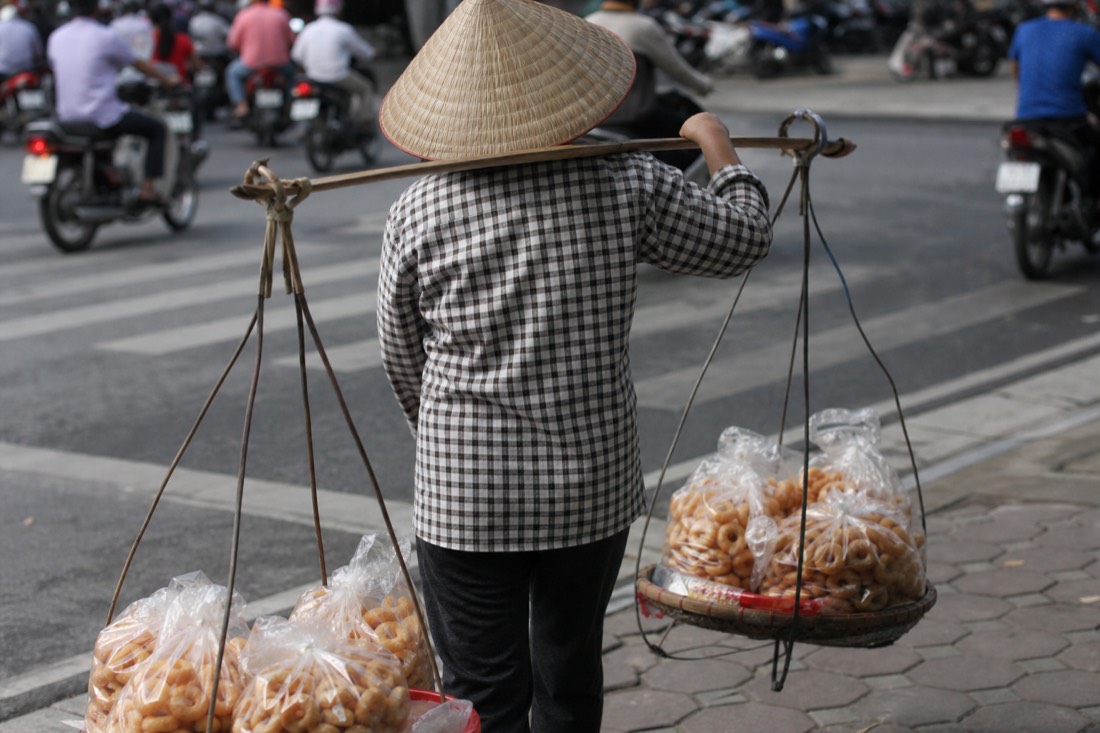
Somewhere near Hoan Kiem Lake, a woman with a bamboo shoulder pole will offer to let you hold it for a photo, then hand you a bag of tiny donuts you never ordered. It is the most famous hustle in the Old Quarter, it costs its victims a few dollars, and it sits at the harmless end of a short, well-documented list. Hanoi's tourist traps are repetitive and easy to spot once named, which is exactly what this guide does.
What should tourists avoid in Hanoi?
Five things cover almost everything: street taxis with rigged meters, donut and shoulder-pole sellers who charge after the fact, shoe-shine men who grab your footwear uninvited, cyclo rides without a pre-agreed price, and restaurants built for tourists rather than regulars. None are dangerous. All are avoidable with one habit each.
Keep the scale in mind before the details. The overwhelming majority of incidents involving foreign visitors here are petty, pickpocketing in crowded markets or an inflated bill, not anything physical. Hanoi at midnight is calmer than most European capitals. So read the table, install Grab, and then go enjoy the city, because paranoia costs more than the scams do.
| Trap | How it works | The counter |
|---|---|---|
| Rigged taxi meter | Meter runs 3-5x fast on street-hailed cabs | Book through the Grab app, price fixed upfront |
| Donut or shoulder-pole seller | Hands you goods or a photo prop, then demands payment | Do not take anything offered free, keep walking |
| Shoe-shine approach | Grabs your shoe, does the work, names a wild price | A firm no before any polish touches leather |
| Cyclo overcharge | Price quoted per person or changed at the end | Agree total price, per ride, before sitting |
| Tourist-menu restaurant | Inflated prices, mediocre versions of famous dishes | Eat where locals queue, know fair prices |
What are the most common scams in Hanoi?
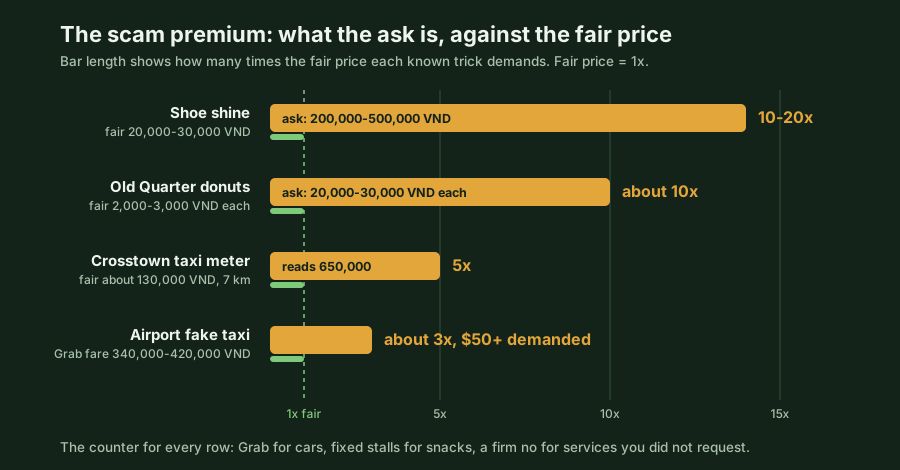
Taxi tricks are the expensive ones. A rigged meter can turn a 130,000 VND crosstown ride into 650,000, and fake airport taxis quote over 50 US dollars for a transfer that costs 340,000 to 420,000 VND on Grab. Street sellers and shoe-shiners work smaller: a few dollars extracted through awkwardness rather than threat.
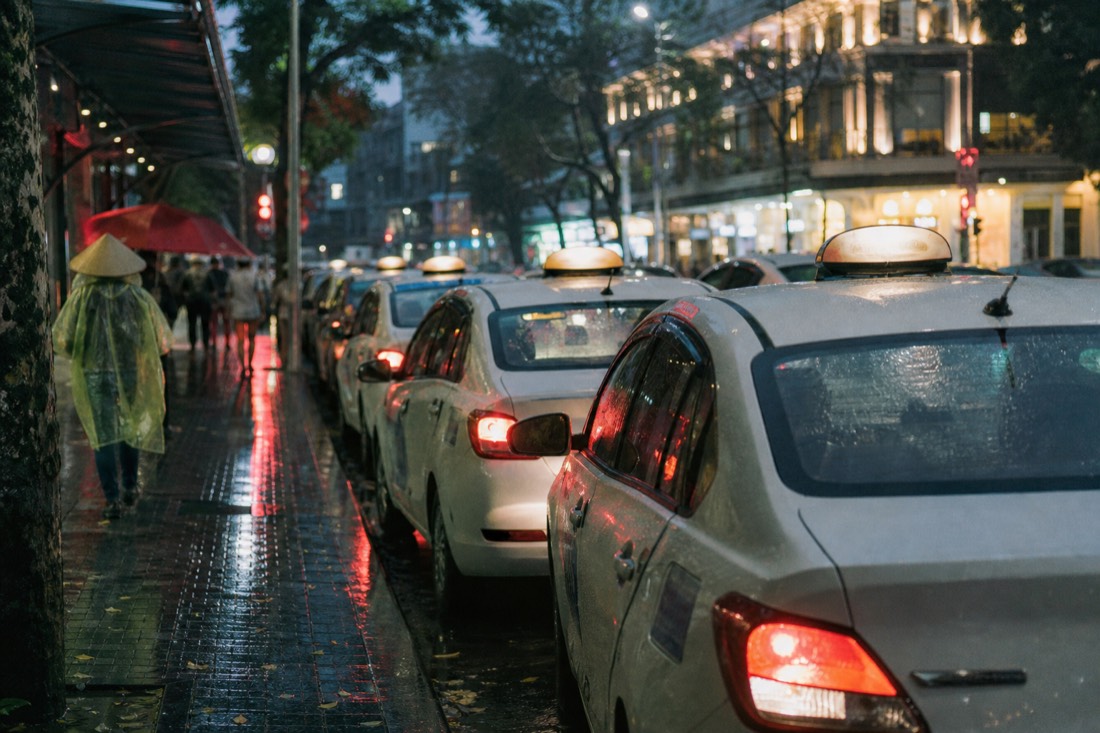
The pattern across all of them is manufactured obligation. Something is placed in your hands, or a service is started before you agree, and then social pressure does the collecting. Vietnamese city dwellers face the same tricks and brush them off without a second thought, which is your model: a smile, a clear no, and feet that keep moving. Nobody escalates.
The numbers make the choice obvious. Here is what the known scams demand against what the real product costs:
| Item | Fair price | Scam ask |
|---|---|---|
| Crosstown taxi, Old Quarter to Tay Ho, 7 km | About 130,000 VND | Around 650,000 VND on a rigged meter |
| Airport to Old Quarter transfer | 340,000-420,000 VND on Grab | $50+ from fake taxis |
| Small bag of street donuts | 2,000-3,000 VND each on Luong Ngoc Quyen | 20,000-30,000 VND each, or a $5 bag |
| Shoe shine | 20,000-30,000 VND | 200,000-500,000 VND |
Grab deserves its own sentence: it is the single highest-value install for a Hanoi trip, killing the entire taxi category of tricks by fixing the price before the car arrives. Metered rides with the major reputable firms are generally fine too, but the app removes the judgment call entirely.
What food traps should you skip?
Skip restaurants with laminated photo menus in four languages, touts waving you in, and twenty-dish kitchens on premium corners. They charge double or triple for weaker versions of dishes a specialist stall does better for pocket change. Knowing five fair prices protects you better than any blacklist.
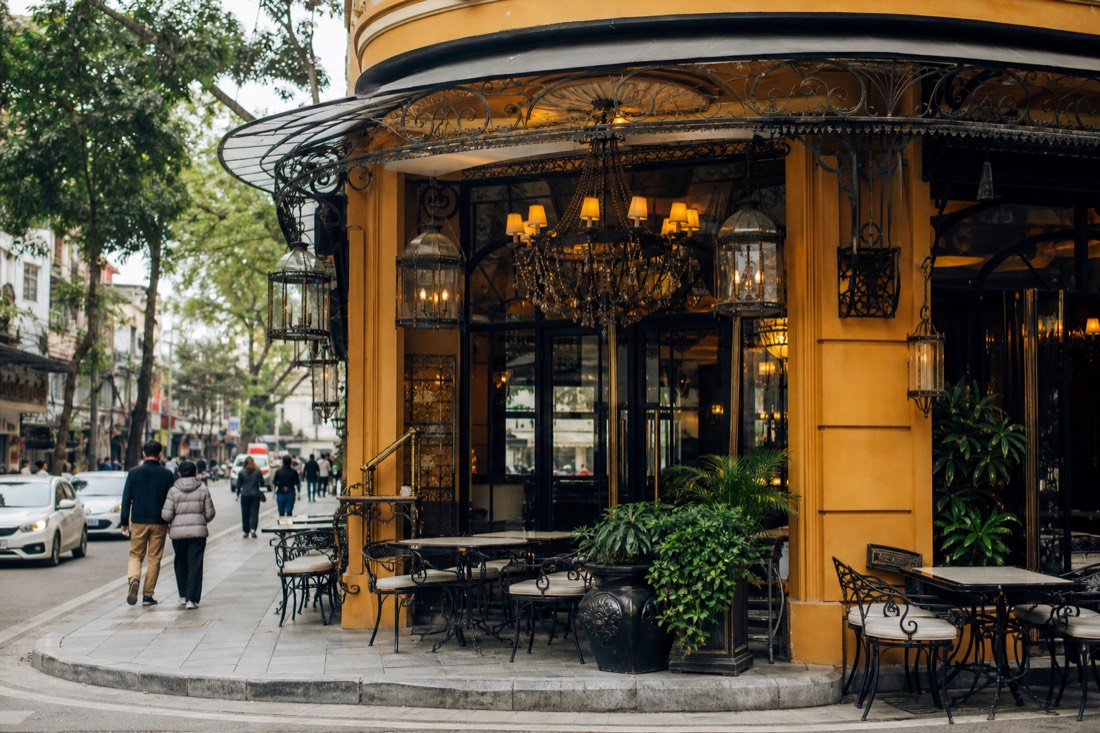
The food trap is subtler than the scams because nothing illegal happens. You simply pay 150,000 VND for a listless bowl of pho fifty meters from a counter selling a superb one for 50,000. The tell is the menu: Hanoi's great food places tend to cook one thing, and the further a menu spreads, the further quality falls. A fuller breakdown of what dishes cost lives in the food price guide, but these five anchors carry you through most meals:
| Dish | Fair 2026 street price |
|---|---|
| Pho | 40,000-60,000 VND |
| Bun cha | 40,000-80,000 VND |
| Banh mi | 20,000-40,000 VND |
| Egg coffee | 30,000-45,000 VND |
| Bia hoi | 10,000-15,000 VND a glass |
Fame is not a trap by itself, and the counterexample proves it. Bun Cha Huong Lien, where Obama and Bourdain ate in 2016, still serves its Obama Combo for about 100,000 VND and holds a Michelin listing. Cheap, famous and excellent can coexist here; the full story is in the Obama and Bourdain guide.
Where should you not eat in Hanoi?
Do not eat at stalls that are empty at mealtimes, at places whose staff have to pull customers in, or anywhere pre-cooked food sits lukewarm through the afternoon. The positive version of the rule does all the work: eat where locals queue and where food comes off heat in front of you.
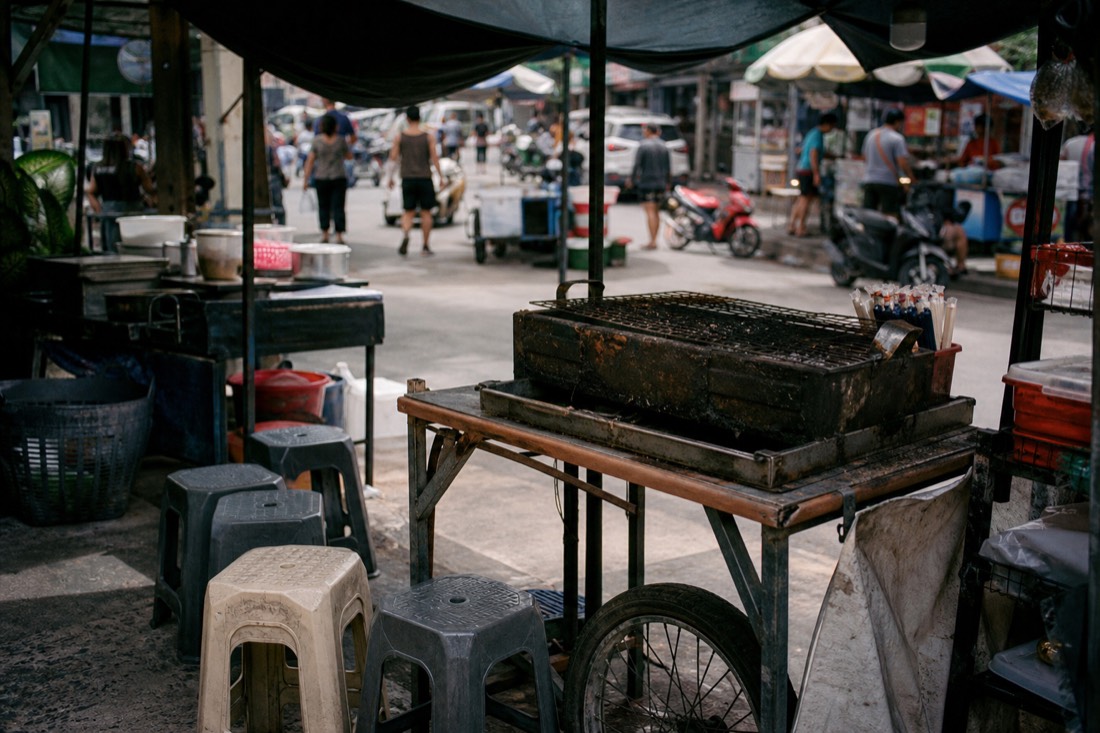
An empty stall at 12:30 in a city this food-obsessed is a verdict already delivered by the neighborhood. The same crowd logic that protects your wallet also protects your stomach, and the street food safety guide turns it into a full stall-picking system for tap water, ice and raw herbs.
How can you tell a tourist-priced menu before you order?
Read the menu, not the address. Photographs of every dish, four languages, twenty items from three cuisines, a person outside waving you in, and no prices at all are the five signals that predict an inflated bill. A short menu in Vietnamese with a queue outside predicts the opposite.
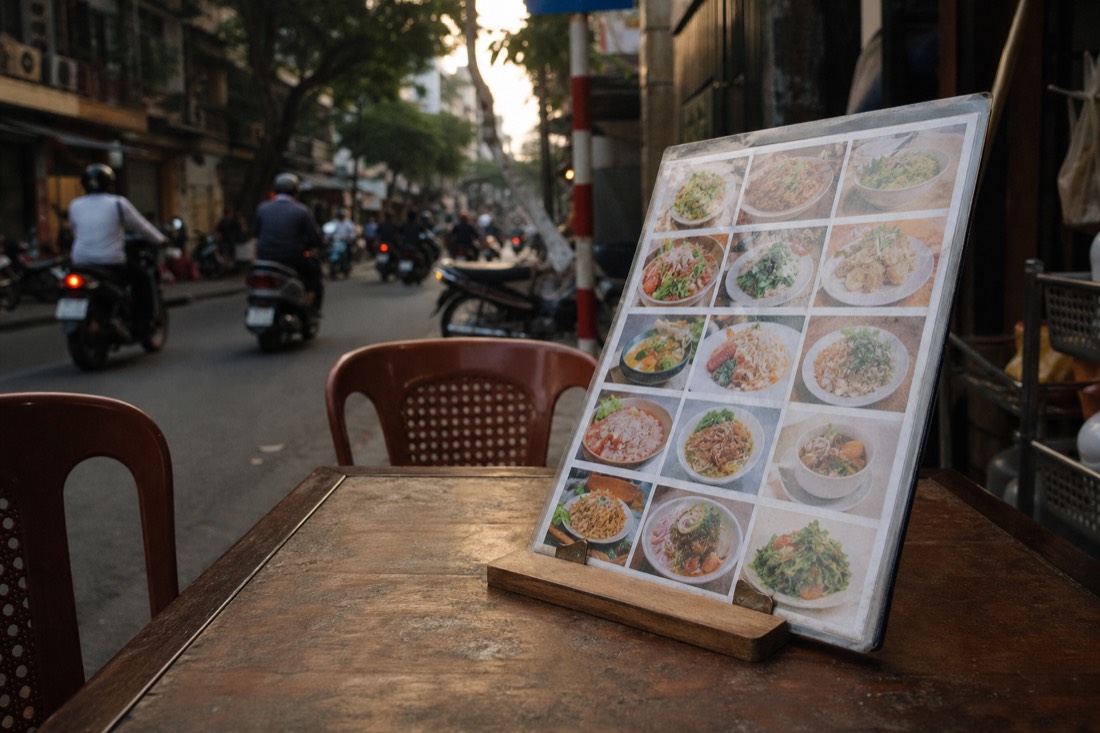
None of these signals is proof, and a few genuinely good places break every one of them. As a filter used quickly, on a street corner, with a decision to make in ten seconds, they are close to reliable. The reason is economic rather than moral: a kitchen that promises pho, pizza and pad thai has to buy for all three, so nothing turns over fast and everything is priced to cover the waste.
The arithmetic is worth doing once, because it stops the shrug that costs travellers most. A listless bowl of pho at 150,000 VND fifty metres from a superb one at 50,000 is 100,000 VND lost on a single dish. Two people repeating that across three meals a day, for a week, are spending a serious sum on food they will not remember, in a city where the memorable version is cheaper.
Prices absent from the menu deserve their own line. When nothing is written down, the number arrives after you have eaten, and the number depends on you. Ask before ordering, every time, in any setting where the price is not printed or chalked up. Nobody legitimate minds the question, and the food price guide gives you the bands to sanity check the answer against.
| Menu signal | What it usually predicts | The better move |
|---|---|---|
| Photos of every dish, three or four languages | Prices at two to three times street level | Walk one street back from the lake |
| Twenty dishes across several cuisines | Nothing cooked often enough to be fresh | Find a place that sells one thing |
| Someone outside inviting you in | Trade that depends on strangers, not regulars | Follow the queue instead of the invitation |
| No prices printed anywhere | A bill calculated once you are seated | Ask the price before you order |
| English sign, empty room at 12:30 | The neighbourhood has already voted | Eat where the neighbourhood is eating |
Who should skip the Old Quarter at night, and where should they go instead?
Light sleepers, anyone with mobility limits, families with small children, and travellers who dislike crowds should all treat the Old Quarter after dark as a visit rather than a base. The food is superb and the noise is relentless. Eat there early, then move out, or stay outside it and come in.
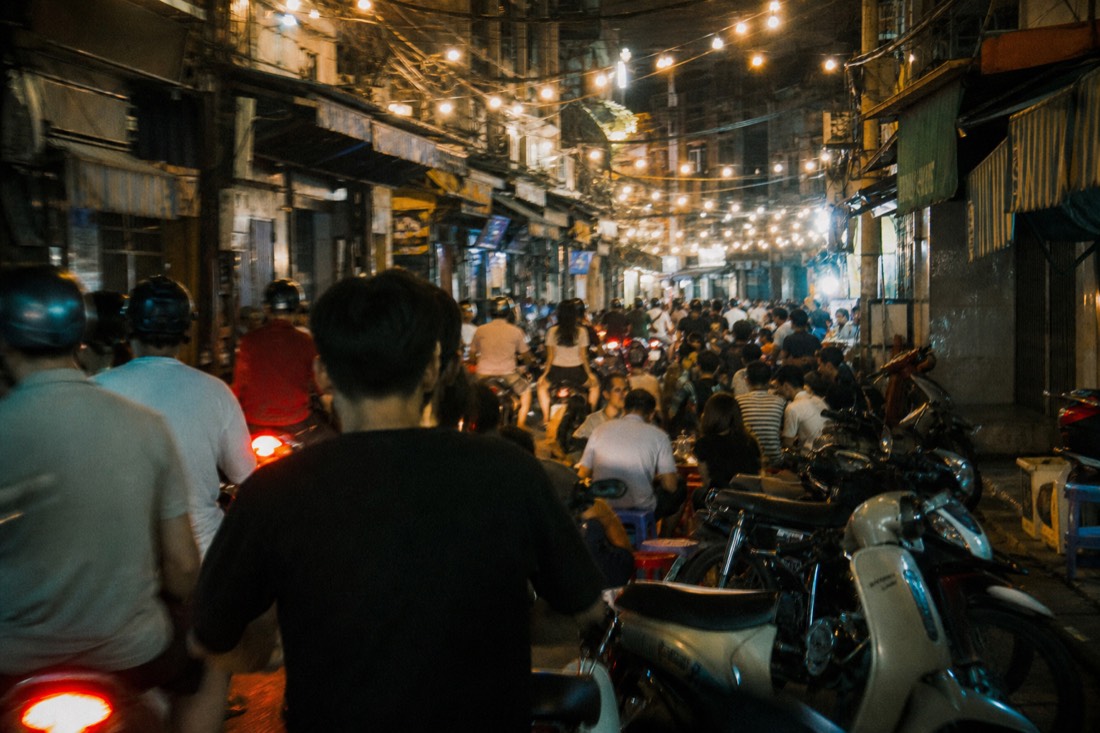
The central grid is a knot of narrow streets carrying motorbikes, kitchens, beer corners and a constant flow of people, all of it on pavements that double as parking, prep space and dining room. That density is the attraction. It is also, late on a Saturday, a lot to handle with a stroller, a bad knee, or an early flight.
Two easy adjustments solve most of it. Eat the Old Quarter on its own timetable, which starts far earlier than visitors expect, and use the weekend pedestrian window when the streets around Hoan Kiem close to traffic from Friday evening through Sunday night. Without motorbikes, the same area becomes calm enough for anyone, and the food stays where it was. The where to stay guide covers the quieter districts within easy reach if you would rather sleep away from the noise entirely.
| Who | The friction | Better plan |
|---|---|---|
| Light sleepers | Karaoke, beer corners and scooters run late | Sleep outside the grid, eat inside it |
| Mobility limits | Pavements double as parking and kitchen space | Weekend pedestrian hours around Hoan Kiem |
| Families with young children | Crowds and traffic peak right at dinner time | Eat in the early evening, when local families do |
| Crowd-averse travellers | Density builds through the late evening | Early dinner, then a quieter neighbourhood |
| Anyone with a dawn flight | Noise carries in the narrow streets | Base yourself near the airport road for the last night |
If you want the density without the guesswork, a small private street food walk covers the same streets at your own pace, and the Old Quarter food guide maps which lanes are worth the elbows.
What should you carry, and what should stay in the hotel?
Carry a phone, one card, small notes, and your hotel address. Leave your passport, spare cards and any cash you would hate to lose in the room safe. Nearly nine in ten crimes reported against foreigners here are pickpocketing or bag snatching, so the fix is simply having less on you.
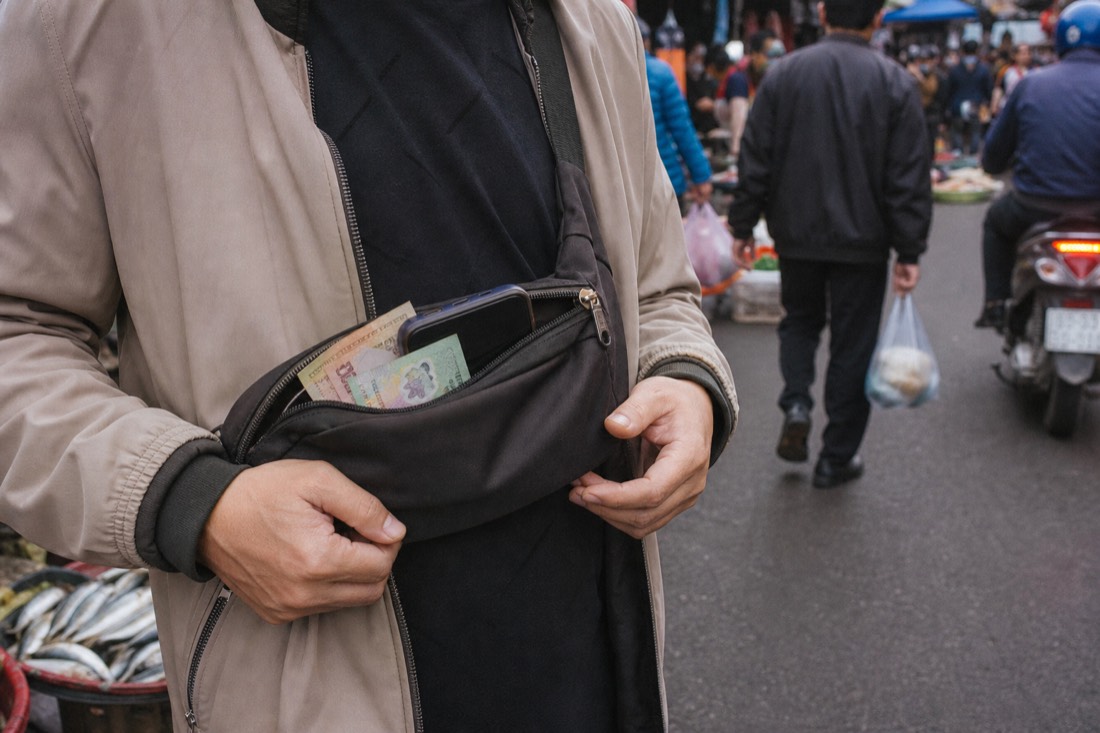
The pickpocket pattern is boring and therefore predictable: crowded markets, packed tourist corners, and the moment your attention is on a phone screen. Bag snatching from passing motorbikes is the other classic, which is why a bag worn across the body on the wall side of the pavement is worth the small hassle. Phones used at the kerb are the single most common loss.
Cash sizing is a separate discipline. Carrying enough to eat all day is easy, since a full day of street food is not expensive, and carrying much more than that only buys risk. Break big notes early at a convenience store, keep the small ones in a front pocket, and keep the rest somewhere else entirely.
The list below is a planning allowance from our own experience walking these streets, not a security rule or an official recommendation.
| Item | Carry or leave | Why |
|---|---|---|
| Passport | Leave, carry a photo of it | Nothing on the street requires the original |
| Bank cards | Carry one, leave the rest | Stalls are cash only anyway |
| Cash | Carry a day's eating money in small notes | Limits both loss and change-making friction |
| Phone | Carry, but use it away from the kerb | Snatching happens at the roadside, not in cafes |
| Day bag | Worn across the body, zipped, in front in crowds | Removes the market pickpocket opportunity |
| Jewellery and watches | Leave | Nothing about a food crawl calls for them |
What does Mai tell guests to ignore?
Most of the internet. Ignore the advice to skip street food entirely, ignore the panic about ice in ordinary cafes, ignore anyone who approaches you with an offer, and ignore the instinct to be polite when a stranger starts a service you did not request. Politeness is what these tricks run on.
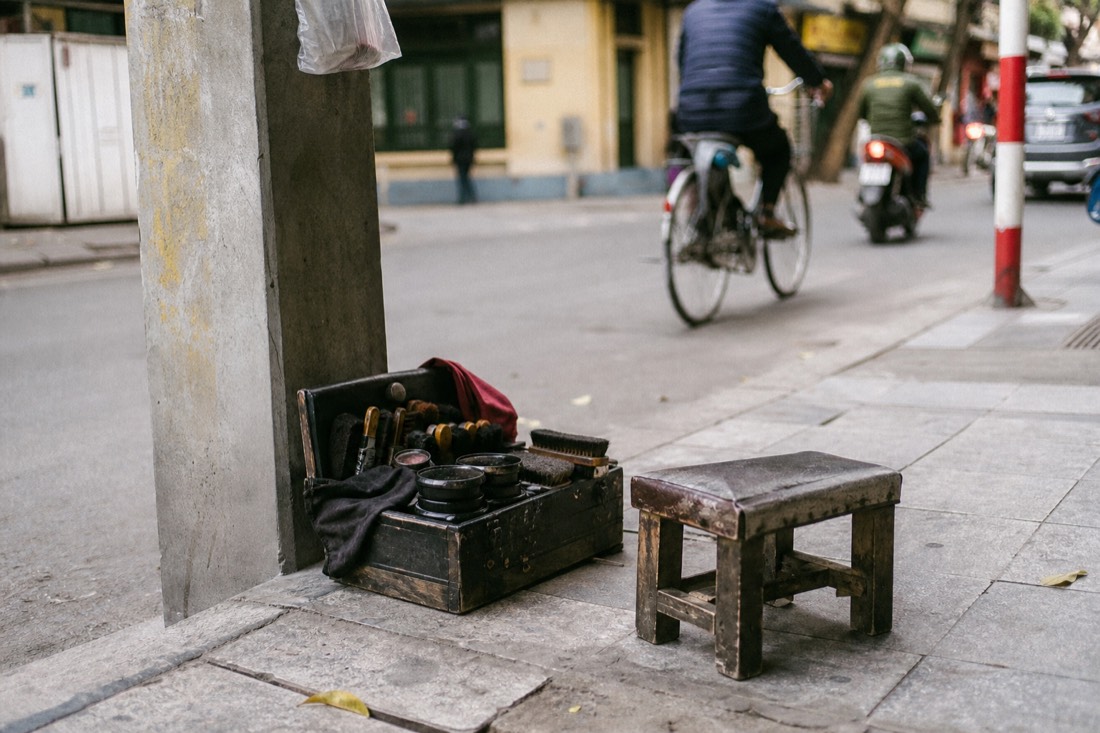
Mai Trần has guided food walks in Hanoi since 2015 and has taken more than 1,000 travellers through the Old Quarter's stalls and wet markets. In her own words:
The question I get most often is whether street food is safe, and it always comes from someone who read a forum thread at 2 a.m. before flying. My honest answer is that I eat on these pavements every working day, my family does too, and the stalls that make people sick do not survive a month here. Read the safety rules once, then stop reading. Worry is not a hygiene measure.
The second thing I tell people to ignore is the friendly approach. Not the people, the approach. Anyone who starts a service before agreeing a price, whether that is polishing a shoe, putting a shoulder pole on your shoulder or steering you towards a particular restaurant, has already told you how the next two minutes will go. I say no clearly, keep walking, and nothing happens. No one follows. No one shouts.
Third, ignore the idea that a busy place is trying to trick you. Guests sometimes want the quiet restaurant with the empty tables because it feels calmer and more welcoming. In this city an empty room at lunchtime is a verdict, not an opportunity.
The last one I say with a smile: ignore the urge to be a good customer to the wrong person. Save that politeness for the woman who has been grilling pork on the same corner since before you were planning this trip. She has earned it, and she will charge you what she charges everyone.
How do you handle a scam in the moment?
Stay calm, refuse early, and walk. Never accept objects offered free, never let work start without a price, and pay disputed amounts in small notes only if cornered, then leave. Raised voices are almost never worth it, and the seller moves on to the next tourist within seconds.
Carrying small denominations is quiet armor. Handing over a 500,000 note for a 30,000 purchase invites slow, creative change-making, so break big notes at convenience stores early and keep a pocket of 10s and 20s. On tipping, the norm is relaxed: tipping in Vietnam is appreciated rather than expected, with rounding up or 5-10 percent in restaurants and 100,000-200,000 VND a day for guides, so nobody legitimate will chase you over gratuity.
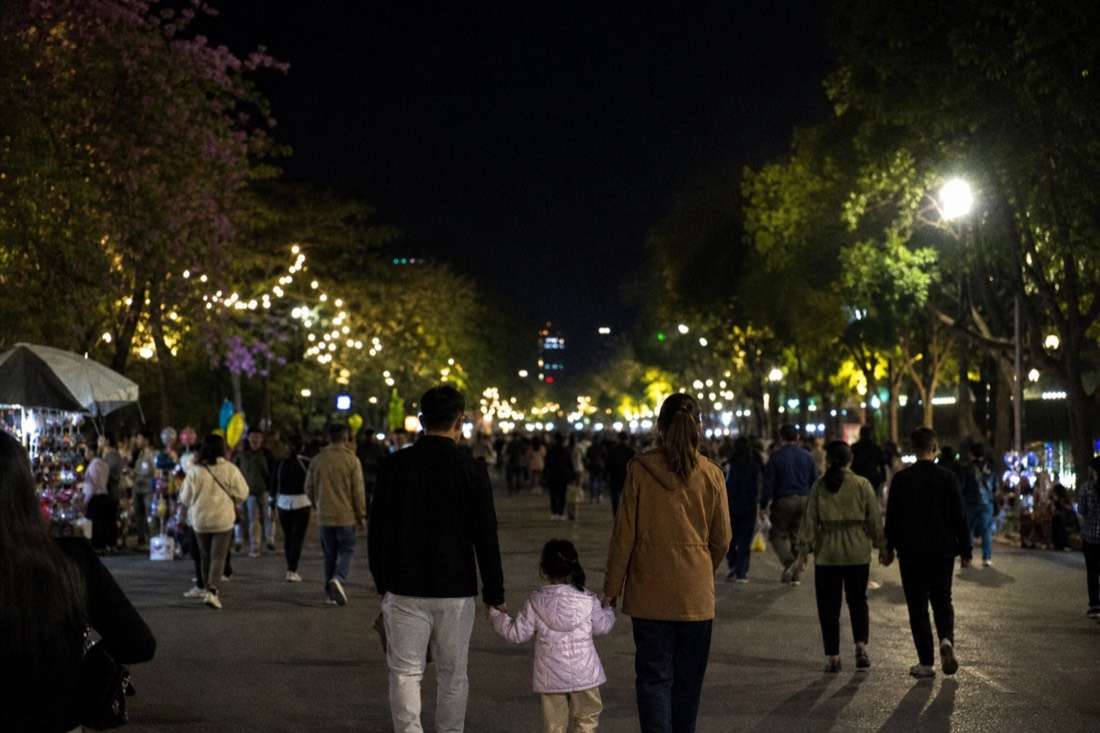
Timing helps too. Friday night through Sunday the streets around Hoan Kiem become a pedestrian zone, busy, festive and well-watched, one of the easiest windows to wander with zero hassle. Plan those evenings with the best time to visit guide, and treat everything above as a five-minute briefing rather than a warning label on a city that mostly just wants to feed you.
Is Hanoi safe for tourists?
Yes, by big-city standards Hanoi is notably safe. Violent crime against visitors is rare, and the documented pattern of incidents is overwhelmingly petty: pickpocketing in crowded spots and overcharging tricks like rigged taxi meters or unsolicited donut sales. Standard habits, the Grab app, small banknotes, firm refusals, neutralize nearly all of it.
What is the donut scam in Hanoi?
A vendor near Hoan Kiem or in the Old Quarter offers a donut to try, or places a shoulder pole on you for a photo, then demands around five dollars for a bag you never ordered. Real donuts from fixed stalls cost 2,000-3,000 VND each. The counter is simple: take nothing offered free and keep walking.
How do you avoid taxi scams in Hanoi?
Use the Grab app, which fixes the fare before the car arrives. An airport-to-Old-Quarter ride runs about 340,000-420,000 VND on Grab, while fake taxis ask over 50 dollars, and rigged street meters can multiply a fair fare several times. If you must hail, choose major reputable firms and watch that the meter starts near zero.
Are the restaurants around Hoan Kiem Lake tourist traps?
Some are, some are not, and the address matters less than the signals. Skip places with touts, photo menus in several languages, and sprawling twenty-dish kitchens. Favor spots with a local crowd and a short specialty menu. Fair anchors help: pho should run 40,000-60,000 VND and banh mi 20,000-40,000 at street level.
Should you tip in Hanoi?
Tipping is not expected in Vietnam, though it is appreciated. Rounding up the bill or leaving 5-10 percent in sit-down restaurants is generous, and tour guides commonly receive 100,000-200,000 VND or more per day. Nobody legitimate will pressure you over a tip, so treat any aggressive demand as a trap rather than a custom.
Your next Hanoi experience
Check your date before planning the rest of the day
Small-group Hanoi food walk
Taste a changing selection of Hanoi dishes with a local guide in a group of up to eight.
Old Quarter pickup; otherwise 41 Luong Van Can. Food tastings and a drink included. Menu varies; dietary requests need advance confirmation.
An editorial starting point. Confirm your party’s requirements with the operator.
Choose a date to see scheduled departures. Final availability and price are confirmed on Viator.
No verified option fits those requirements. Adjust your choices or reset to explore the general recommendations.
Compare options, fit your schedule & check your budget
Small-group Hanoi food walk · 3h. Taste a changing selection of Hanoi dishes with a local guide in a group of up to eight. Old Quarter pickup; otherwise 41 Luong Van Can. Food tastings and a drink included. Menu varies; dietary requests need advance confirmation.
Private Old Quarter food walk · 3h. Explore the Old Quarter with a guide dedicated to your own party. Old Quarter pickup or 38 Bat Su. Tastings included. Confirm specific dietary and access needs before booking.