Best Time to Visit Hanoi 2026-2027: Month by Month, and Which Months to Skip
Hanoi has real seasons, a furnace of a summer, a grey drizzly late winter, and two long stretches of superb eating weather. Picking your window well changes the entire trip.
 Written with Mai Trần, Hanoi food tour guide and culinary specialist

Short answer
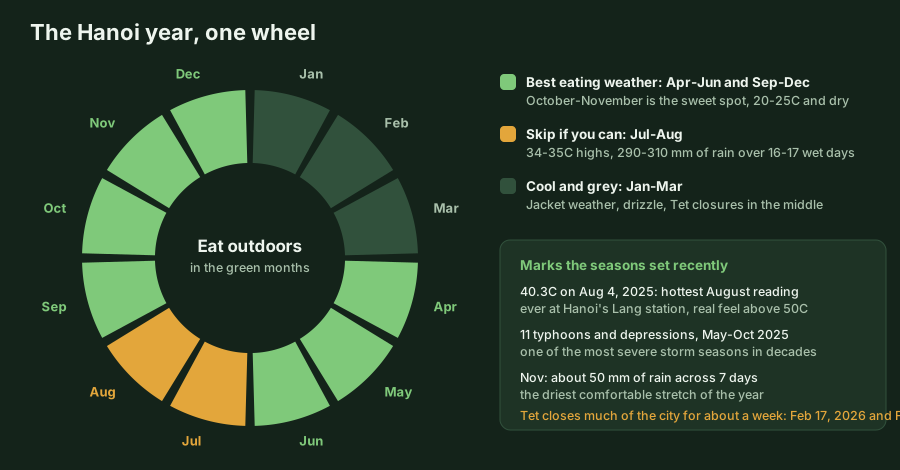
The best months for Hanoi are April to June and September to December, with October and November the sweet spot, dry, 20-25C, ideal for street eating. Avoid July and August if you can: highs around 34-35C with punishing humidity, 290-310 mm of monthly rain, and typhoon season in full swing. Check Tet dates too, since much of the city closes for about a week in late January or February.
There is a specific November feeling in Hanoi: 22 degrees, dry pavement, a bowl of pho steaming visibly in the cool morning air, and locals in light jackets acting like it is midwinter. That is the city at its best, and it is no accident that the food scene feels sharpest then. Street eating is an outdoor sport here, so weather is not a footnote to planning, it is most of the plan. The figures below follow the official Vietnam tourism board climate guidance plus current season data.
What is the best time of year to visit Hanoi?
April to June and September to December are the two good windows, and October-November is the peak: dry days, 20-25C, low humidity, perfect for hours of walking between stalls. Spring, February to April, is pleasant but hazier with light drizzle. Summer works only for the heat-tolerant.
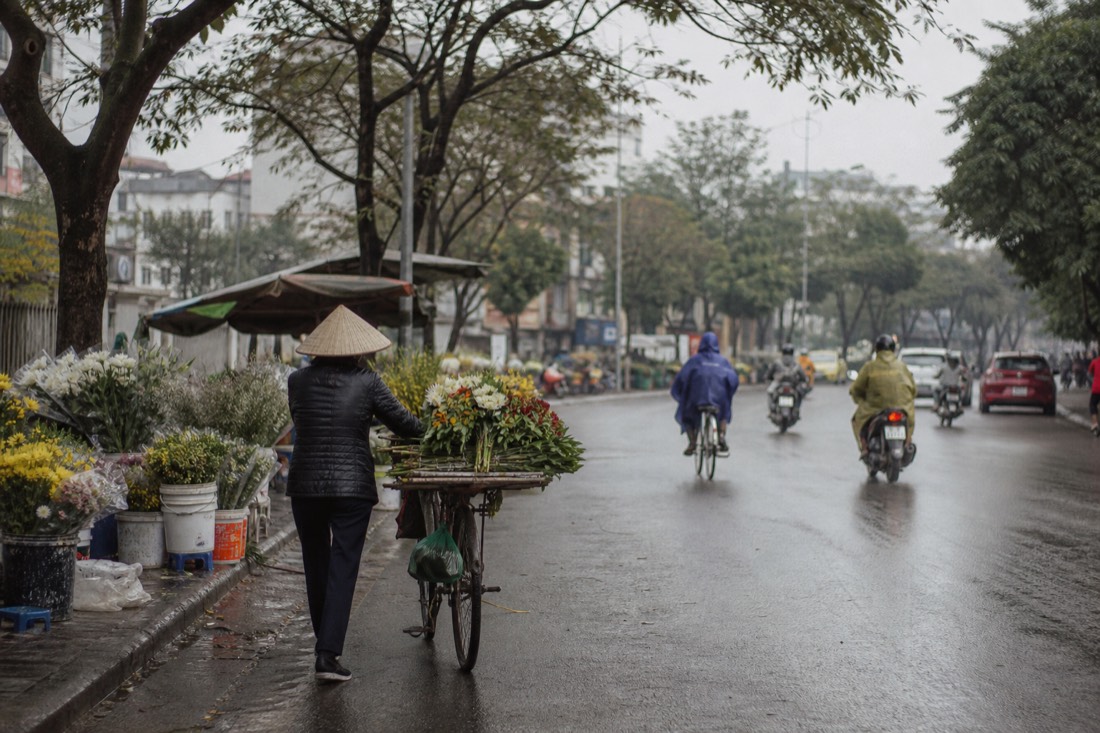
Hanoi sits in Vietnam's north, which surprises travelers expecting uniform tropics: the city has four seasons, including a genuinely cool winter. For an eating trip the calculus is simple, since you will spend your days on plastic stools at pavement level. You want dry and mild, which is exactly what autumn delivers.
| Month | Character | Eating-weather verdict |
|---|---|---|
| January | Cool, grey, occasional drizzle, 15-20C typical | Fine, pack a jacket |
| February | Cool, misty drizzle, Tet closures likely | Watch Tet dates |
| March | Milder, humid, hazy | Decent |
| April | Warm, drier, comfortable | Good window opens |
| May | Hot spells begin, storms possible | Good, early starts help |
| June | Hot and humid, rain building | Last of the good window |
| July | About 35C highs, 290 mm rain over 16 wet days | Hard work |
| August | About 34C highs, 310 mm over 17 wet days | Peak heat and rain, skip |
| September | Heat breaks, rain eases | Good window reopens |
| October | Dry, mild, clear | Excellent |
| November | 20-25C, about 50 mm rain over 7 days | The sweet spot |
| December | Cool, dry, crisp mornings | Excellent |
Cool, dry months also happen to be open-vehicle months. An open jeep in 22-degree November air is a completely different proposition from one in August soup.
Which months should you avoid in Hanoi?
July and August are the months to skip: highs around 34-35C that feel far hotter, 290-310 mm of monthly rain across 16-17 wet days, and the heart of typhoon season. Late January to February carries a different risk, the week-long Tet shutdown, wonderful culturally but hard on eaters.
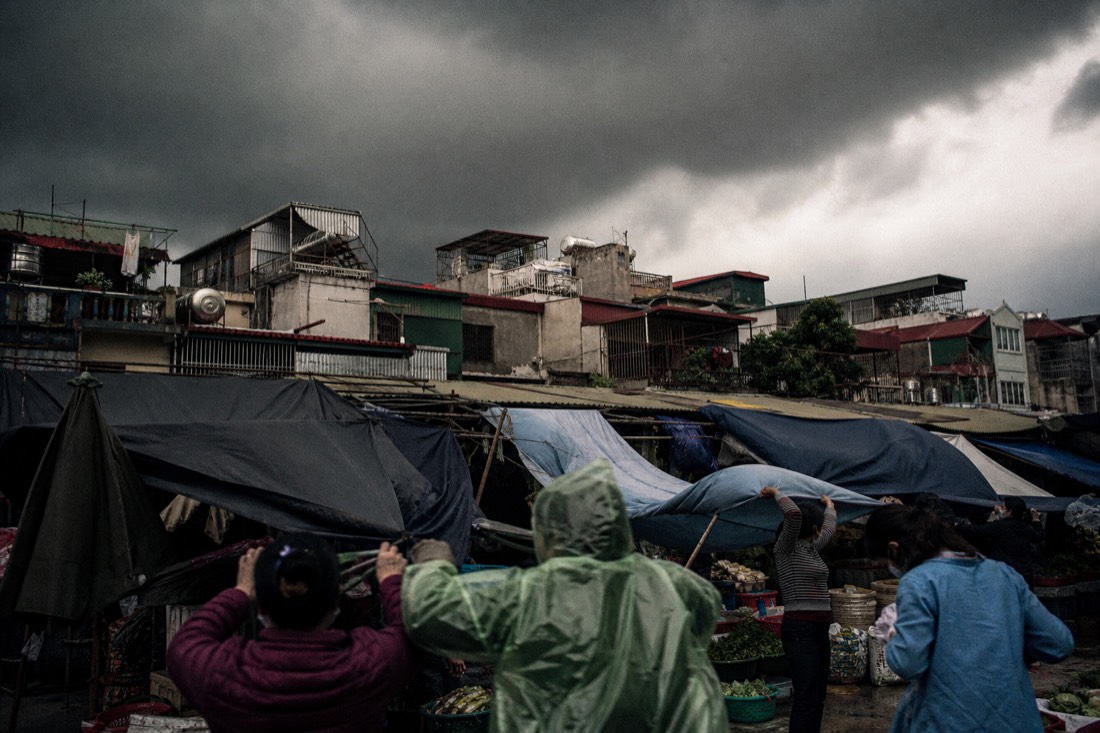
The summer numbers deserve respect rather than fear. Heat in Hanoi is a humidity phenomenon: the air holds so much moisture that mid-30s temperatures produce a perceived heat well beyond the thermometer, and recent summers have pushed records. Walking food crawls become genuinely punishing between late morning and sunset, which is most of the day.
When is the rainy season in Hanoi?
Roughly May through October, peaking in July and August when monthly totals reach about 290-310 mm across 16-17 rainy days. This is also typhoon season on the northern coast, which can push storm remnants over the city. By November rainfall collapses to around 50 mm over a handful of days.
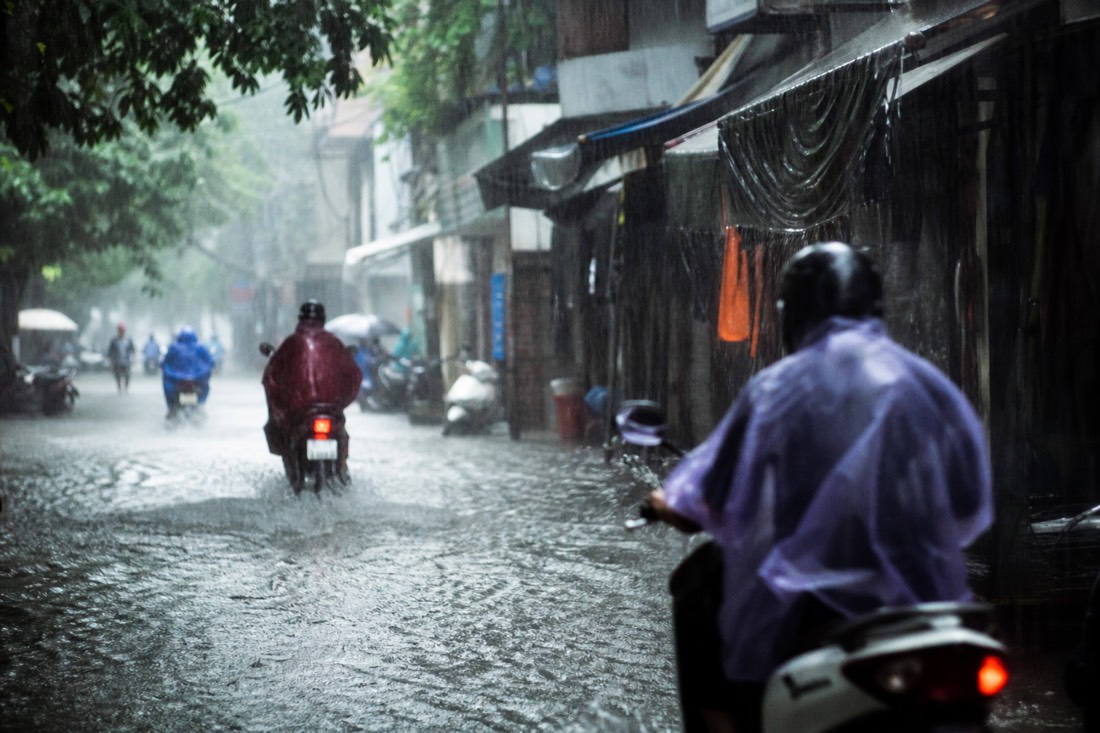
Rainy season in Hanoi does not usually mean all-day washouts. The classic pattern is a hot, heavy build through the day and a violent late-afternoon downpour that floods gutters for an hour, then clears. Street vendors are unbothered, tarps drop, stools shuffle inward, and pho continues. The practical costs fall on travelers instead: soaked shoes, gridlocked traffic at storm hour, and the occasional typhoon-driven day where boats and excursions cancel outright. Recent seasons have been rough by historical standards, so a summer itinerary needs slack built into it rather than a perfect chain of bookings.
If a summer trip is fixed, shape your days around the pattern. Eat early and late, plan indoor anchors for mid-afternoon, and keep Train Street's cafe timings flexible since schedules shift anyway. A rainy afternoon is also the perfect slot for a cooking class, the one food experience that improves when the weather turns.
What is Hanoi like in summer?
Hot in a way that reorganizes your day. June through August runs 35C and beyond with saturated humidity, and recent record afternoons have pushed perceived heat past 50C. The city adapts by living at the edges of the day, dawn markets, iced drinks, late dinners, and visitors do best copying that rhythm.
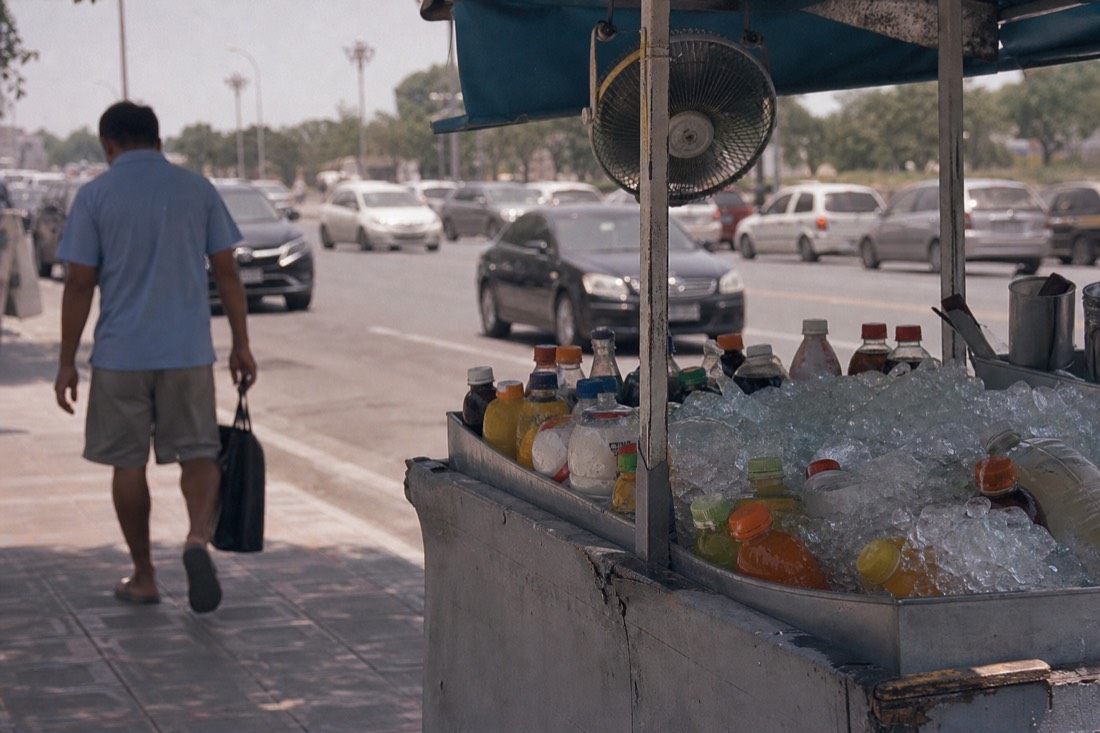
Summer Hanoi is not a write-off, it is a different city with its own logic. The 6 a.m. pho counter is busy precisely because locals eat before the heat arrives. Egg coffee moves to iced form. Bia hoi corners fill after sunset when pavement temperatures drop, and evening food walks replace midday wandering. A three-day eating itinerary built on early-and-late rhythm still works in July; the same plan attempted from noon outward does not.
Two cautions carry extra weight in the hot months. Hydration discipline matters when you are sweating through 90 percent humidity, and the bottled-water and ice rules in the street food safety guide apply doubly. Storm-day flexibility is the other: keep one slack afternoon in any summer plan for the downpour that will, at some point, win.
The larger point is that every season has a correct format, and matching the two is most of the planning skill:
| Window | What it suits best |
|---|---|
| October-December | Open jeep and vintage motorbike tours, long walking crawls, all-day eating |
| April-June | Walking tours with early starts, Train Street cafe evenings |
| July-August | Cooking classes, indoor coffee tastings, dawn and after-dark street eating |
| January-March | Walking tours in a light jacket, the most atmospheric hot-pho weather of the year |
Which shoulder weeks are the smartest bet?
The edges of the good windows: late March into early April, the last half of May, mid to late September, and early December. Each buys most of the comfortable weather with fewer people in it, and each carries one specific trade-off you can plan around rather than gamble on.
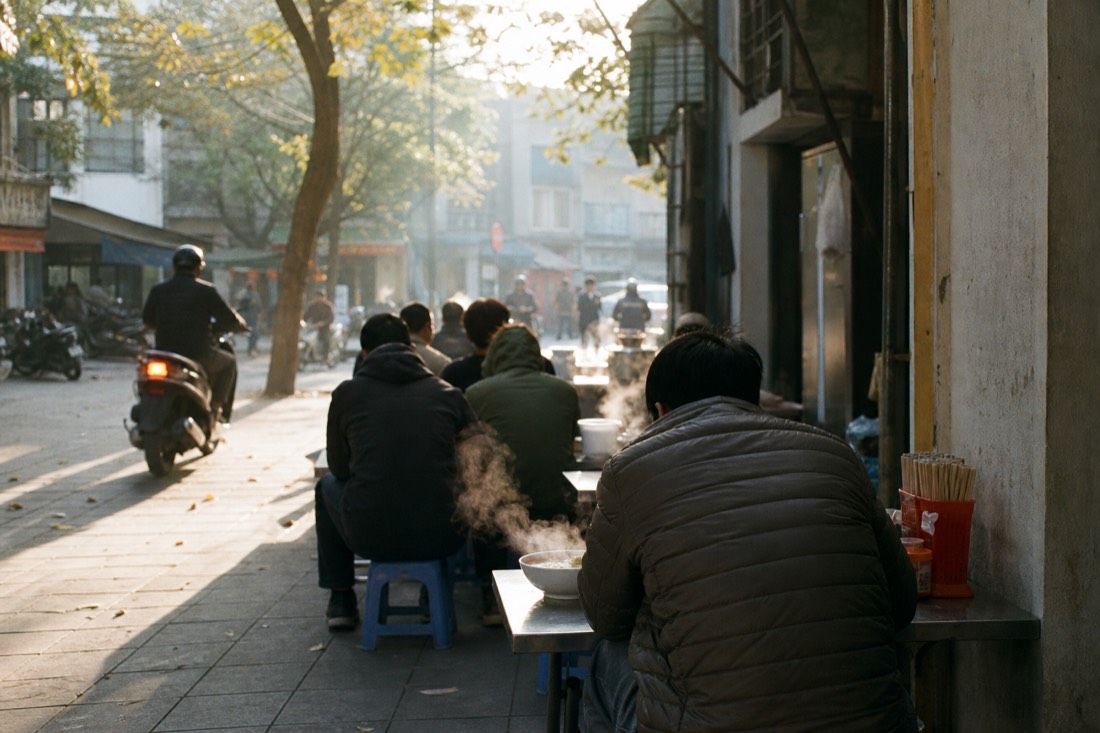
Crowds are a real variable now rather than a footnote. Hanoi counted about 12.14 million visitors in the first four months of 2026 alone, up nearly 21 percent year on year, and that growth lands hardest on the same handful of central food blocks in the same handful of good-weather weeks. Shifting your dates by ten days is the cheapest crowd-management tool available.
September is the shoulder week most people underrate. The heat breaks, the rain eases, and prices and queues have not yet caught up with autumn. The catch sits offshore: Vietnam took eleven typhoons and tropical depressions between May and early October 2025, so a mid-September trip needs one flexible day in it. Late May is the mirror image, still comfortable for walking if you start early, with the first hot spells and storms arriving without much notice.
Early December is the quiet favourite. Rainfall has already collapsed from the November level of roughly 50 mm across seven days, mornings turn crisp, and the city's cooking is at its best in cool weather. Pack an actual jacket rather than the one you brought for air conditioning, because northern Vietnam gets properly cold by tropical standards, and the coffee culture makes a great deal more sense at 20 degrees than at 35.
| Shoulder window | What you get | The trade-off |
|---|---|---|
| Late March into early April | Spring haze lifting, warm dry days arriving | Drizzle days still turn up without warning |
| Second half of May | Long comfortable evenings, the good window still open | First hot spells and the start of storm season |
| Mid to late September | Heat broken, rain easing, autumn crowds not yet arrived | Tail of a typhoon season that ran to early October in 2025 |
| Early December | Cool, dry, crisp mornings, the year's best eating weather | Genuinely cold evenings by tropical standards |
| The week after Tet | A city coming back to life, still cool | Stalls reopen unevenly for the first few days |
What actually closes during Tet, and for how long?
Government offices close for the full holiday block, roughly a working week. Family-run stalls and famous single-dish shops close for several days around the new year and reopen unevenly afterwards. Hotels and larger restaurants keep going. Tet 2026 fell on February 17 with offices shut February 16 to 20; Tet 2027 lands on February 6.
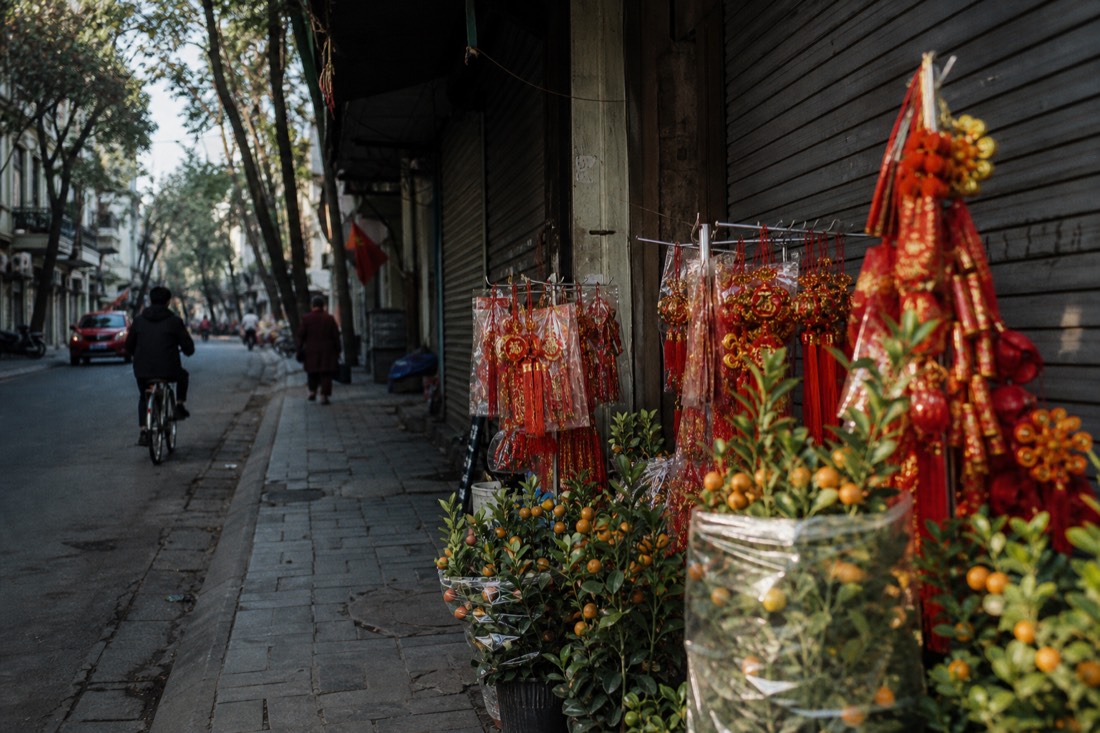
The thing that catches food travellers out is not the closure itself, it is the unevenness. Tet is a family holiday, and the great Hanoi counters are family businesses, so each one shuts and reopens on its own schedule depending on where the family is and how the week goes. There is no published list. A shop that reopened on day four last year may reopen on day six this year.
Two planning moves take most of the pain out of it. First, check the lunar calendar before you book flights, since the date moves each year: the 2027 public holiday is expected to run February 3 to 11. Second, if your dates do land in Tet week, build the trip around the parts that stay open and the atmosphere you cannot get at any other time, rather than around a list of specific addresses. Booked experiences and hotel kitchens are the reliable core, and the Michelin-listed places publish their holiday hours far more often than a pavement counter ever will.
| What closes | Typical closure | How to plan around it |
|---|---|---|
| Government offices and consulates | The full holiday block, February 16 to 20 in 2026, back on the 23rd | Finish any paperwork well before the holiday |
| Family-run street stalls | Several days, reopening on no fixed schedule | Ask your hotel each morning which counters are open |
| Famous single-dish shops | Often dark across the main holiday days | Never build a whole day around one address |
| Wet markets | Thin out before the holiday, restart slowly | Treat market visits that week as a bonus, not a plan |
| Hotels, larger restaurants, booked tours | Generally running | Make these the backbone of a Tet-week trip |
How should you pace an eating day in the July heat?
Live at the edges of the day. Eat your main street meal between dawn and mid morning, take shelter through the worst hours, then come back out after sunset. July runs about 35C with 290 mm of rain across 16 wet days, so the plan is not toughness, it is scheduling around a few unusable hours.
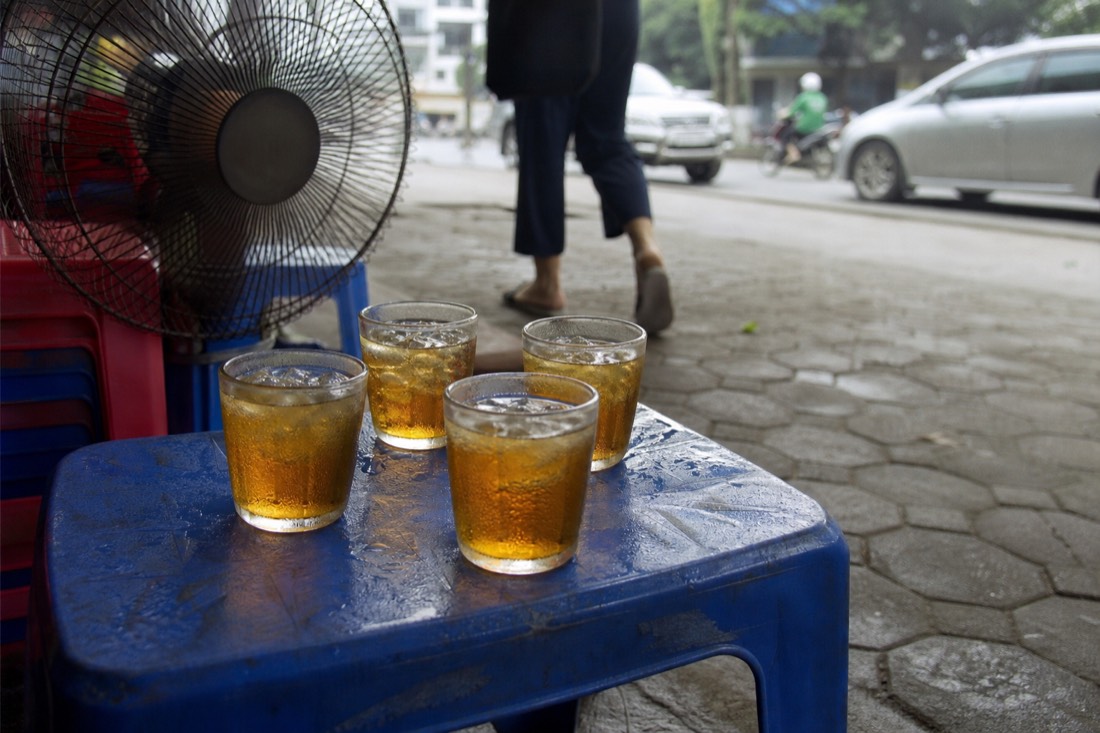
Locals have already solved this problem, and copying them works better than any gear you can buy. The dawn pho counters are busy at 6 a.m. for a reason, the middle of the day belongs to shade and iced drinks, and the pavement fills again once the temperature drops. Fighting that rhythm is how visitors end up eating a mediocre air-conditioned lunch and missing the good food entirely.
The heat is also a genuine safety variable rather than a comfort one. Hanoi's Lang station recorded 40.3C on August 4, 2025, with perceived heat by Hoan Kiem Lake topping 50C that afternoon. On days like that, hydration and shade beat ambition, and the water rules in the safety guide get more important rather than less. Add the afternoon downpour to the picture and one slack half day per summer week is the minimum sensible buffer.
The schedule below is a planning allowance we use for pacing summer eating days, not published guidance.
| Block | What to do | Why |
|---|---|---|
| 6 a.m. to 9 a.m. | The main outdoor meal of the day, pho or a market breakfast | Coolest hours, busiest counters, best turnover |
| 9 a.m. to 11 a.m. | Coffee sitting down, short walk, one market | Heat is climbing but still workable in shade |
| 11 a.m. to 4 p.m. | An indoor anchor: a cooking class, a coffee tasting, a long lunch | These are the hours that ruin summer itineraries |
| 4 p.m. to 6 p.m. | Water, shower, do nothing | Storm hour lands here more often than not |
| 6 p.m. onward | Evening food walk, bia hoi corners, late dessert | Pavement temperatures drop and the city comes back out |
How does Mai pace a group in November against one in July?
Almost the same food, a completely different clock. In November she walks longer, stops less often and eats through the evening. In July the same route gets split across dawn and after dark, with more sitting, more water, and fewer stops that involve standing over a charcoal grill.
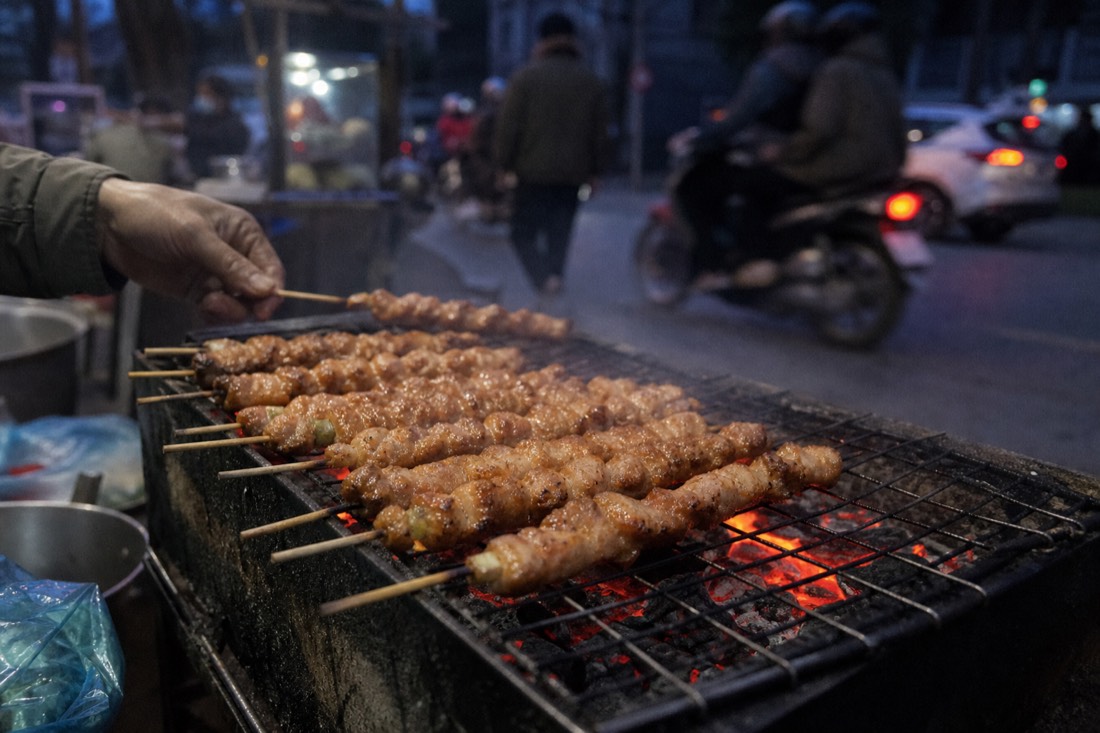
Mai Trần has guided food walks in Hanoi since 2015 and has taken more than 1,000 travellers through the city's stalls and wet markets. In her own words:
November is the month I do not have to think about. Twenty-something degrees, dry pavement, and people can walk for three hours without noticing they are walking. I can put a grilled stop in the middle of the evening, stand at the coals, let everyone watch the pork char, and nobody wilts. Groups eat more in cool weather, which means they taste more, which is really the whole job.
July is a different profession. The heat is not the number on the phone, it is the humidity sitting on top of it, and by mid morning a group that started cheerfully will be quiet and irritable without knowing why. So I move the walking to the shaded side of the street, I plan a sitting stop after every two standing ones, and I buy water constantly. Nobody has ever complained about being handed too much water.
I also change the order of dishes in summer. Hot broth first thing in the morning is perfect. Hot broth at 2 p.m. in August is a punishment, so that is when I steer people to iced coffee, che, and anything served cold and sweet. The same guests who would have skipped dessert in December will happily eat two in July.
The last difference is expectations. In the cool months I tell people they can eat all day. In the hot months I tell them the truth: we will do two excellent short sessions instead of one long one, and the middle of the day belongs to a fan. Guests who accept that plan enjoy Hanoi in summer. Guests who fight it spend the trip tired and blame the food.
Should you plan around Tet, and how do visas affect timing?
Yes to both. Tet, Vietnam's lunar new year, shuts much of Hanoi for close to a week, magical for atmosphere, difficult for eating, since many stalls and restaurants close. Check the dates for your year before booking. Visas rarely constrain timing: e-visas cover up to 90 days and many nationalities enter visa-free for 45.
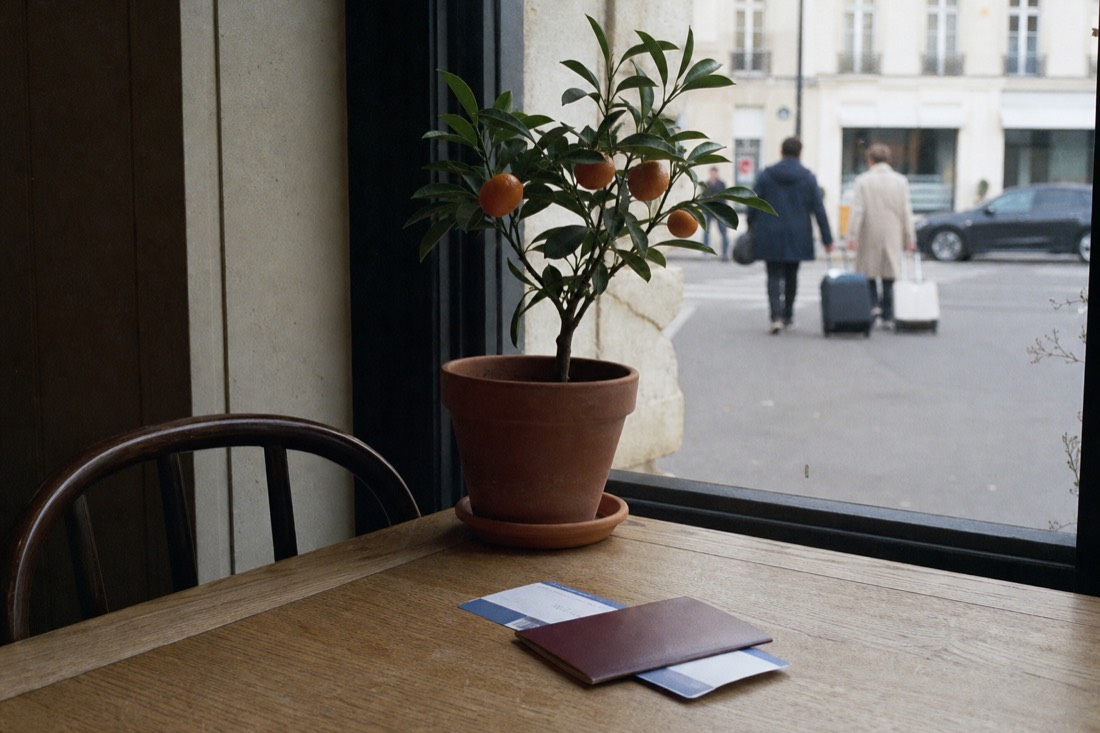
Tet is the one calendar event that overrides weather logic. The city empties as families gather, firecracker-red decorations go up, and for a few days even famous pho counters go dark. Arriving mid-Tet expecting a street food blitz is the classic planning mistake in an otherwise fine February window.
| Tet year | New year date | Expected closures |
|---|---|---|
| 2026 | February 17 | Offices closed February 16-20, resuming February 23 |
| 2027 | February 6 | Public holiday expected February 3-11 |
Paperwork, by contrast, is flexible enough to ignore for date-picking. Vietnam's official e-visa runs up to 90 days at $25 single entry or $50 multiple, and citizens of many countries get 45 days visa-free, so the season, not the stamp, should drive your calendar. Once dates are set, the what to eat guide turns good weather into a plan.
What is the best month to visit Hanoi?
November, by a nose over October. Temperatures sit at 20-25C, rainfall drops to roughly 50 mm across about seven days, humidity eases, and street eating is comfortable from dawn pho to late bia hoi. October offers nearly identical conditions, and the whole September-December stretch is reliable. April to June is the good spring alternative.
Which months should you avoid in Hanoi?
July and August. Average highs run 34-35C with brutal humidity, monthly rainfall reaches 290-310 mm over 16-17 wet days, and typhoon season peaks. Recent summers have set records, with one August afternoon measuring 40.3C and perceived heat above 50C. Also treat the Tet week, in late January or February depending on the year, as a soft closure.
When is rainy season in Hanoi?
May through October, heaviest in July and August. Rain typically arrives as a violent late-afternoon downpour rather than all-day drizzle, so mornings and evenings often stay workable. The season overlaps with typhoons on the northern coast, which occasionally push storm days over the city. By November the rain largely switches off.
Is Hanoi worth visiting during Tet?
Only if atmosphere is your goal rather than food. Tet brings decorations, temple visits and a rare quiet to the streets, but many restaurants and stalls close for several days and government offices shut for about a week. Tet 2027 falls on February 6 with holidays expected February 3-11. Food-first travelers should book around it.
Your next Hanoi experience
Check your date before planning the rest of the day
Small-group Hanoi food walk
Taste a changing selection of Hanoi dishes with a local guide in a group of up to eight.
Old Quarter pickup; otherwise 41 Luong Van Can. Food tastings and a drink included. Menu varies; dietary requests need advance confirmation.
An editorial starting point. Confirm your party’s requirements with the operator.
Choose a date to see scheduled departures. Final availability and price are confirmed on Viator.
No verified option fits those requirements. Adjust your choices or reset to explore the general recommendations.
Compare options, fit your schedule & check your budget
Small-group Hanoi food walk · 3h. Taste a changing selection of Hanoi dishes with a local guide in a group of up to eight. Old Quarter pickup; otherwise 41 Luong Van Can. Food tastings and a drink included. Menu varies; dietary requests need advance confirmation.
Hanoi six-brew coffee workshop · 3h. Make and compare phin, egg and coconut coffee with an English-speaking coffee host. Three hours; ingredients, equipment and snacks included. Travel to the Hoang Hoa Tham meeting point yourself. Some tastings contain alcohol; confirm alternatives and child participation.
Rose Kitchen market and cooking class · 4.5h. Shop at a local market, cook a selected Vietnamese menu and share the meal in a garden-villa kitchen. Allow 4–4.5 hours depending on option. Menu choices vary; pho or bun cha must be selected. Check pickup option. Vegan menu available by arrangement.