Hanoi Old Quarter Food: The 36 Streets, Where to Eat, and When to Go
The Old Quarter packs Hanoi's most famous single-dish shops into a medieval street grid. This is how the 36 streets work, where to eat, and when the streets go car-free.
 Written with Mai Trần, Hanoi food tour guide and culinary specialist

Short answer
Yes, the Old Quarter is worth it: the 36 guild streets hold Hanoi's most famous single-dish shops, from Pho Gia Truyen on Bat Dan to Cha Ca La Vong, serving since 1871, plus more than 100 ancient temples, pagodas and guild halls. Street meals run 20,000 to 90,000 VND. Come hungry in the morning, return at night, and aim for Friday to Sunday, when the streets around Hoan Kiem Lake go pedestrian from about 7 pm.
Cha Ca Street is named after a single dish. One restaurant, Cha Ca La Vong, has grilled turmeric fish at number 14 since 1871, and the street eventually took the name of the food. That is the Old Quarter in miniature: a medieval merchant district where streets were named for what they sold, and where a handful of them still sell exactly that, a century and a half later.
Is Hanoi's Old Quarter worth visiting?
Yes, and for eaters it is the single highest-density food destination in Vietnam. The Old Quarter concentrates Hanoi's benchmark single-dish shops, its most storied cafes and its loudest beer street into a walkable grid that also holds more than 100 ancient temples, pagodas and guild halls.
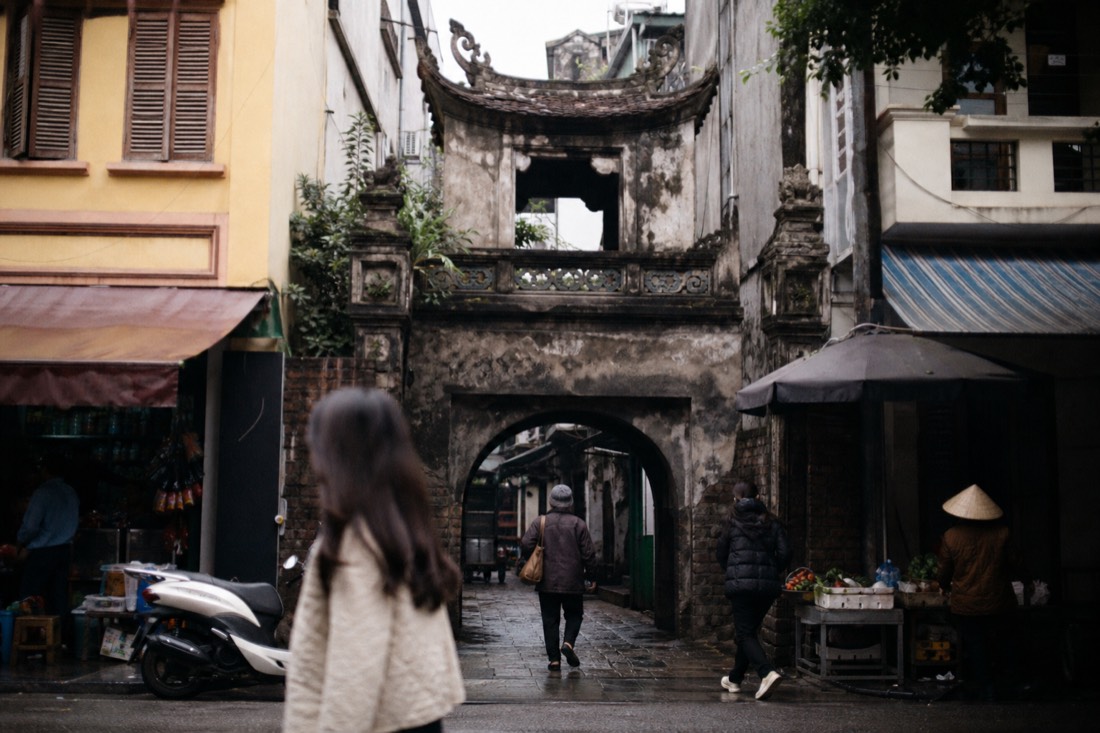
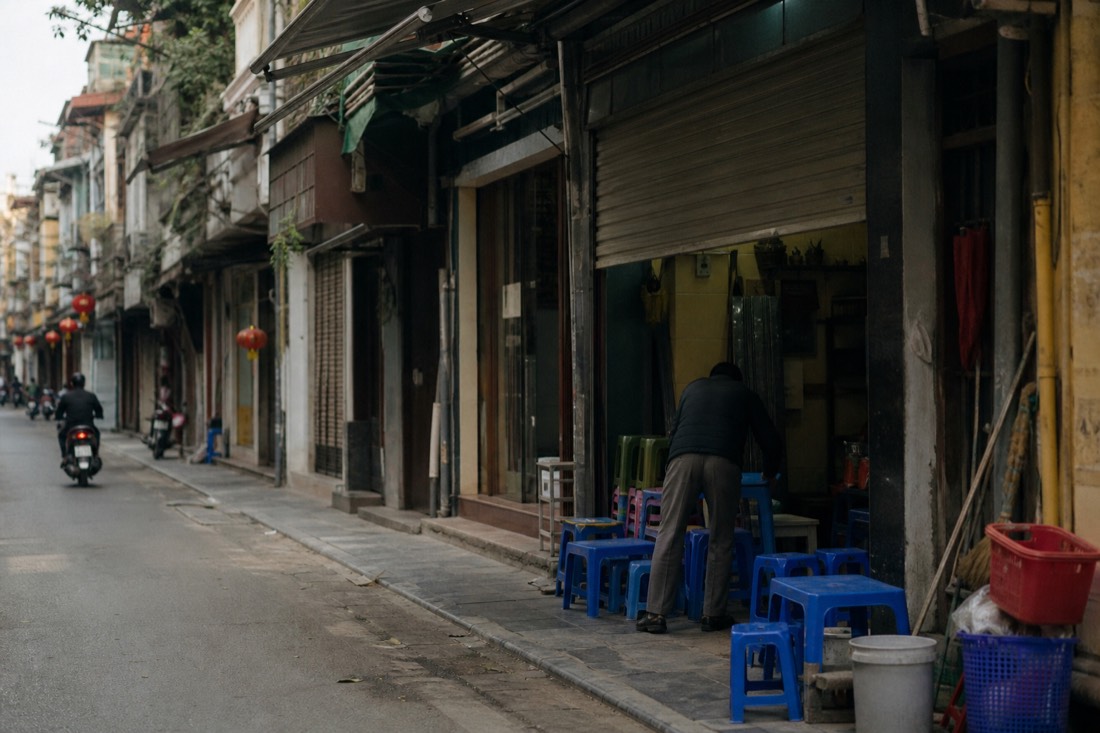
The district earns its reputation on layering. The same block can hold a 19th-century shophouse, a communal temple, a pho queue and a stack of plastic stools that becomes a restaurant at 6 pm. Nothing is staged for visitors; the food shops predate tourism by generations and still serve a mostly local crowd, especially at breakfast and lunch.
The wider city's recognition keeps climbing too. Michelin has covered Vietnam since 2023, and the 2026 selection gave Hanoi four One-Star restaurants and 23 Bib Gourmands, the value-for-money list where old-school street cooking dominates. Weather is the honest caveat: April to June and September to December are the comfortable walking months, while June to August runs hot, humid and rainy, which matters in a district you explore entirely on foot.
What are the 36 streets of Hanoi?
The "36 streets" are the guild streets of the old merchant quarter, most named "Hang" plus the goods once made or sold there: Hang Bac for silver, Hang Gai for silk. The area is bounded by Hang Dau to the north, Phung Hung to the west, Tran Nhat Duat and Tran Quang Khai to the east, and the Hang Bong, Hang Gai, Cau Go and Hang Thung line to the south.
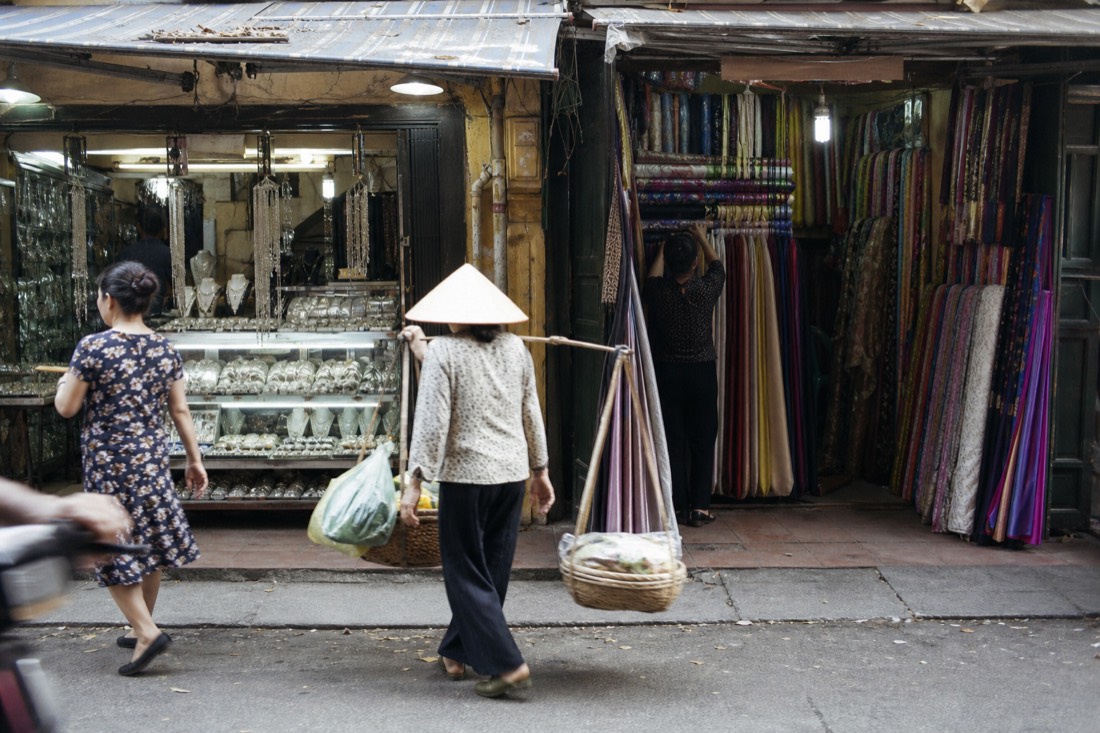
Thirty-six was the count of guilds, and while the modern district holds more streets than that, the naming logic survives everywhere. "Hang" roughly means "merchandise." Read the street signs and you are reading a medieval market directory.
| Street | The name means | Why eaters go now |
|---|---|---|
| Cha Ca | Grilled fish | Cha Ca La Vong at no. 14, one dish since 1871, about 200,000 VND per person |
| Hang Manh | Bamboo blinds | Bun Cha Dac Kim at no. 1, full set 70,000 to 90,000 VND |
| Bat Dan | Earthenware bowls | Pho Gia Truyen at no. 49, the benchmark morning pho |
| Hang Bac | Silver | Jewellery shops still, with snack stalls between them |
| Hang Gai | Silk | Silk and tailoring; the southern boundary of the quarter |
| Ta Hien | (No trade in the name) | The 70-metre bia hoi lane, 20-plus serving points nightly |
The guild-street idea also explains why Hanoi food is so address-specific. Specialisation is the district's founding principle, and the food shops inherited it: one dish, one address, one serving window. The city-wide dish list built on that logic is in the what to eat in Hanoi guide.
Where should you eat in the Old Quarter?
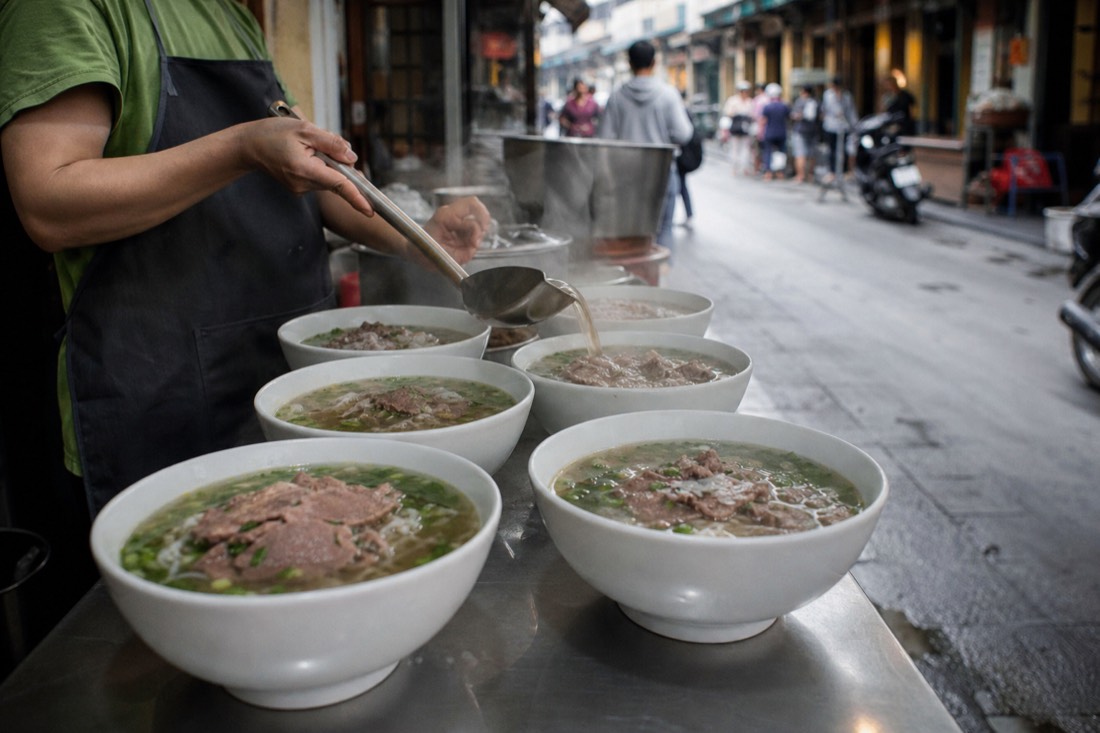
Start with the anchors: morning pho at Pho Gia Truyen on Bat Dan, a bun cha lunch at Dac Kim on Hang Manh, egg coffee at Cafe Giang on Nguyen Huu Huan, the Dong Xuan market alley for snacks, and Ta Hien for bia hoi after dark. Cha Ca La Vong is the sit-down splurge.
| Stop | Address | Order | 2026 price (VND) | Window |
|---|---|---|---|---|
| Pho Gia Truyen | 49 Bat Dan | Beef pho | 60,000 to 80,000 | 6 to 11 am, 5 to 9 pm |
| Bun Cha Dac Kim | 1 Hang Manh | Bun cha full set | 70,000 to 90,000 | 10:30 am to 3 pm |
| Cafe Giang | 39 Nguyen Huu Huan | Egg coffee | 35,000 | All day |
| Cha Ca La Vong | 14 Cha Ca | Turmeric fish with dill | ~200,000 per person | Lunch and dinner |
| Dong Xuan alley | Beside Dong Xuan Market | Shrimp cakes, snail noodles | Snack prices | Daytime into evening |
| Ta Hien | The whole lane | Bia hoi by the glass | 10,000 to 15,000 | Evening |
One honest footnote: the single most famous bun cha shop, the Michelin-listed Huong Lien where Anthony Bourdain brought Barack Obama in May 2016, is not in the Old Quarter; it sits further south. Old Quarter regulars mostly shrug and point you to Dac Kim anyway.
When is the weekend walking street?
Every Friday evening from around 7 pm through Sunday night, the streets around Hoan Kiem Lake and much of the Old Quarter close to traffic. The weekend night market runs Friday to Sunday from about 6 pm to 11 pm along a roughly 3-kilometre stretch, with thousands of stalls.
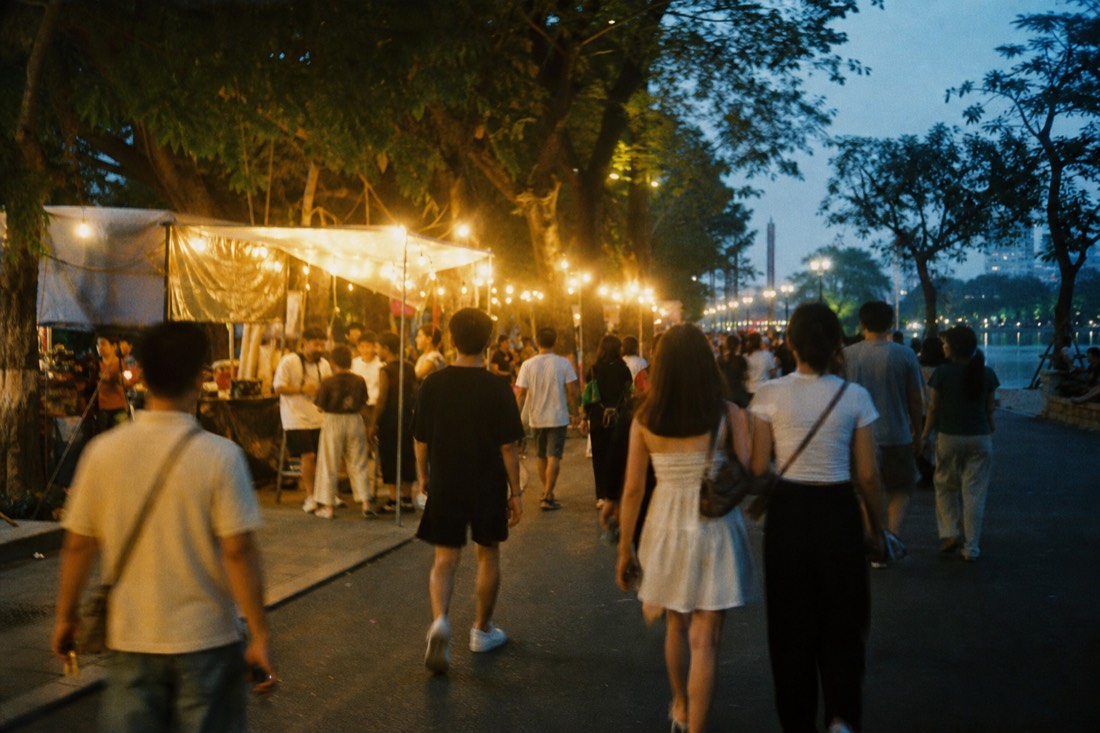
The car-free window changes the district's personality completely. Streets that spend the week as scooter rivers become promenades, stages appear, and food stalls spread into the roadway. It is the easiest time to eat outdoors with small children, and the hardest time to find a quiet corner.
| Zone | Days | Hours | What happens |
|---|---|---|---|
| Hoan Kiem walking street | Friday to Sunday | From ~7 pm Friday through Sunday night | Pedestrian zone around the lake and quarter |
| Old Quarter night market | Friday to Sunday | ~6 pm to 11 pm | Street food and souvenir stalls along ~3 km |
| Dong Xuan Market, main hall | Daily | 6 am to 6 pm | Wholesale and dry goods; food alley beside it |
| Dong Xuan weekend night market | Friday to Sunday | 6 pm to 10:30 pm | Over 4,000 stalls, Xam singing on Saturdays |
How do you find your way around the 36 streets?
Read the signs. Most street names begin with Hang, meaning merchandise, and the second word is what the street once sold. Four edges box the quarter in: Hang Dau to the north, Phung Hung to the west, Tran Nhat Duat and Tran Quang Khai to the east, and the Hang Bong to Hang Thung line to the south.
Inside those edges the grid is medieval, which means it is not a grid at all. Streets bend, change name at a junction, and narrow without warning. The saving grace is scale: the whole quarter is small enough to cross on foot, and every edge is a landmark you cannot mistake for an interior street.
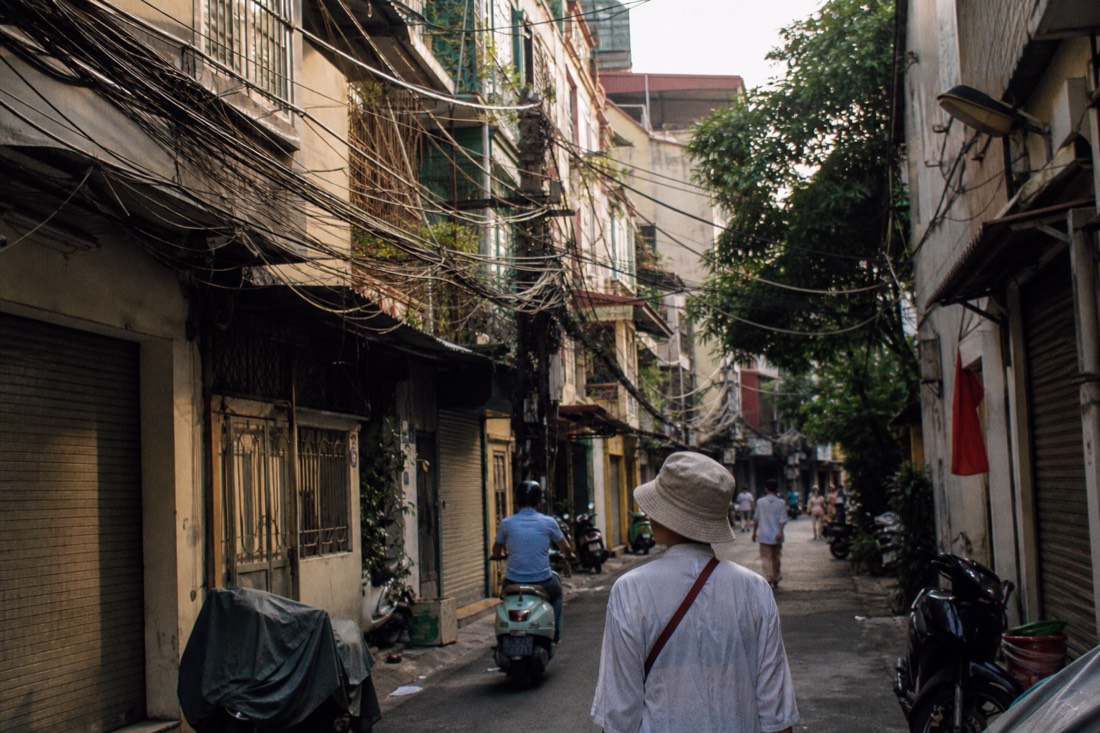
The buildings explain the food. The classic Old Quarter shophouse is a tube: a narrow street frontage, a long corridor running back, a kitchen and family rooms behind it. That shape suits a business selling one dish to a queue, and it is why the benchmark shops hold a pot, a grill and a row of stools, and nothing else. Specialisation here was never only a marketing choice. The buildings encourage it.
Use the guild names as a memory system. Bat Dan meant earthenware bowls and now means the morning pho queue. Hang Manh meant bamboo blinds and now means bun cha. Cha Ca meant nothing until one restaurant renamed the street after its own dish. Once you connect a few names to a few plates, the district stops being a maze.
| Edge | Street | How you know you have crossed it |
|---|---|---|
| North | Hang Dau | Traffic opens out toward the citadel side and the shophouses thin |
| West | Phung Hung | The rail line and its arches, with the Train Street corridor beyond |
| East | Tran Nhat Duat, Tran Quang Khai | Wide, fast dyke roads running along the river |
| South | Hang Bong, Hang Gai, Cau Go, Hang Thung | Hoan Kiem Lake and its open pavements appear |
Those western arches are also the fastest orientation trick in the district: if you can hear or see the railway, you are on the edge, not the middle. What happens along that corridor, and the current access rules there, is covered in the Train Street guide.
When does the Old Quarter get too crowded to eat comfortably?
The pinch points are small, fixed and predictable: Ta Hien's 70-metre lane with more than 20 beer points, the 200-metre Dong Xuan food alley, and the roughly 3 kilometres of car-free street on Friday, Saturday and Sunday evenings. Weekday lunch queues at the benchmark shops look bad but clear fast.
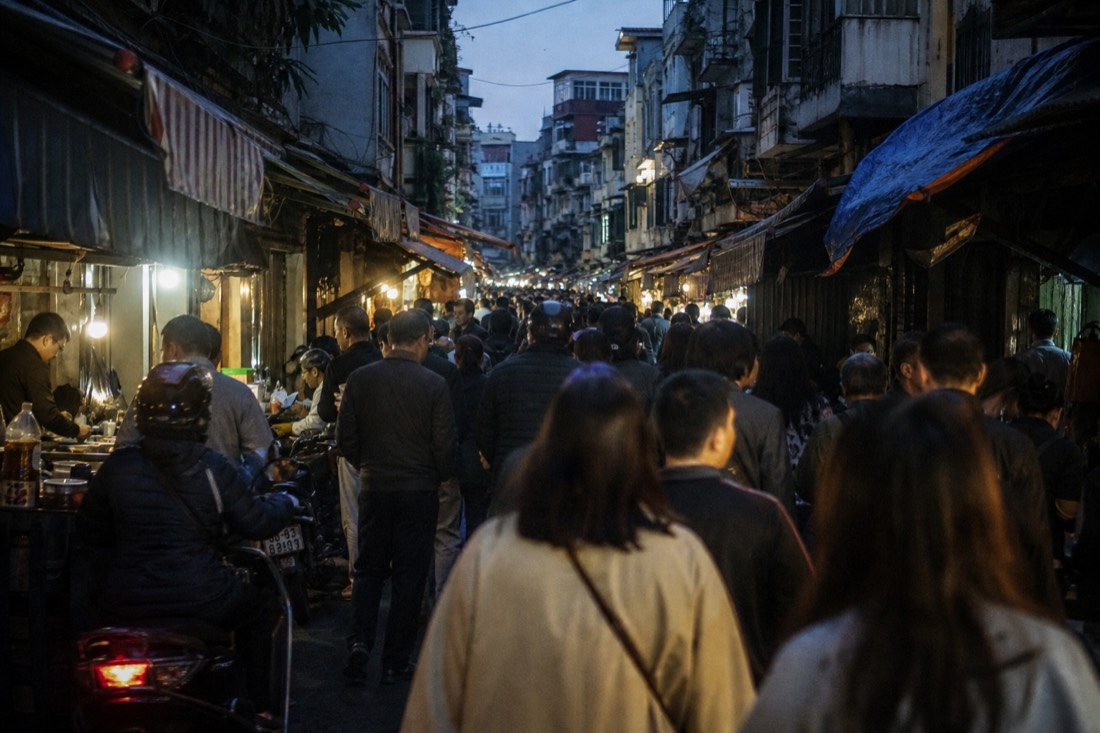
Crowding here is a function of geometry rather than volume. The quarter's lanes were laid out for handcarts, so a few hundred extra people in a 70-metre lane reads as gridlock while the same crowd on a boulevard would be unremarkable. Add the visitor trend and the effect compounds: Hanoi counted about 12.14 million visitors between January and April 2026, up 20.9% on the same period a year earlier.
The weekend layer is the big variable. From around 7 pm on Friday until Sunday night the streets around Hoan Kiem Lake go pedestrian, and the night market trades from about 6 pm to 11 pm along that 3-kilometre stretch. Dong Xuan runs its own weekend night market from 6 pm to 10:30 pm with over 4,000 stalls and Xam singing on Saturdays, while the main hall keeps daytime hours of 6 am to 6 pm. Those hours are published. The pressure pattern below is our own read, from repeated evenings in the district.
These are planning allowances we use when pacing a night of eating, not published figures.
| Pinch point | When it tightens | Why | What we do instead |
|---|---|---|---|
| Ta Hien lane | From about 7 pm, worst on weekend nights | 20-plus serving points on 70 metres of pavement | Take a stool before 6:30, or drink on the side streets feeding into it |
| Dong Xuan food alley | Late afternoon into the evening rush | Hundreds of counters in 200 metres, two-way foot traffic | Graze it in daylight, when the market hall is still trading |
| Weekend night market | Friday to Sunday, roughly 7 to 10 pm | About 3 km of car-free street, plus stalls in the roadway | Walk it against the flow, or eat first and browse after 10 |
| Benchmark pho shop | The first hour of the morning window | One pot, one dish, a local breakfast crowd | Join the queue anyway; it moves faster than it looks |
| Bun cha grills | 12 to 1 | A short lunch window shared with office workers | Eat at 11 or at 2, not at noon |
None of this argues for staying away. It argues for eating at the edges of the peak, which is also when the food is at its best. Where you sleep changes the calculus too, since a room inside the quarter turns the crowd into a five-minute problem rather than a taxi ride, a trade-off weighed in the where to stay guide.
What does a worked Old Quarter evening look like?
A good evening runs north to south, or the reverse, and never doubles back. Start in the Dong Xuan alley while it is still light, walk down to Ta Hien for a glass as the lane fills, then finish with egg coffee on Nguyen Huu Huan. Four stops, three short walks, no backtracking.
The route works because it follows the district's own schedule instead of fighting it. The market alley is a daylight and early-evening operation, Ta Hien wakes up after dark, and the cafe row keeps going long after the food stalls have packed up. Reverse that order and you arrive everywhere at the wrong hour.
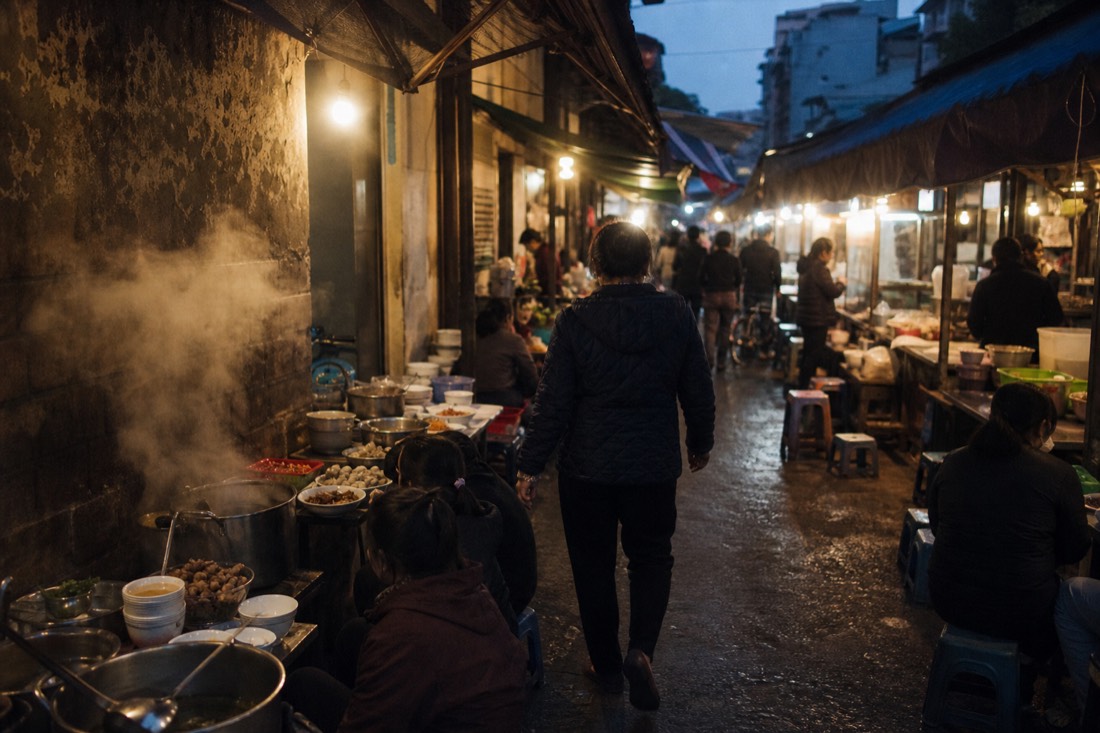
Build in more walking than feels necessary. The distances are trivial, but appetite needs the gaps, and the walk between stops is where the district actually reveals itself: a temple gate between two shops, a woman frying banh goi in a doorway, a whole street of one trade. If the evening lands on a Friday, Saturday or Sunday, expect the last leg to take longer, because the roadway itself becomes the market.
These are planning allowances we use when pacing a night of eating, not published figures.
| Stop | Order | Walking allowance to the next stop | Time to allow |
|---|---|---|---|
| Dong Xuan food alley | Shrimp cakes, snail noodles, a shared bowl | 10 to 15 minutes south | 45 minutes |
| A grill on the way down | Skewers, standing up | 5 to 10 minutes | 20 minutes |
| Ta Hien | Bia hoi at 10,000 to 15,000 VND a glass | 5 to 10 minutes east | 1 hour |
| Cafe Giang, 39 Nguyen Huu Huan | Egg coffee at 35,000 VND | End of the route | 45 minutes |
Swap the second stop for a sit-down dinner at Cha Ca La Vong, at about 200,000 VND per person, if you want one proper meal in the middle rather than a chain of snacks. Groups who would rather have the route and the ordering handled can take the private Old Quarter walk instead, and there is a three-hour small-group version capped at eight for people who want company. A wider two-wheeled alternative that reaches past the quarter is set out in the motorbike food tour options.
Which famous Old Quarter corners does a local guide still rate?
Ta Hien and the Dong Xuan alley still earn their reputations, as long as you go at the right hour. Cafe Giang I send everyone to. The weekend night market I treat as a walk rather than a meal, and Cha Ca Street is worth it once, as a sit-down evening, not as street food.
I am Mai Trần, a Hanoi local, and I have been walking visitors through these streets since 2015. People expect a guide to dismiss the famous corners. I do not. Fame here is usually earned and old, and the shops that draw crowds mostly draw them for the same reason Hanoians have queued at them for decades. What changes is the hour at which the fame is worth putting up with.
Ta Hien at 6 pm is a neighbourhood drinking street. Ta Hien at 9 pm on a Saturday is a crowd with beer in it. Both are real, and the first one is the one I book my time for. The Dong Xuan alley works the same way: brilliant in the late afternoon while the counters are cooking hard, chaotic and slow once the night market crowd folds into it.
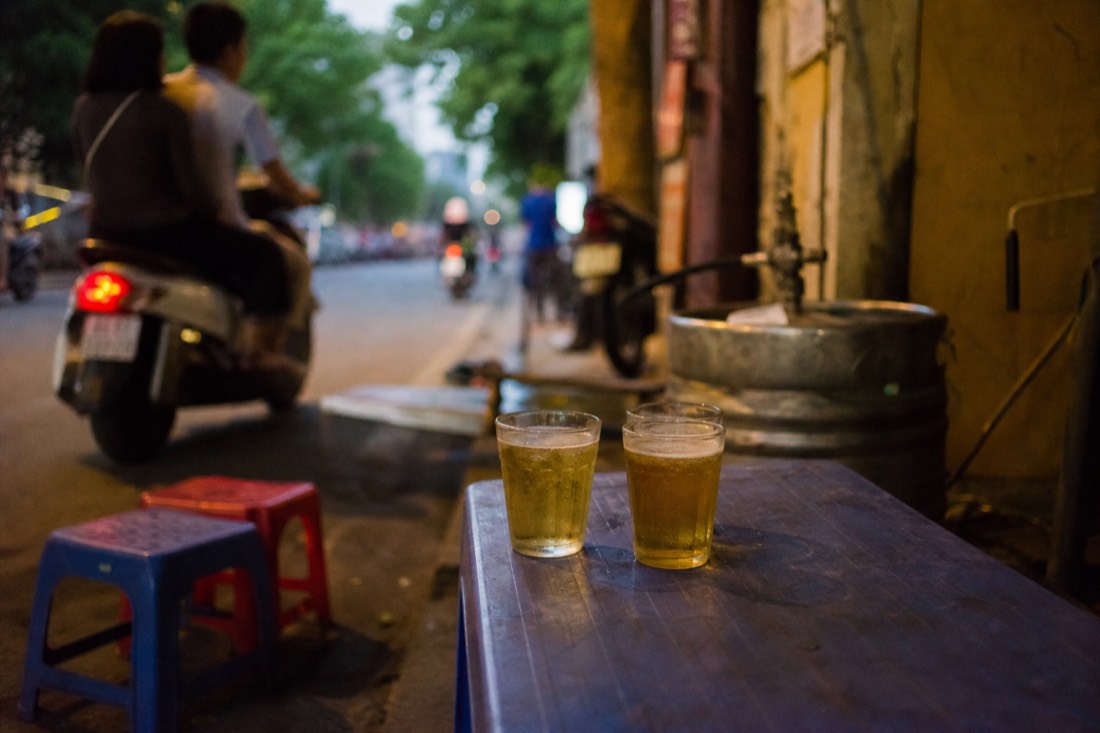
The one thing I do steer people away from is treating the weekend market as dinner. The stalls in the roadway are for grazing while you walk, and the district's serious kitchens are one street off it, quieter and cheaper. My other habit is unglamorous: I eat where the turnover is highest and the food comes hot off the flame, and I have kept a decade of guests healthy on that rule alone, which is the same logic set out in the street food safety notes.
| The famous corner | What I still rate it for | When I would skip it |
|---|---|---|
| Ta Hien | Cheap fresh beer, the best people-watching in the city | Weekend nights after 9, unless the crowd is the point |
| Dong Xuan alley | The widest snack range in the district, in 200 metres | Once the night market crowd arrives |
| Cafe Giang | The original 1946 egg coffee, still family-run at 35,000 VND | Never; go, but go outside the tour-bus hour |
| Cha Ca Street | One tableside dish, done since 1871 | Any night you want street prices |
| Weekend night market | A walk, a skewer, live performance, car-free streets | If you came for a proper meal |
| Bat Dan pho queue | The benchmark bowl, worth the wait | Outside the 6 to 11 and 5 to 9 windows, when it is shut |
Is the Old Quarter better by day or by night?
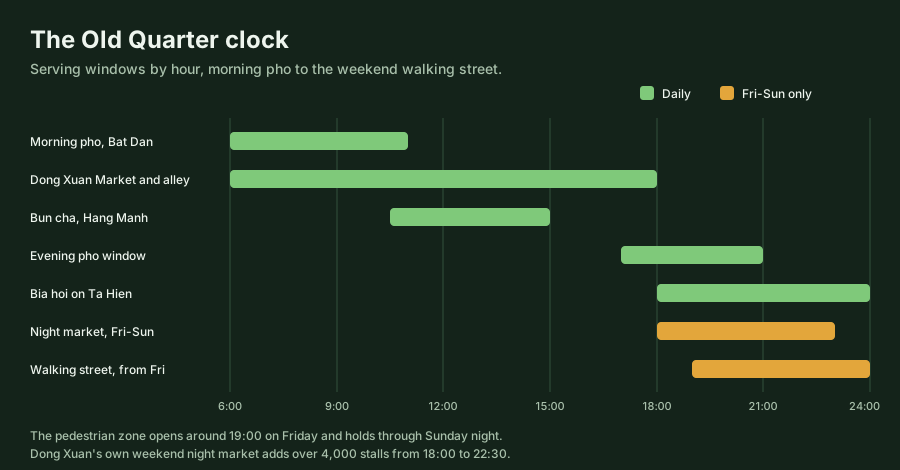
Both, for different stomachs. Daytime belongs to the benchmark dishes: pho until 11, bun cha until 3, market snacks in between. Night belongs to atmosphere: bia hoi on Ta Hien, the second pho window, and the weekend market. Eat the classics by day and graze after dark.
The mistake visitors make is arriving at 4 pm expecting the full menu. By then the pho pots are cold and the bun cha grills are done; the district is between shifts. Time your first day around the serving windows below, then spend an evening in the north of the quarter, where Train Street's cafe-lined rail corridor runs along the district's western edge and the night market noise builds toward Ta Hien. How the wider street food scene works beyond this district, including costs and safety, is covered in the Hanoi street food guide.
What are the 36 streets of Hanoi?
The guild streets of the old merchant quarter, most named "Hang" plus the goods once traded there: Hang Bac for silver, Hang Gai for silk. Thirty-six was the historical guild count. The area is bounded by Hang Dau, Phung Hung, the river dyke roads and the Hang Bong to Hang Thung line, and it remains Hanoi's densest food district.When is the Hanoi walking street open?
The pedestrian zone around Hoan Kiem Lake and the Old Quarter runs every weekend, from around 7 pm on Friday through Sunday night. The night market operates Friday to Sunday, roughly 6 pm to 11 pm. On weeknights traffic returns and the district goes back to scooters, so plan the car-free experience for a weekend.Where did Obama eat bun cha in Hanoi?
At Bun Cha Huong Lien, with Anthony Bourdain, in May 2016. The shop is Michelin-listed and still serves the Obama Combo for around 100,000 VND. It sits south of the Old Quarter rather than inside it; within the quarter itself, locals rate Bun Cha Dac Kim at 1 Hang Manh as the stronger bowl.Is the Old Quarter too touristy?
The main lanes get crowded, especially on weekend nights, but the food economy still serves locals first. Breakfast and lunch queues at the benchmark shops are mostly Hanoians, and prices stay at street level: 20,000 to 90,000 VND for nearly everything. Step one street off the night market route and the district turns residential fast.Your next Hanoi experience
Check your date before planning the rest of the day
Old Quarter food walk
Follow an English-speaking guide between six or seven food and drink tastings.
Old Quarter pickup on foot or meet at 38 Bat Su. Train Street is an optional upgrade. Dishes depend on the day.
An editorial starting point. Confirm your party’s requirements with the operator.
Choose a date to see scheduled departures. Final availability and price are confirmed on Viator.
No verified option fits those requirements. Adjust your choices or reset to explore the general recommendations.
Compare options, fit your schedule & check your budget
Old Quarter food walk · 3h. Follow an English-speaking guide between six or seven food and drink tastings. Old Quarter pickup on foot or meet at 38 Bat Su. Train Street is an optional upgrade. Dishes depend on the day.
Private Old Quarter food walk · 3h. Explore the Old Quarter with a guide dedicated to your own party. Old Quarter pickup or 38 Bat Su. Tastings included. Confirm specific dietary and access needs before booking.