An Hour on Train Street With an Egg Coffee
What an hour at a Hanoi Train Street cafe involves: minimum spends, posted train times, the stool ritual before each pass, and the 60,000 VND egg coffee.
 By Mai Trần, Hanoi food tour guide and culinary specialist
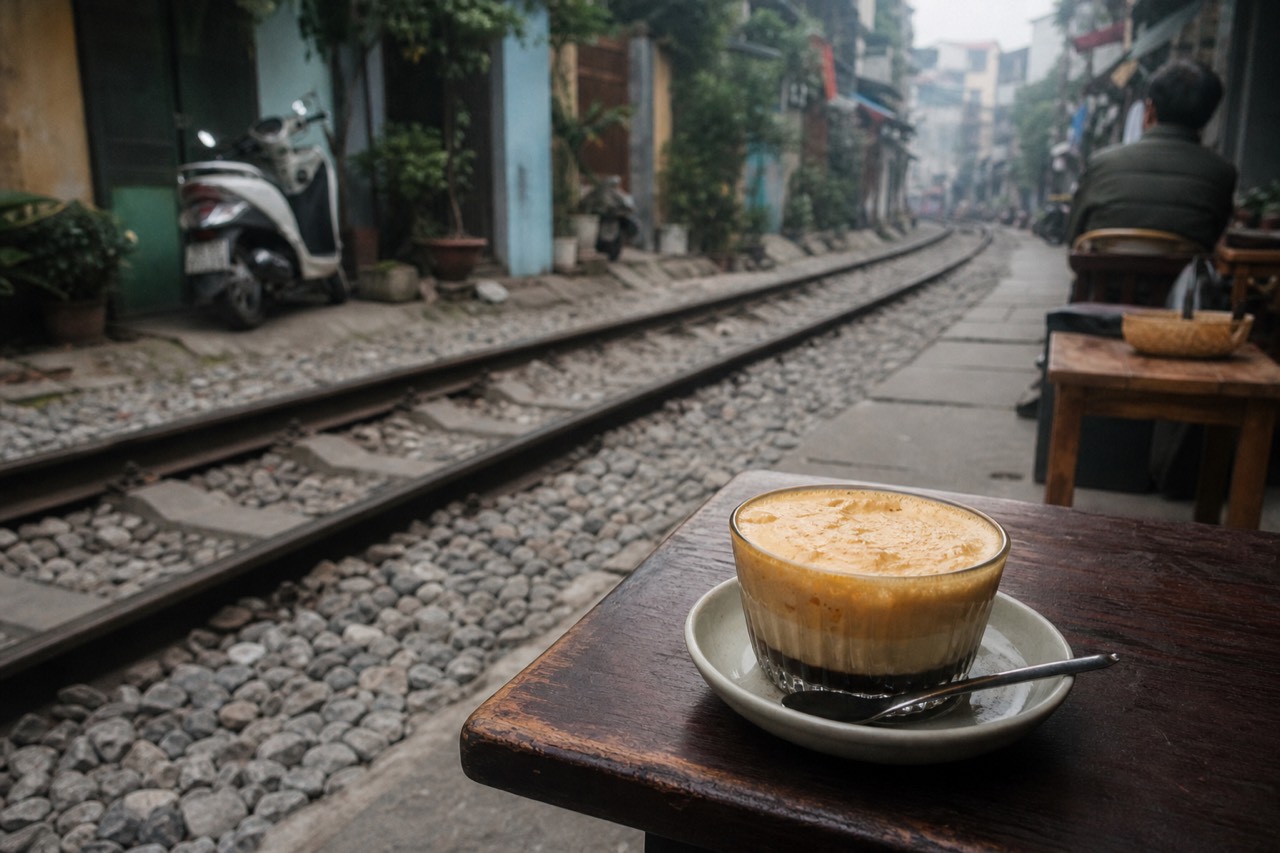
There is a particular quiet that falls on Train Street about two minutes before a train, and after a decade of drinking coffee on these tracks I can feel it before I hear anything. Conversations drop. A cafe owner whistles once. Stools scrape backwards against brick walls, gates swing shut, and forty strangers holding phones and egg coffees all look the same direction at once. Then the horn, the rush of warm air, a wall of blue carriages a metre from your knees, and it is over in twenty seconds. Everyone laughs. The stools scrape back out.
I bring guests here for exactly one hour, usually late afternoon into evening, and I always order the same thing. Here is how that hour works in 2026, and how to do it without being the person who gets the street closed.
How do you actually get onto Train Street in 2026?
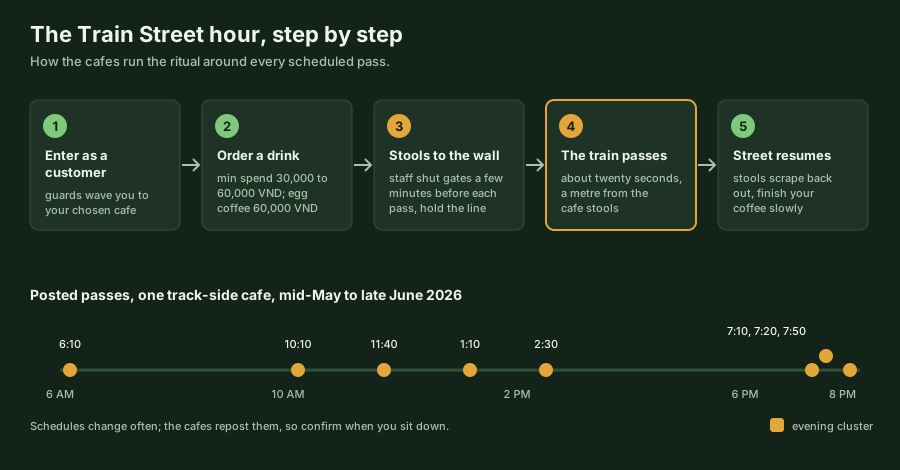
You enter as a cafe customer. The street is barricaded, and guards wave you through when you point at a cafe; ordering a drink with a minimum spend of roughly 30,000 to 60,000 VND per person is the ticket. Walking the tracks freelance is exactly what gets the street closed.
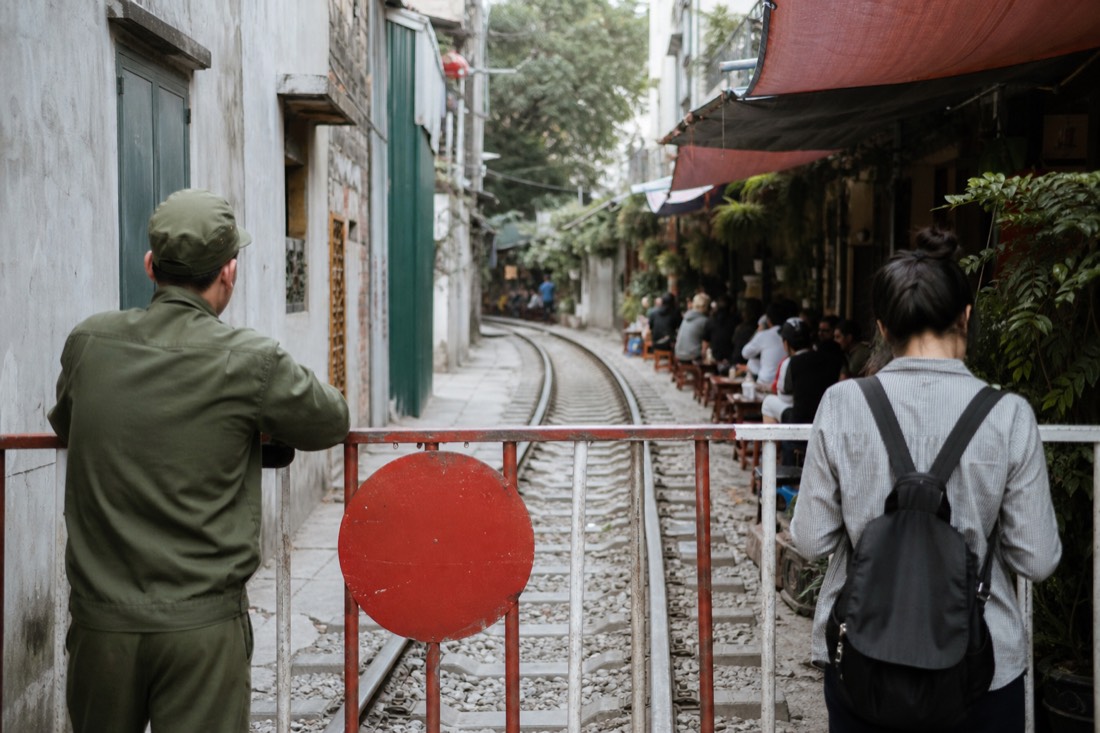
The barricades confuse first-timers, so let me translate them. After the safety crackdowns, the corridor between Le Duan and Phung Hung operates on a simple social contract: track-side cafes may seat paying customers, and everyone else stays out. The current access rundown at Revitrip matches what I see weekly: open, barricaded, and workable if you behave like a customer rather than a trespasser. My fuller notes on the street's rules and history live in the Train Street guide.
Treat the whole arrangement as current but changeable. The railway authority has publicly floated rerouting trains away from the cafe corridor, with reports pointing at mid-2026. Nobody on the street knows how that ends, including the owners pouring your coffee. If Train Street matters to you, go this trip, not next trip.
When do trains actually pass the cafes?
On a schedule that keeps changing. One track-side cafe posted times for mid-May to late June 2026: 6:10, 10:10 and 11:40 in the morning, 1:10 and 2:30 in the afternoon, then an evening cluster at 7:10, 7:20 and 7:50. Treat any published list as provisional and confirm with your cafe.
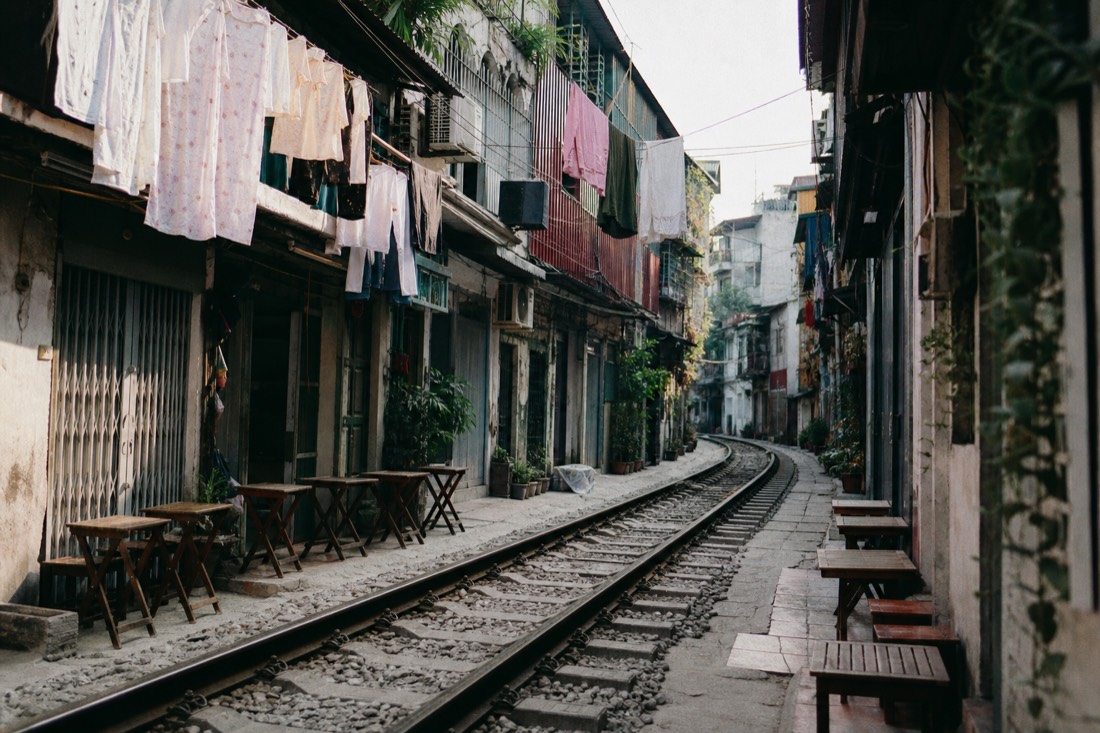
That posted schedule, from the Hanoi 1990s cafe, is the most concrete timetable I have seen this year, and it came with a catch: the cafe wanted advance reservations for seats during that period. The evening cluster is why I aim my hour at roughly 6:45 to 7:45 PM. Three passes in forty minutes is the best value on the timetable.
| Period | Posted passes (May to late June 2026) |
|---|---|
| Morning | 6:10 AM, 10:10 AM, 11:40 AM |
| Afternoon | 1:10 PM, 2:30 PM |
| Evening | 7:10 PM, 7:20 PM, 7:50 PM |
| Reality check | Schedules vary; cafes repost them, so ask when you sit down |
The ritual, minute by minute
The hour has a rhythm you only notice after a few visits. You arrive, pick a cafe, and claim a stool with your order. For me the order is always ca phe trung, the whipped egg yolk coffee whose 1946 origin story, a bartender improvising through a milk shortage, is well told in Vietcetera's history of the drink. Then you wait, and the waiting is the point. Kids do homework in doorways. Laundry hangs over the rails. A dog owns the sunniest sleeper.
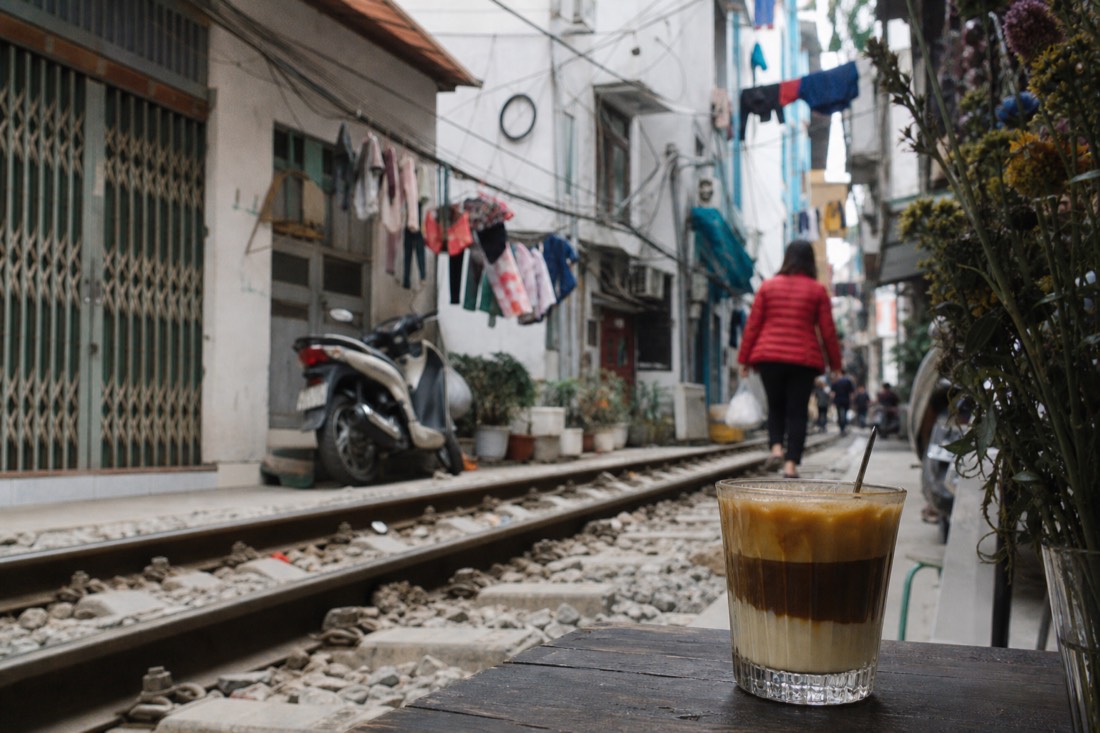
The drink deserves your attention while you wait. Ca phe trung arrives as two layers that refuse to mix: strong dark coffee underneath, and above it a thick golden foam of egg yolk whipped with condensed milk, dense enough to hold a spoon upright for a second. You drink through the foam rather than stirring it in, so every sip lands bitter and sweet at once. It is closer to a warm dessert than to a flat white, which is why it suits an hour of sitting still so well. The full story of the drink, the family that invented it and where a cup costs half the track-side price is in my egg coffee guide.
A few minutes before each pass, staff close the entry gates and pull every stool against the wall, holding the safety line until the train has gone. Follow their hands, not your camera. The choreography is practised and quick, and it exists because a metre of clearance is not a metaphor here.
The egg coffee itself costs more on the tracks than anywhere else in Hanoi, and I pay it happily, because I am renting a front-row seat, not just buying a drink.
| The cost of the hour | VND |
|---|---|
| Egg coffee at a Train Street cafe | 60,000 |
| Egg coffee citywide, for comparison | 30,000 to 45,000 |
| Typical minimum spend per person, track-side | 30,000 to 60,000 |
| A second drink, if a pass runs late | 30,000 to 60,000 |
If the price difference offends you, drink your second cup at the source, down in the Old Quarter where the founding family's cafes pour the same layers for half the money and no cup needs a barricade.
Which seat should you take?
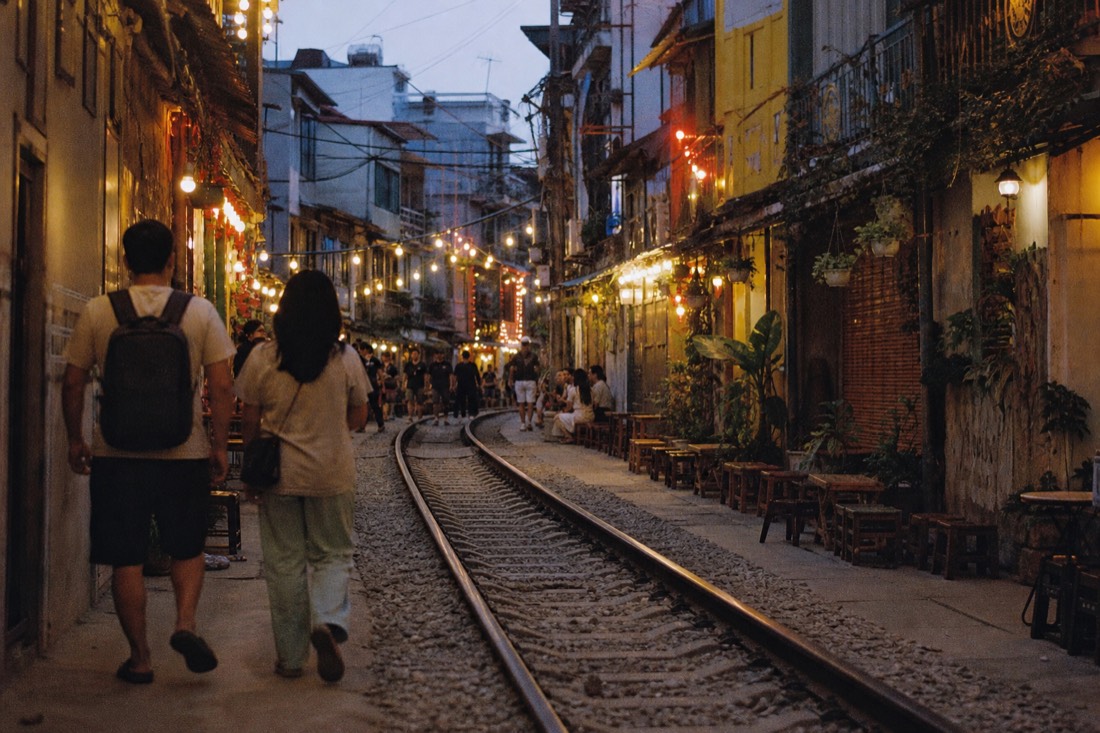
Ground-floor stools give you the classic shot and the adrenaline; the train fills your whole field of vision. Second-floor balconies, which several track-side cafes have added, give you the better photograph, especially after sunset when the string lights come on around 6 to 7 PM and the corridor turns amber. On my guiding weeks I split the difference: balcony for the first pass, trackside stool for the second.
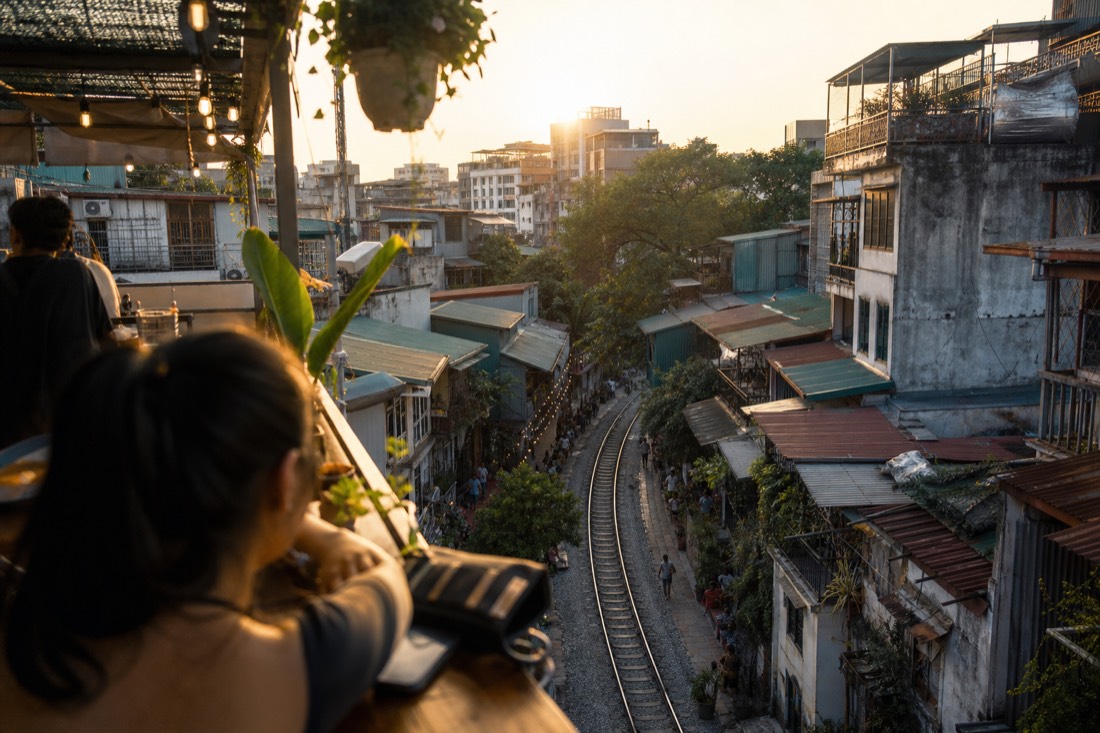
A word on manners, because the street's future depends on them. Keep every part of yourself and your bag behind the line the staff set, however tempting the angle. No tripods across the rails, no stepping out for one last frame when the horn has already sounded, no leaning past the person beside you. The owners police this hard because their livelihoods ride on nobody getting clipped, and the fastest way to earn the whole corridor another shutdown is one tourist who thought the rules were for other people. Sit, sip, film from your stool. The train is close enough that you could not miss the shot if you tried.
| Time of day | What you get | My take |
|---|---|---|
| Early morning, 6:10 pass | Empty street, soft light, sleepy cafes | Best for photographers, hard on holiday sleep |
| Late morning to afternoon | Two to three passes, full sun, moderate crowds | Fine, but hot from June to August |
| Evening, from about 6 PM | Warm lights, three posted passes, biggest buzz | My pick: book ahead, arrive by 6:45 |
Is Train Street worth building an evening around?
For most first visits to Hanoi, yes, once, and with food attached. An hour is enough; two trains are better than one; and the street sits close enough to the Old Quarter that it stitches naturally onto an eating route like my after-dark crawl. If your dates are flexible, the cooler months make the stool-sitting far more pleasant, something I weigh up in the best time to visit guide.
Coffee on the tracks is a strange little ceremony when you describe it plainly: pay double for a drink, sit in a corridor, wait for a scheduled interruption. But the drink is Hanoi's own invention, the corridor is lived-in rather than staged, and the interruption arrives with a horn and a rush of wind that makes the whole street cheer. There are ways to understand this city that take years. This one takes an hour and costs 60,000 VND, and I will be somewhere down that corridor next week, whistling my guests' stools back from the wall. Vietnamese coffee has more rooms in it than one street, though, and the rest of the coffee culture is where I send everyone next.
Your next Hanoi experience
Check your date before planning the rest of the day
Old Quarter food walk
Follow an English-speaking guide between six or seven food and drink tastings.
Old Quarter pickup on foot or meet at 38 Bat Su. Train Street is an optional upgrade. Dishes depend on the day.
An editorial starting point. Confirm your party’s requirements with the operator.
Choose a date to see scheduled departures. Final availability and price are confirmed on Viator.
No verified option fits those requirements. Adjust your choices or reset to explore the general recommendations.
Compare options, fit your schedule & check your budget
Old Quarter food walk · 3h. Follow an English-speaking guide between six or seven food and drink tastings. Old Quarter pickup on foot or meet at 38 Bat Su. Train Street is an optional upgrade. Dishes depend on the day.
Hanoi six-brew coffee workshop · 3h. Make and compare phin, egg and coconut coffee with an English-speaking coffee host. Three hours; ingredients, equipment and snacks included. Travel to the Hoang Hoa Tham meeting point yourself. Some tastings contain alcohol; confirm alternatives and child participation.