A Day Out by Army Jeep: How Hanoi Looks from the Back of a GAZ-69
A Hanoi guide on the olive-green GAZ-69 jeeps that carry eaters through her city: the Soviet machine's history, where the food routes go, and who should ride.
 By Mai Trần, Hanoi food tour guide and culinary specialist

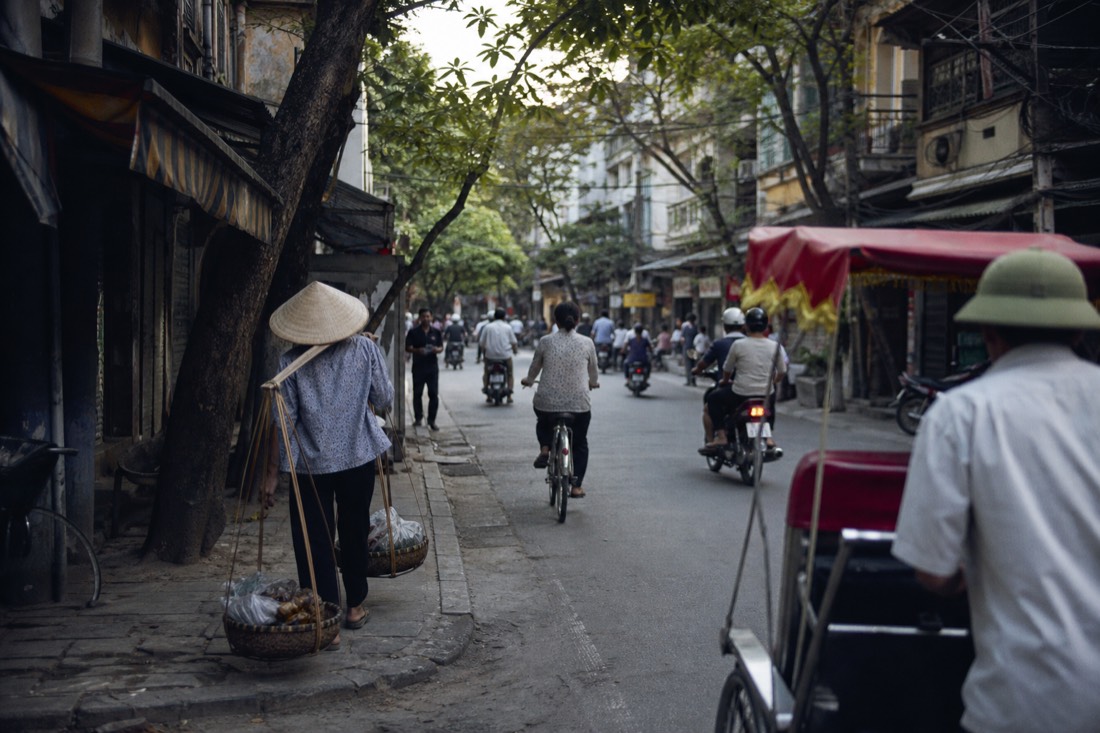
I hear them before I see them. My walking groups will be mid-bite in some alley off Hang Buom when a low mechanical growl rolls up the street, and around the corner comes an olive-green jeep with its top off, four delighted foreigners in the back, and a driver threading a vehicle designed for Soviet mud through a lane built for shoulder poles. My guests always turn. Someone always asks, "what is that?"
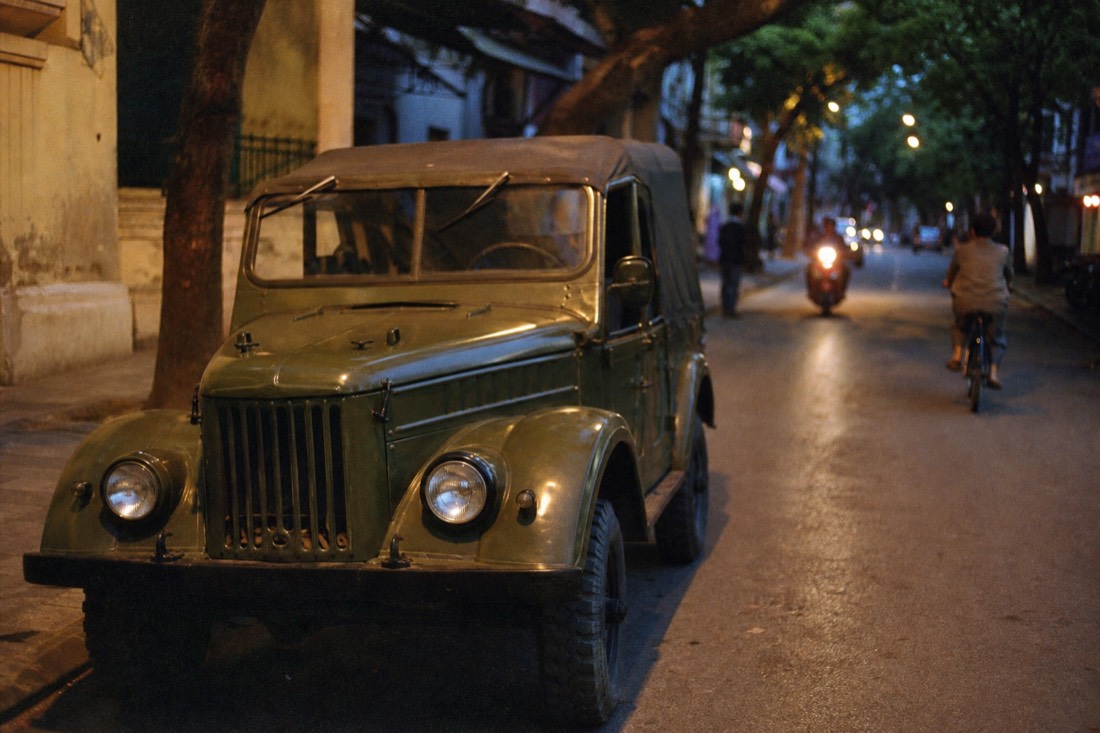
That army-jeep silhouette has a second career in Hanoi. The historical GAZ-69 discussed below is part of that story; the current Viator food-tour listing specifies a UAZ, so do not book it expecting a guaranteed GAZ-69. The same model that once hauled soldiers and radios now hauls hungry visitors between bun cha grills and egg coffee, and it has become one of the most booked food experiences in the city. I walk for a living, so I have opinions about eating from a vehicle. But I also know exactly why people love this one.
What is a GAZ-69, and why is one carrying tourists?
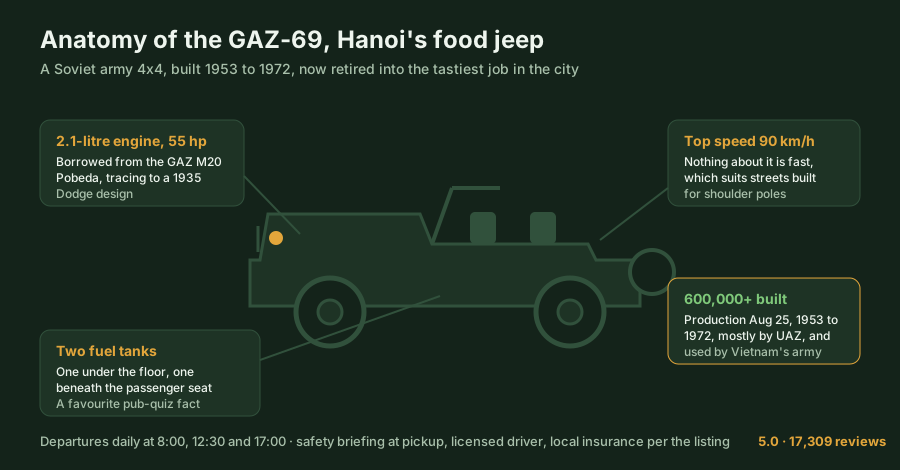
The GAZ-69 is a Soviet light 4x4 that entered production on August 25, 1953 at the GAZ plant in Gorky; over 600,000 were built by the end of 1972, most of them by UAZ after 1956. The Vietnamese People's Army ran them through the 1950s and 60s, and restored survivors now carry food and culture tours around Hanoi.
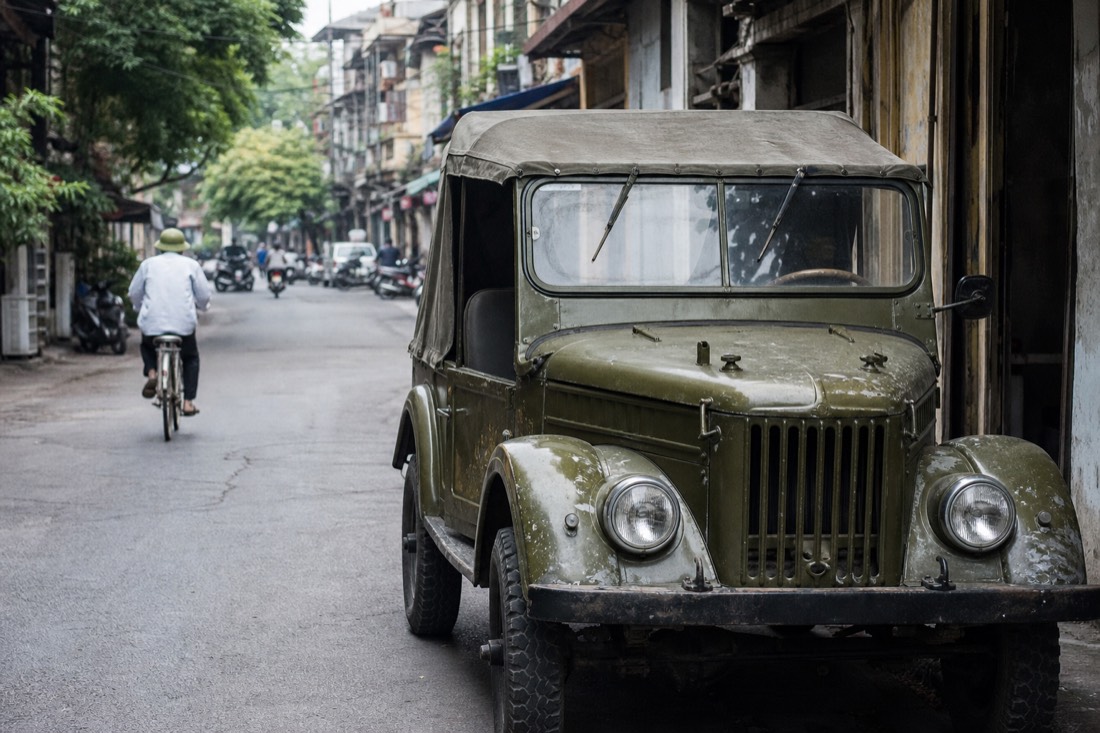
The machine has good stories in its bones. Its 2.1-litre engine came from the GAZ M20 Pobeda, which itself traced back to a 1935 Dodge design whose blueprints reportedly cost 20,000 dollars. It makes 55 horsepower, tops out at 90 km/h, and carries two fuel tanks, one under the floor and one under the passenger seat, which delights every engineer who ever rides in one. Nothing about it is fast. Everything about it is loud, open, and impossible to ignore, which is precisely the point when the ride is the show.
| GAZ-69 spec | Figure |
|---|---|
| Production start | August 25, 1953, GAZ plant, Gorky |
| Total built by end of 1972 | More than 600,000, mostly by UAZ after 1956 |
| Engine | 2.1-litre, from the GAZ M20 Pobeda |
| Power | 55 hp |
| Top speed | 90 km/h (56 mph) |
| Fuel tanks | Two: under the floor, and under the passenger seat |
In the Old Quarter these jeeps are simply part of the street picture now, the way cyclos were when I was younger. I see the convoys daily, and I can report one honest fact from ground level: the people in the back are always grinning.
Where do the jeep food routes actually go?
Further than any walking tour can. The operator's routes take in the Old Quarter and French Quarter, Hoan Kiem and West Lake, Tran Quoc Temple, the Temple of Literature, the Opera House, Long Bien Bridge and the Red River floating villages, with street food stops threaded between the landmarks. That reach is the jeep's whole argument.
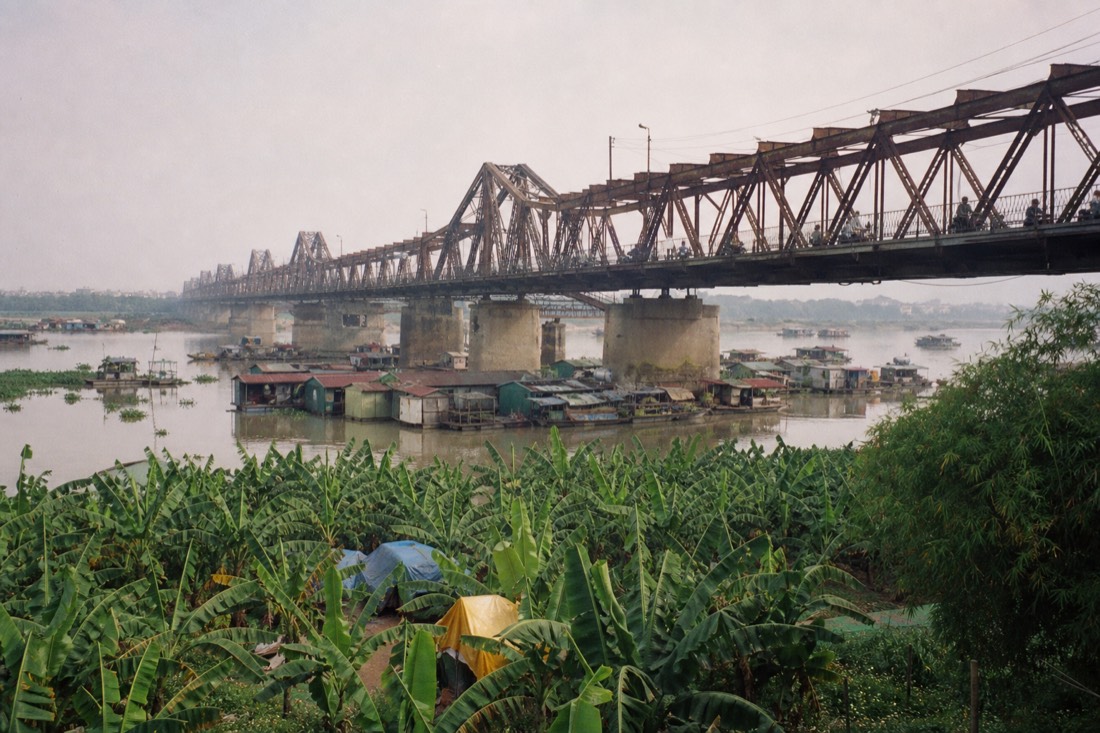
On foot, three hours buys you one neighbourhood done properly. On wheels, the same window covers the city's greatest hits plus the parts most visitors never reach, and for me the Long Bien side is the prize. The old bridge, the banana groves below it, the river communities: this is Hanoi ten minutes and a hundred years from the Old Quarter, and I love that the jeeps take people there. It is the same territory I cross on foot before sunrise when I shop, which I wrote about in my dawn wet market walk.
| Stop on the routes | What you are looking at |
|---|---|
| Old Quarter backstreets | The food lanes, taken at walking pace with engine noise |
| French Quarter and Opera House | Colonial boulevards, wide enough to actually drive |
| Hoan Kiem and West Lake | The two lakes that anchor the city's two moods |
| Tran Quoc Temple, Temple of Literature | The oldest pagoda and the old university grounds |
| Long Bien Bridge | The battered rail bridge across the Red River |
| Red River floating villages | River life and banana plantations below the bridge |
Guests who have taken the jeep day tell me the rhythm is ride, stop, eat, repeat, with a safety briefing at hotel pickup, a licensed driver at the wheel, and local insurance included per the listing. Departures run at 8:00, 12:30 and 17:00 daily, so the day fits around whatever else your Hanoi plans hold.
What do you eat on a jeep food day?
The listing covers food, drinks and an egg coffee, with stops at local eateries serving what the operator calls heirloom-recipe Hanoi specialties. Reviewers consistently describe the same canon I feed my own walking groups: the noodle soups, the grilled pork dishes, the banh mi, and the sweet finishers.
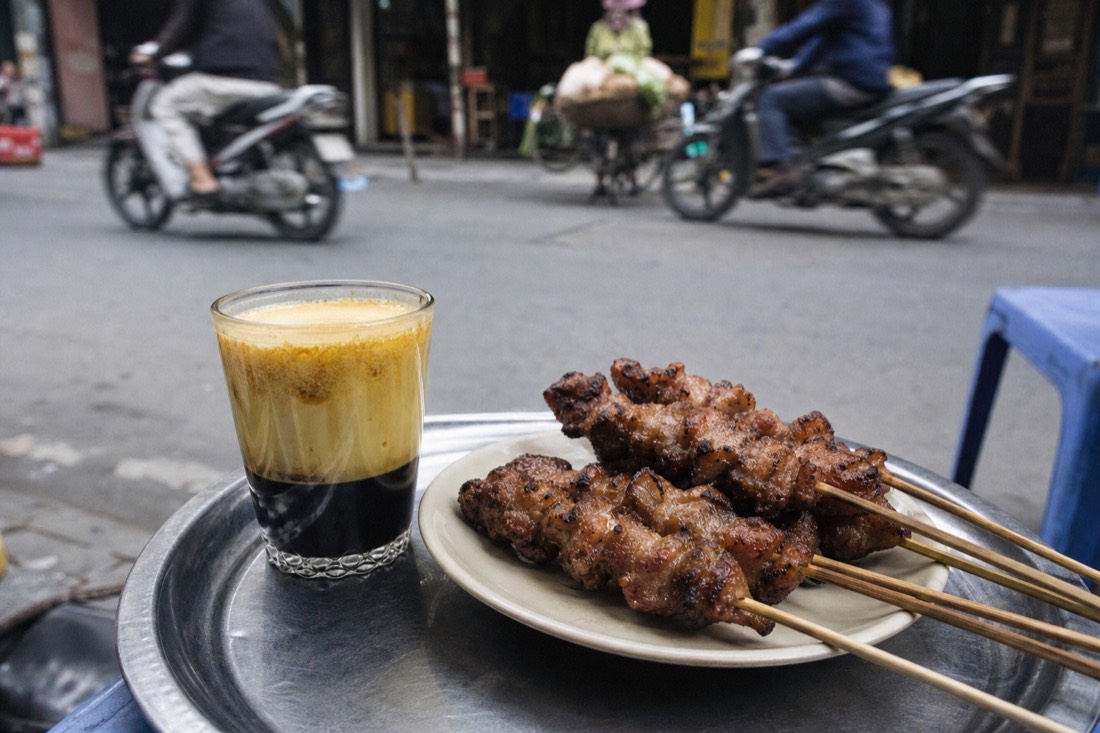
I cannot tell you which stall the jeep will park beside on your date; that is the driver's knowledge, not mine. I can tell you about the dishes, because they are my daily work. The grilled-pork smoke that hits you mid-ride at 11 AM means bun cha, the dish that became world famous when Barack Obama and Anthony Bourdain ate it at Bun Cha Huong Lien in 2016, and the one I have argued about my whole adult life in my bun cha obsession. The full menu of what this city does best is mapped in the what to eat in Hanoi guide; a jeep day samples that list with a windscreen view between courses.
There is also something the vehicle does to the eating that I only understood after years of watching the convoys unload. Arriving by jeep resets your appetite between stops. Walking tours build hunger gradually, street by street; the jeep delivers you fresh to each stall with ten minutes of wind and city in between, which is why guests come back describing six or seven tastings without the defeated fullness my walkers sometimes hit by stop four. The egg coffee at the end lands better when you did not climb four kilometres of pavement to earn it. I say this with professional envy and no hard feelings.
Jeep, motorbike, or your own two feet?
Honest answer from a walking guide: they solve different problems. Walking gives depth in one neighbourhood for the least money. The Minsk motorbike puts you inside the traffic. The jeep covers the most ground while keeping the group together in one vehicle, which is why families and mixed groups keep choosing it.
| Walking food tour | Vintage Minsk motorbike | GAZ-69 jeep | |
|---|---|---|---|
| Duration | ~3 h | 4.5 h | ~4 h |
| Top-rated example | 5.0, 2,582 reviews (Old Quarter walk) | 5.0, 7,101 reviews | 5.0, 17,309 reviews |
| Range | One neighbourhood, deeply | Citywide, in the traffic | Citywide, seated together |
| You are | On your feet | On the back of a bike, max 20 riders | In an open 4x4 with your group |
| Cost band | In the tens of dollars | Higher than walking | Higher than walking |
The traffic question decides it for many of my guests. Riding pillion through Hanoi traffic is thrilling and some travellers are simply not up for it, while the jeep gives the open-air ride without asking anyone to balance. The whole wheels-versus-walking decision tree lives on the motorbike food tours hub, with the Minsk motorbike tour as the two-wheeled alternative.
Who do I actually steer toward the jeep, when guests ask me straight? Three groups, reliably. Families whose members span seven to seventy, because everyone rides the same machine at the same comfort level. Travellers with one full day in Hanoi, because no other format covers this much city and this much food in a single booking. And couples where exactly one person wants a motorbike, because the jeep is the compromise that leaves nobody sulking. The people I steer away are the ones who want to linger: if your dream is forty unhurried minutes at one bun cha table, book a walk and give the driver's seat to someone else.
One seasonal note from someone who works outdoors here: April to June and September to December are the kind months, while June through August runs past 35C with real humidity, as the national tourism board's climate guide confirms. In high summer I would book the 17:00 departure and ride into the cooler evening; more on seasons in the best time to visit guide.
Should you book the jeep day?
And then, this is my one request, give the Old Quarter a slow morning on foot as well. The jeep shows you how the pieces of Hanoi fit together; walking shows you the stitching. Yesterday one of the green convoys rumbled past my group as we stood eating banh goi from paper bags, and the riders waved, and my guests waved back with greasy hands. Both sides were having the correct Hanoi day. There is no rule that you cannot have both.
Your next Hanoi experience
Check your date before planning the rest of the day
Hanoi food and culture by army jeep
Ride through backstreets and city landmarks, with a food stop at Hidden Gem Cafe.
Driver, food, drinks and Old Quarter pickup included. Current Viator listing specifies a UAZ jeep; vehicle model may differ from the historical GAZ-69. Boarding and some walking required; moderate fitness.
An editorial starting point. Confirm your party’s requirements with the operator.
Choose a date to see scheduled departures. Final availability and price are confirmed on Viator.
No verified option fits those requirements. Adjust your choices or reset to explore the general recommendations.
Compare options, fit your schedule & check your budget
Hanoi food and culture by army jeep · 4h. Ride through backstreets and city landmarks, with a food stop at Hidden Gem Cafe. Driver, food, drinks and Old Quarter pickup included. Current Viator listing specifies a UAZ jeep; vehicle model may differ from the historical GAZ-69. Boarding and some walking required; moderate fitness.
Hanoi food and culture by motorbike · 4.5h. Ride as a passenger with an experienced driver between Hanoi backstreets and food stops. Driver, helmet, poncho, food and drinks included. Not recommended during pregnancy or with spinal problems. Moderate fitness; confirm suitability with operator.
Small-group Hanoi food walk · 3h. Taste a changing selection of Hanoi dishes with a local guide in a group of up to eight. Old Quarter pickup; otherwise 41 Luong Van Can. Food tastings and a drink included. Menu varies; dietary requests need advance confirmation.