Bia Hoi Nights: The Corner Where Hanoi Drinks the World's Freshest Beer
A Hanoi guide's night at Bia Hoi Corner: how daily-brewed beer for under a dollar works, where the Ta Hien stalls sit, and what the 2026 pavement rules change.
 By Mai Trần, Hanoi food tour guide and culinary specialist

The first thing you learn at Bia Hoi Corner is how to sit. The stools are blue plastic, knee-high, built for someone half your size, and by eight on a Friday night there is exactly one free, wedged between a group of students and two Australians who have clearly been here a while. I have been drinking on this corner since before I started guiding in 2015, and the stool situation has never improved. Nobody wants it to.
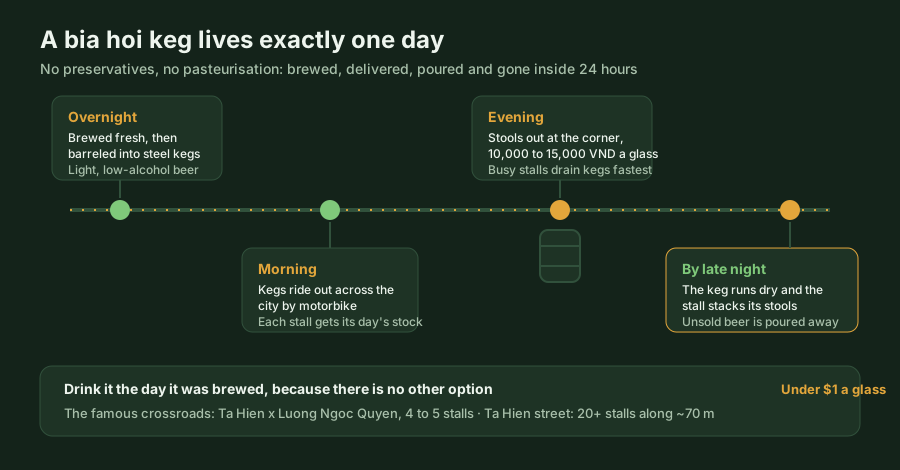
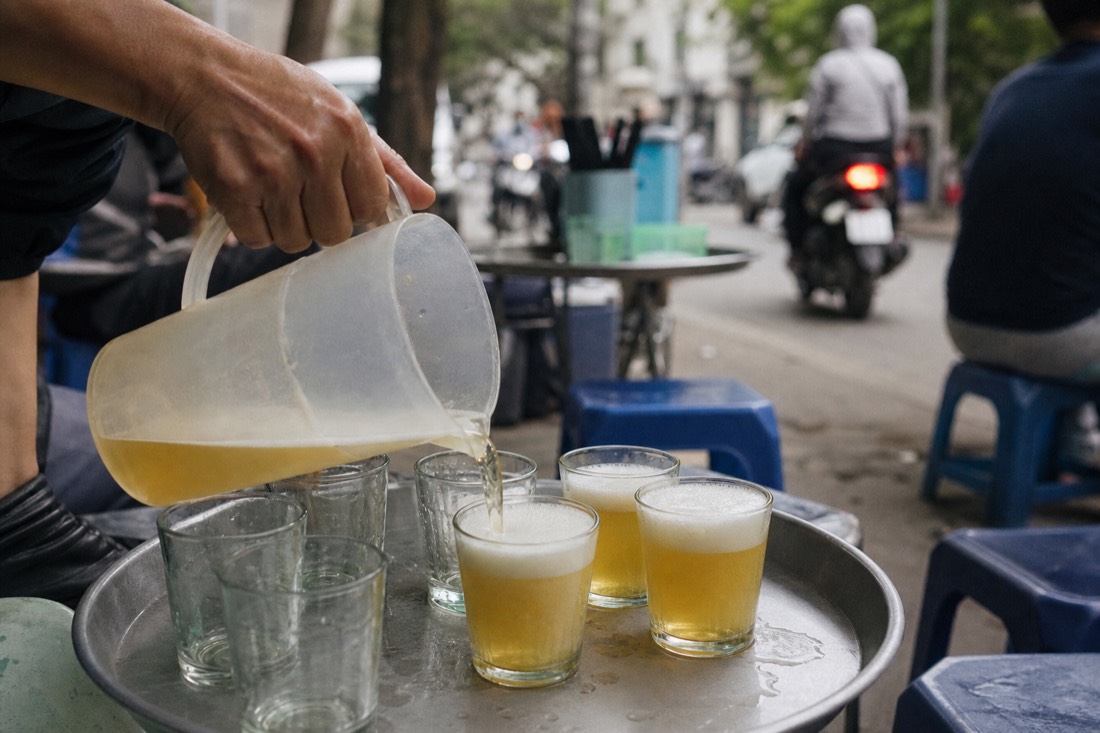
The beer arrives in a thick glass, pale gold, lightly fizzy, cold enough to sweat. It costs less than the parking fee for a motorbike. And here is the part that surprises my guests every single time: the keg it came from did not exist yesterday.
What is bia hoi, exactly?
Bia hoi is Hanoi's daily draft beer: light, low-alcohol, brewed fresh every day with no preservatives, delivered each morning and meant to be finished within 24 hours. A glass costs roughly 10,000 to 15,000 VND, well under a dollar, which is why people call it the cheapest beer in the world. Fresh is the better word.
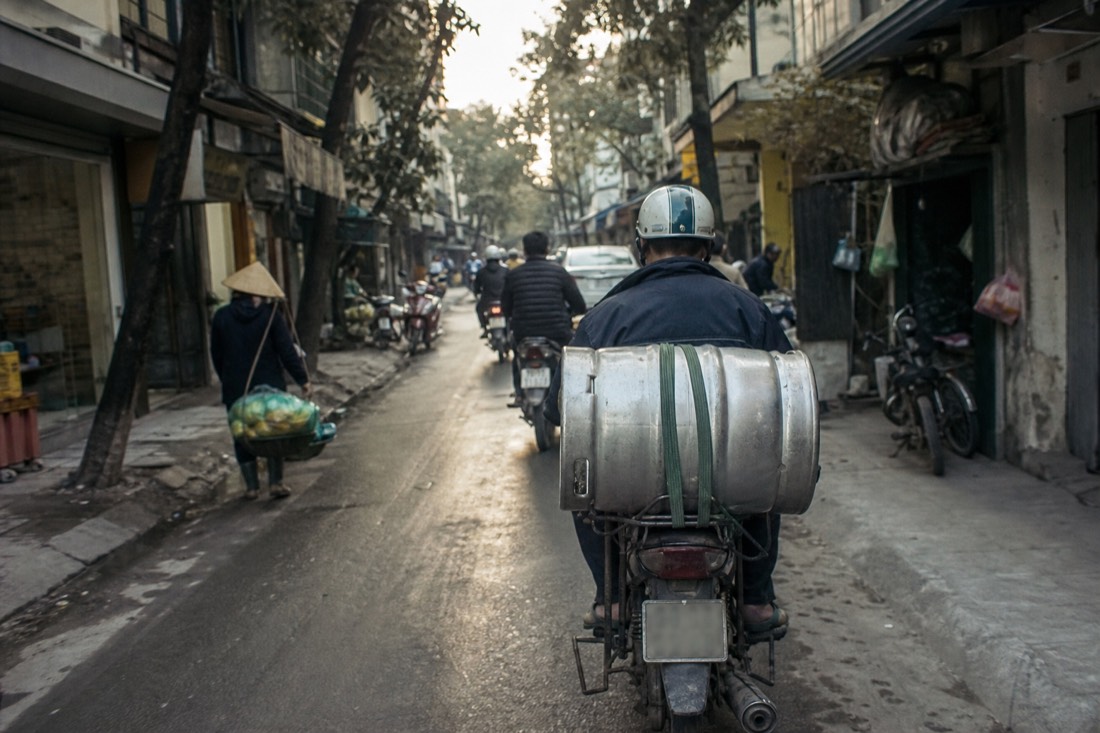
The system behind it is the charm. The beer is brewed overnight, barreled into steel kegs, and run out across the city by motorbike in the morning, kegs strapped to the back like fat silver passengers. Whatever a stall receives that morning is what it sells that night. When the keg runs dry, that is the evening. There is no pasteurisation and nothing added to stretch its life, so a keg that is not drained gets poured away, though on this corner that is a theoretical problem.
The taste matches the biography. Bia hoi is light, a little sweet, closer to 3 or 4 percent than a Western lager, and it goes down in a way that makes the arithmetic dangerous. My rule for guests: you are drinking glasses, not pints, and the point is the sitting, not the drinking.
Ordering is beautifully simple. You catch an eye, hold up fingers for how many glasses, and beer appears; nobody will hand you a menu because the menu is one word long. When Vietnamese tables toast, you will hear "mot, hai, ba, yo!", one two three cheers, and if a neighbouring table aims it at you, the polite response is to raise your glass and join. Some of my favourite conversations with strangers have started exactly that way, in two half-shared languages over glasses that cost less than the napkins would elsewhere.
Where exactly is Bia Hoi Corner?
The crossroads most visitors mean is the junction of Ta Hien and Luong Ngoc Quyen in the Old Quarter, a cluster of four or five stalls with pavement-only seating. The original Bia Hoi Corner sits at Luong Ngoc Quyen and Dinh Liet, about 500 metres away, while Ta Hien street itself runs roughly 70 metres with more than 20 bars and stalls.
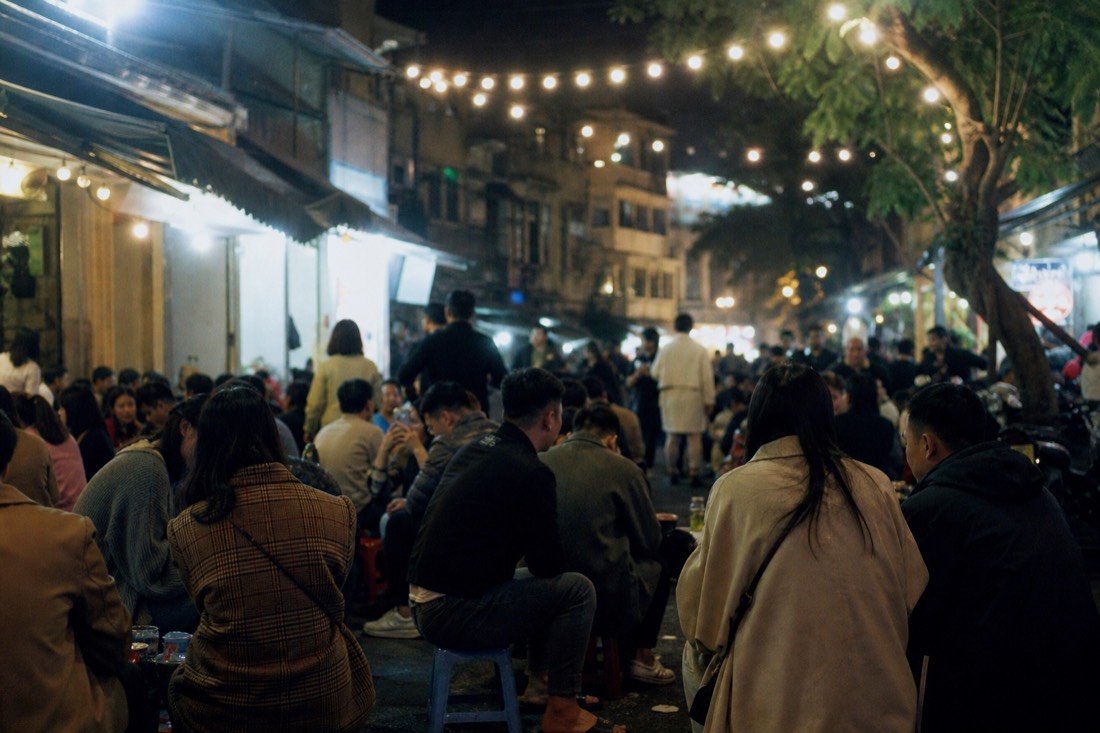
So there are really three overlapping places wearing one name, and it helps to know which one you are standing in. The famous crossroads is loud, international, and lit like a stage. Ta Hien street proper is the long tail of it, a narrow lane where the bars thicken and the music competes. The original corner at Dinh Liet is quieter and more local, the version of the scene that existed before anyone photographed it.
| Spot | Location | Scale | Feel |
|---|---|---|---|
| The famous crossroads | Ta Hien x Luong Ngoc Quyen | 4 to 5 stalls around the junction | Loud, touristy, pavement stools only, minimal food |
| Ta Hien street | ~70 m lane off the junction | 20+ bars and stalls | Bar-crawl energy, music, densest crowds |
| The original corner | Luong Ngoc Quyen x Dinh Liet, ~500 m away | A handful of old-school joints | Calmer, more local, the pre-Instagram version |
I take first-timers to the crossroads because the spectacle is half the product. When friends visit, we walk the extra 500 metres. The difference is audible before it is visible: the crossroads runs on speakers and shouted orders, while the Dinh Liet corner runs on conversation and the clack of glasses on metal tables. Neither is better. They are the same institution at two volumes, and a proper bia hoi education samples both in one night, fifteen slow minutes apart.
How much does a night at the corner cost?
Almost nothing, by any visitor's standard. Figure 10,000 to 15,000 VND a glass for the beer, 20,000 to 40,000 for a banh mi if you wander for food, and an egg coffee to finish at 30,000 to 45,000. Three glasses and a snack lands around 80,000 VND, roughly three US dollars.
Here is what a slow evening actually adds up to, using current Old Quarter street prices:
| Round | Item | 2026 price (VND) |
|---|---|---|
| 1 | Glass of bia hoi | 10,000 to 15,000 |
| 2 | Second glass, because the first was 4 minutes long | 10,000 to 15,000 |
| Snack | Banh mi from a nearby cart | 20,000 to 40,000 |
| 3 | One more, for the people-watching | 10,000 to 15,000 |
| Finish | Egg coffee on the walk home | 30,000 to 45,000 |
Tipping is not part of the ritual. As the Vietnam tipping guide lays out, tips are appreciated but never expected at street level; rounding up the bill is plenty. I find it funny, in the best way, that this happens in the same city where the 2026 Michelin selection lists four One-Star restaurants and 23 Bib Gourmands. Hanoi contains both, ten minutes' walk apart, and neither feels embarrassed by the other. The full budget picture for a day of eating here is in the Hanoi food prices guide.
Is bia hoi culture disappearing?
Not disappearing, but squeezed. Since December, Hanoi has installed close to 2,000 surveillance cameras and issued more than 3,000 fines in a push against pavement-blocking vendors, with penalties up to 6 million VND. Stalls now pull stools tighter to the wall, and the sprawl retreats when patrols pass, then flows back.
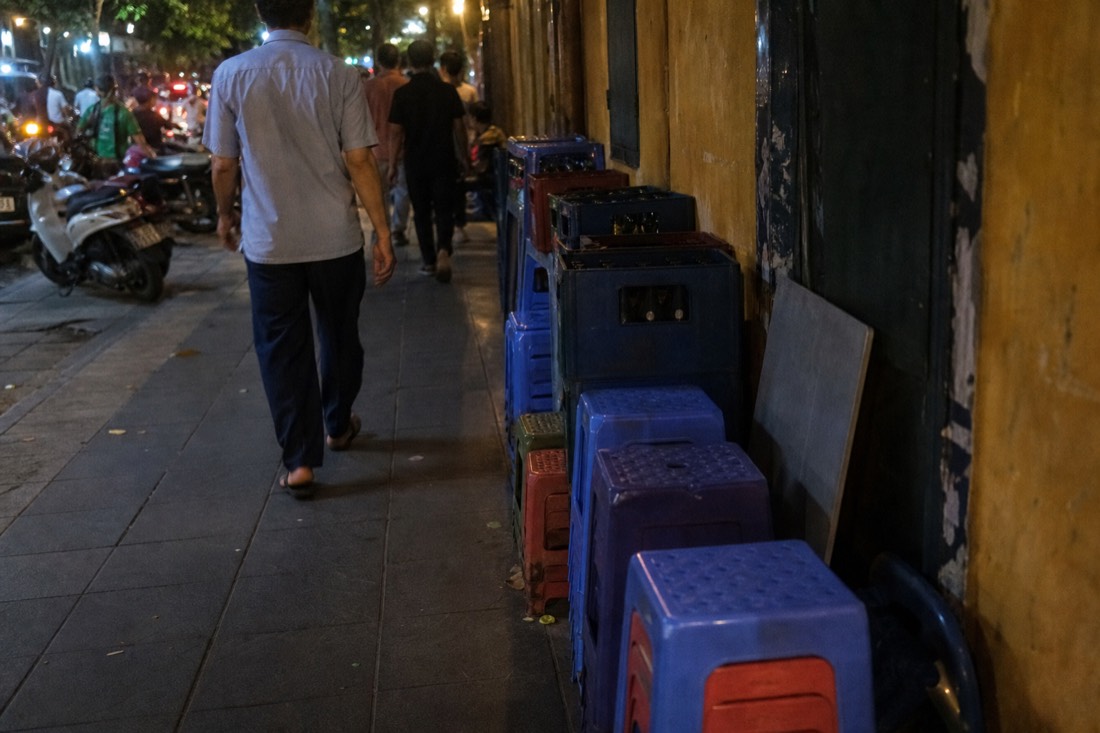
The pavement is the whole architecture of this culture, which is why the 2026 enforcement wave matters. A bia hoi joint is a keg, a wall of crates, and forty stools colonising a corner. Take the pavement and there is no room left. What I see on the ground is adaptation rather than extinction: tighter rows, faster tidying, an almost tidal rhythm of stools moving in and out. The corner has outlived other crackdowns, and the crowds have not thinned. But if you have been putting off an evening here, I would not file it under "someday".
| The 2026 pavement campaign | Figure |
|---|---|
| Surveillance cameras installed | Nearly 2,000 |
| Fines issued since December | More than 3,000 |
| Maximum penalty | Up to 6 million VND |
| What it targets | Vendors and seating that block foot traffic |
| What it means at the corner | Stools pulled tighter, sprawl retreating and returning |
For scale, that maximum fine equals roughly 400 to 600 glasses of beer, which is the kind of maths that makes a stall owner take the camera on the lamppost seriously. What visitors should take from the numbers is not alarm but timing. The culture is legally fragile in a way the crowds do not show, and every long-running bia hoi corner in Hanoi is, in some sense, a negotiation that has held so far.
How I build a night around the corner
The mistake I watch visitors make is treating Bia Hoi Corner as the destination. It is a terrible dinner venue; the stalls at the crossroads barely cook. It is a perfect final chapter. My own evening route eats first and drinks second: bun cha or banh cuon while the kitchens are at their best, a wander through the streets I cover in my Old Quarter evening crawl, and the corner as the landing place when the eating is done. On weekends the whole neighbourhood shifts again once the Hoan Kiem walking street closes to traffic, and the crowd flows between the lake and the beer without ever meeting a car.
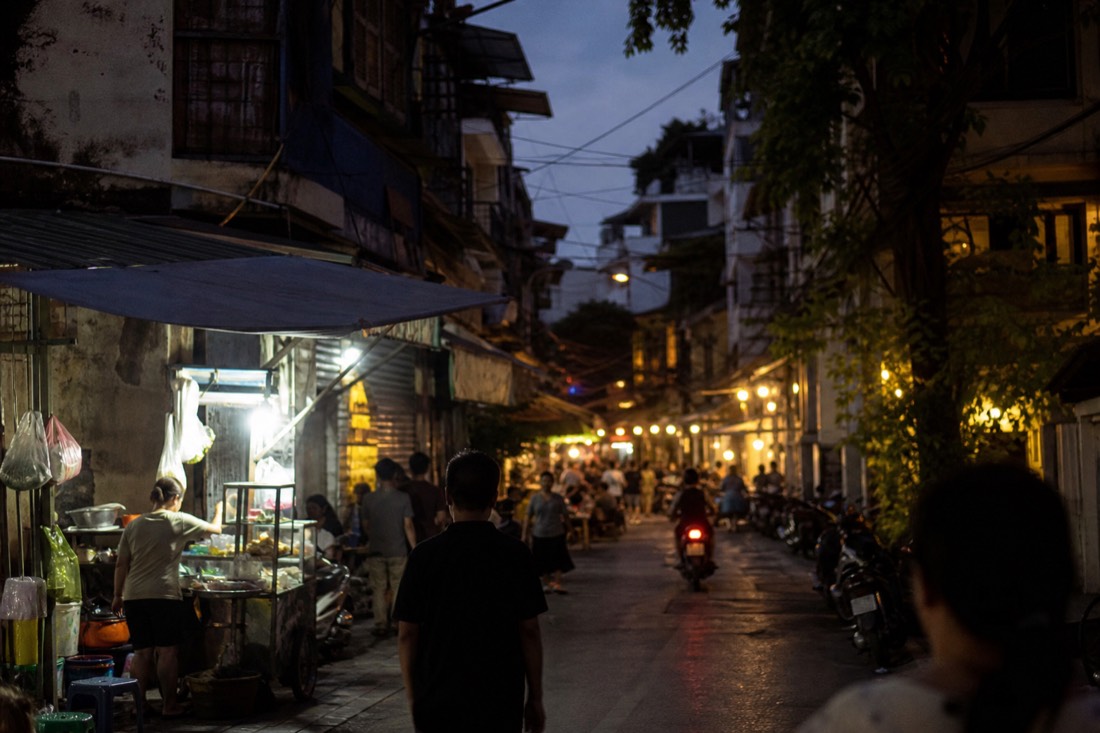
A practical word, since I am the one my guests ask: the beer is brewed and kegged daily, which is its own freshness guarantee, and the busiest stalls turn their kegs fastest. The same high-turnover logic applies to the food carts around the junction; the ones with queues are the ones emptying their pans. More on how I pick stalls in the street food safety guide, and the wider eating map of these lanes is in the Old Quarter food guide.
Last Friday I sat at the crossroads with a glass while the karaoke from Ta Hien fought the traffic noise from Luong Ngoc Quyen, and a keg ran out mid-pour at the stall opposite. The owner shrugged, turned the tap off, and started stacking stools. That is the whole philosophy of bia hoi in one gesture. When it is gone, it is gone, and there will be new beer tomorrow. Go sit on the small stool while both are still true.
Your next Hanoi experience
Check your date before planning the rest of the day
Small-group Hanoi food walk
Taste a changing selection of Hanoi dishes with a local guide in a group of up to eight.
Old Quarter pickup; otherwise 41 Luong Van Can. Food tastings and a drink included. Menu varies; dietary requests need advance confirmation.
An editorial starting point. Confirm your party’s requirements with the operator.
Choose a date to see scheduled departures. Final availability and price are confirmed on Viator.
No verified option fits those requirements. Adjust your choices or reset to explore the general recommendations.
Compare options, fit your schedule & check your budget
Small-group Hanoi food walk · 3h. Taste a changing selection of Hanoi dishes with a local guide in a group of up to eight. Old Quarter pickup; otherwise 41 Luong Van Can. Food tastings and a drink included. Menu varies; dietary requests need advance confirmation.
Private Old Quarter food walk · 3h. Explore the Old Quarter with a guide dedicated to your own party. Old Quarter pickup or 38 Bat Su. Tastings included. Confirm specific dietary and access needs before booking.