My Rules for Hunting a Perfect Hanoi Banh Mi
A Hanoi guide's scoring rubric for the perfect banh mi: why northern baguettes are denser, what good pate does, and the shops worth a queue in the Old Quarter.
 By Mai Trần, Hanoi food tour guide and culinary specialist

I judge a banh mi in the first three seconds, before anything is in my mouth. The sound tells me most of it. A proper Hanoi loaf crackles when the vendor squeezes it open, a dry papery crunch that promises shatter rather than chew. If the bread sighs instead of crackles, I will still eat the sandwich, I am not made of stone, but it has already lost a third of its possible points. After ten years of guiding hungry strangers through the Old Quarter, I have eaten enough mediocre banh mi for all of us. These are the rules that keep me from eating any more.
What makes a Hanoi banh mi different from a Saigon one?
The bread, mostly. Hanoi's baguettes are medium-sized and denser because the cooler northern climate allows less rising time in the bake, where Saigon's run bigger, softer and airier. Hanoi fillings stay restrained and prices lower, roughly 20,000 to 35,000 VND against Saigon's 25,000 to 70,000.
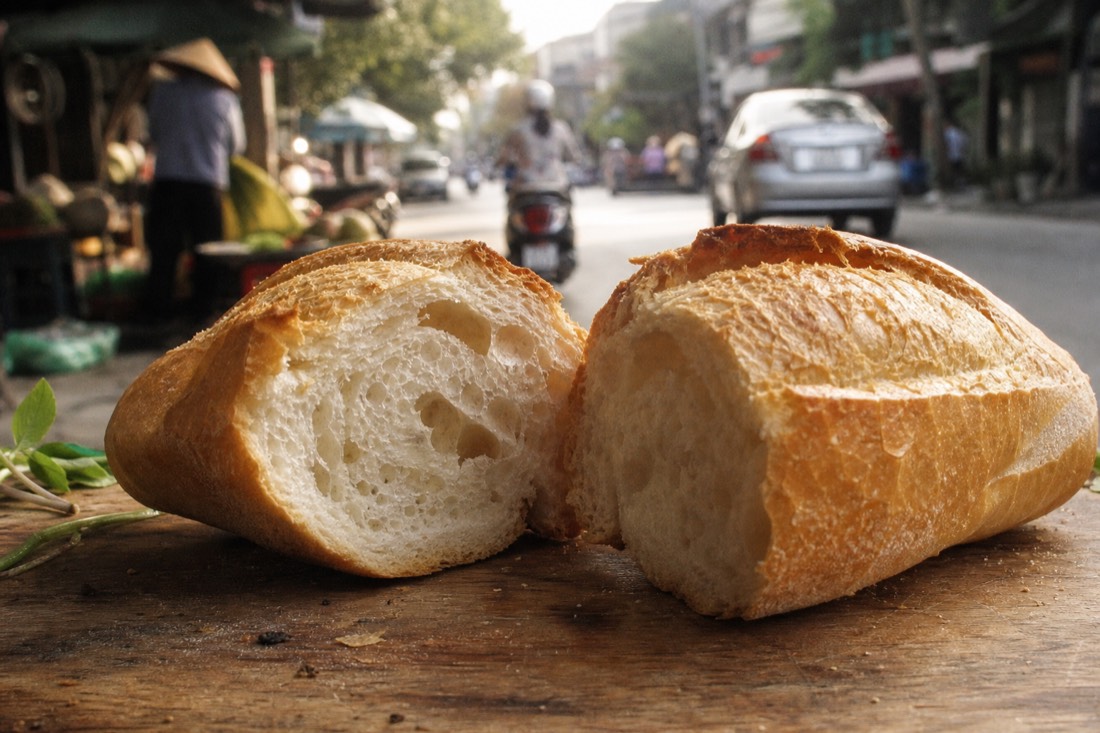
Neither city invented the thing alone. The baguette landed with the French in the 1860s and was an everyday staple by the early twentieth century, but the sandwich as the world knows it, split loaf, local fillings, one hand, was a Saigon creation of the 1950s. Hanoi adopted it and then, being Hanoi, quietly edited it: fewer fillings, firmer bread, more respect for the pate. I grew up on the northern version and I will defend it at any table, though I concede the south wins on sheer variety.
| Hanoi | Saigon | |
|---|---|---|
| Baguette | Medium, denser crumb, harder crackle | Bigger, softer, airier |
| Why | Cooler climate, less rising time in the bake | Warm climate, fuller rise |
| Fillings | Restrained, pate-forward | Generous, stacked, saucier |
| Price band, 2026 | 20,000 to 35,000 VND | 25,000 to 70,000 VND |
How I score a banh mi
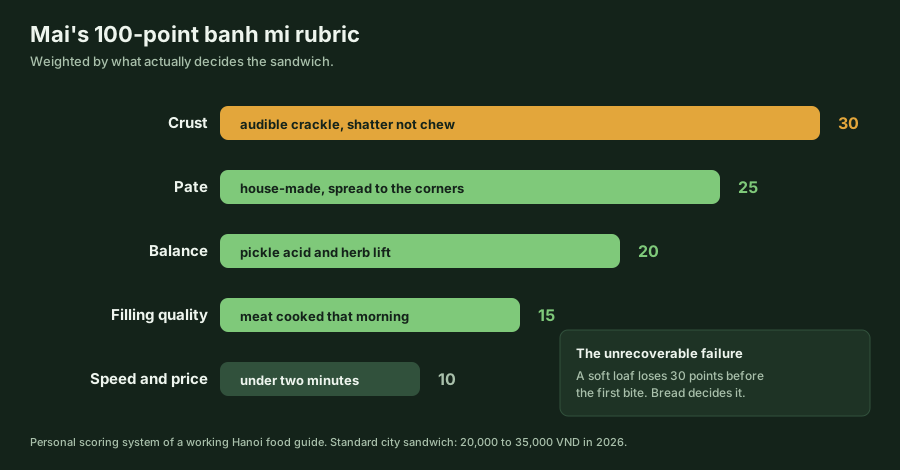
Out of a hundred, weighted by what actually decides the sandwich: crust 30 points, pate 25, balance 20, filling quality 15, speed and price 10. Bread failure is unrecoverable, which is why it carries the most weight. A great pate on a soft loaf is a tragedy, not a sandwich.
This rubric is mine, built from years of eating and arguing, and I apply it with complete seriousness and no authority whatsoever. It is how I taught myself to articulate why one 30,000 VND sandwich haunts me and another is forgotten by the next corner.
| Criterion | Points | What I am looking for |
|---|---|---|
| Crust | 30 | Audible crackle, shatter not chew, warm from the re-toast |
| Pate | 25 | House-made, loose, faintly smoky, spread to the corners |
| Balance | 20 | Pickle acid and herb lift cutting the fat, chili where asked |
| Filling quality | 15 | Meat cooked that morning, not sliced from a cold block |
| Speed and price | 10 | Assembled in under two minutes, priced for daily eating |
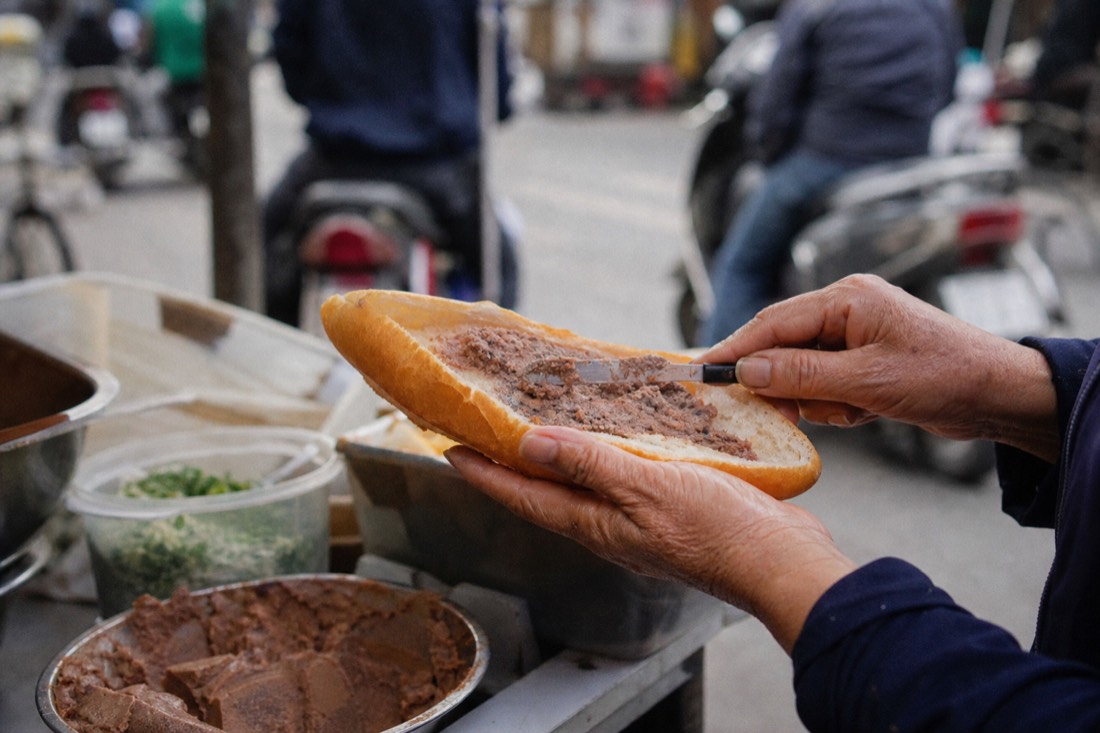
Pate deserves its own paragraph, because it is the soul of the northern sandwich and the first thing tourists learn to miss when they go home. Good Hanoi pate is livery without being heavy, spread warm so it soaks slightly into the crumb. On the safety question I get asked constantly: pate and fresh herbs are exactly the ingredients to buy from a busy stall that empties its batch daily rather than a quiet one, which is the same high-turnover, hot-and-fresh logic the CDC's food and water guidance applies to all street eating. My fuller reasoning is in the street food safety guide.
Where do I actually buy banh mi in Hanoi?
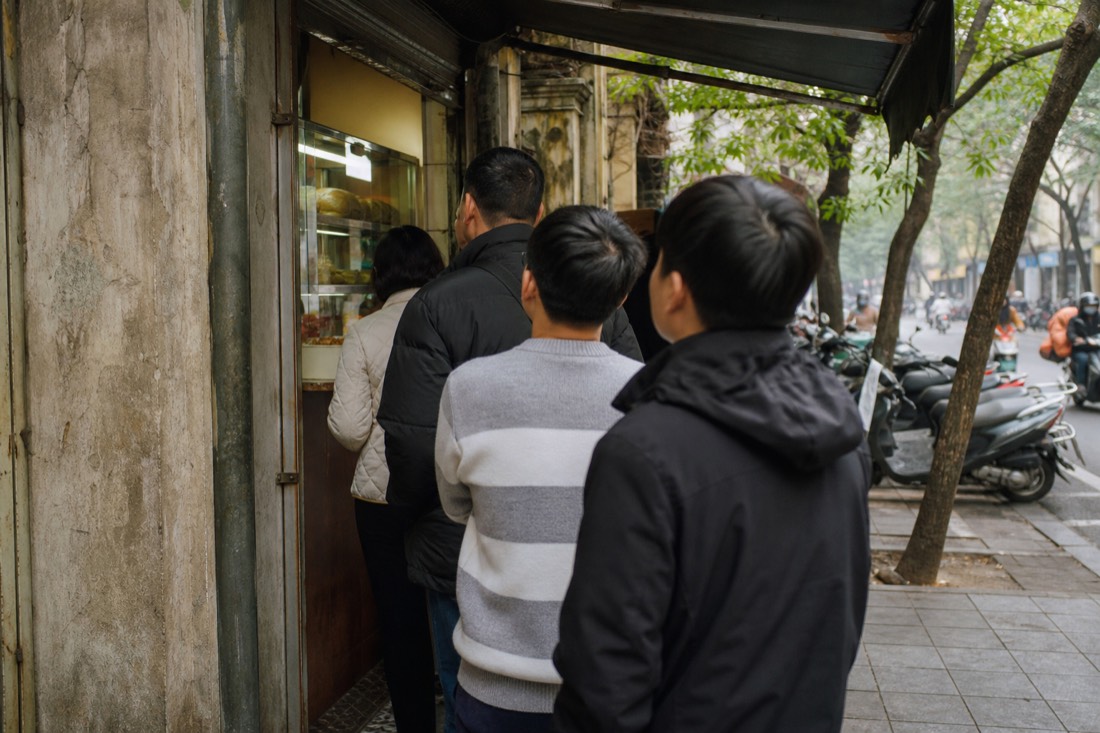
Three reliable answers: Banh Mi 25 at 25 Hang Ca, the Old Quarter's famous queue, sandwiches 30,000 to 50,000 VND; Banh My P at 39 Hang Bai, warm freshly cooked meat around 40,000; and Bami Bread, the 2014-founded Hanoi chain now past 70 stores, for consistency anywhere in the city.
| Shop | Where | Price (VND) | Known for |
|---|---|---|---|
| Banh Mi 25 | 25 Hang Ca, Old Quarter | 30,000 to 50,000; beef and mushroom 45,000 | The famous queue, tourist-friendly menu |
| Banh My P | 39 Hang Bai | Around 40,000 | Meat cooked warm to order |
| Bami Bread | 70+ stores citywide | Chain pricing, everyday cheap | Morning-baked baguettes, house pate, since 2014 |
Banh Mi 25 is where every visitor ends up, and honestly the queue is earned; the beef and mushroom at 45,000 VND is the order I point first-timers toward. Banh My P is my personal pick of the three, because warm meat straight off the heat wins points no assembly line can. And Bami Bread is the answer to a question guides hear a lot: "where do I get a good one near my hotel at 7 AM?" A chain that grew from one Old Quarter shop in 2014 to more than seventy stores without changing its morning-bake-plus-house-pate formula has settled the consistency argument.
Ordering is simpler than the queue makes it look. Everything rides on two or three choices: which meat, whether you want it with the works, and how much chili. My standing advice for guests is to take the vendor's default the first time, because the house combination is the argument the shop has been making for years, and to say "it cay", little chili, or simply hold up a flat hand if you want the heat gentle. Watch the assembly while you wait. A vendor who re-toasts the loaf before splitting it, spreads pate to the very ends and drains the pickles before they go in is telling you everything about the next thirty seconds of your life.
The stall-level truth, though, is that my best banh mi of any given month is usually from somewhere with no name and no queue, discovered mid-walk. The hunt is the point. Bread this good at these prices rewards wandering, and the Old Quarter's density of bakeries and griddles makes it the best hunting ground; my street-by-street notes are in the Old Quarter food guide. One more practical note for the stall counter: tipping is not expected at street stalls, as the current tipping guide for Vietnam lays out, so hand over your 30,000 and keep the change moving.
When is the best banh mi hour?
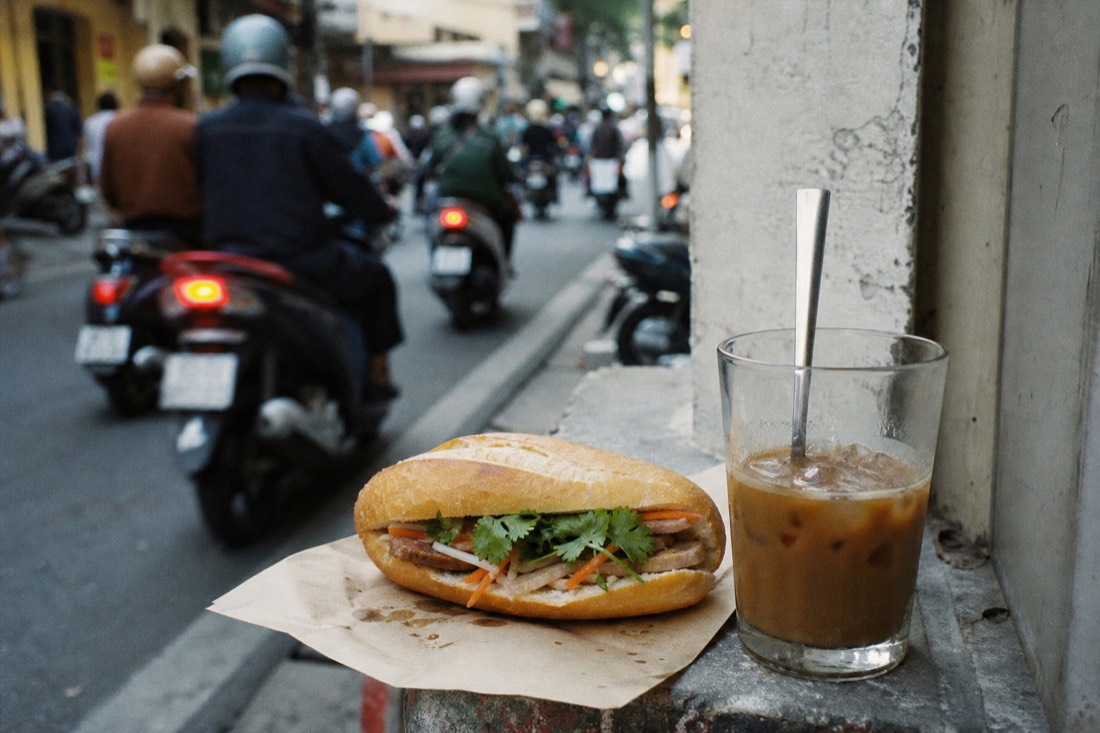
Morning, and it is not close. My own breakfast version of the hunt is a fixed ritual: sandwich in one hand, iced coffee within reach, standing at whatever ledge or stool the stall can offer, watching the school run and the office traffic braid past each other. Hanoi does its best people-watching before 9 AM, and a banh mi is the correct ticket to the show. The baguettes come out of the city's bakeries before dawn, some of them supplied through the same overnight logistics I watch from a stool on my dawn market walks, and a loaf's crackle is a perishable thing. By late afternoon most stalls are re-toasting bread that peaked eight hours earlier. I buy mine between 7 and 10 AM, eat it standing up within five minutes, and treat an afternoon banh mi as an honest snack rather than the real event. Save your serious appetite for the smoke signals of a bun cha lunch instead, and let each dish own its hour.
Where the sandwich fits in your daily budget barely matters, which is its own kind of luxury; even the famous shops sit under two dollars, and the full context is in my Hanoi food prices guide. My last rule is the one I break most often. One banh mi a day, I tell myself, because there are forty other things to eat in this city. Then I pass a stall I have never tried, hear a crust crackle under someone's grip, and the rubric comes back out of my pocket. The hunt does not end. That is the best thing about it.
Your next Hanoi experience
Check your date before planning the rest of the day
Bread & Brew banh mi baking class
Knead the bread, prepare fillings and pickles, and make Vietnamese coffee with a home chef.
Ingredients, equipment and recipes included; tofu filling offered. Meeting location supplied after booking. Wheat-based class; not gluten-free.
An editorial starting point. Confirm your party’s requirements with the operator.
Choose a date to see scheduled departures. Final availability and price are confirmed on Viator.
No verified option fits those requirements. Adjust your choices or reset to explore the general recommendations.
Compare options, fit your schedule & check your budget
Bread & Brew banh mi baking class · 4h. Knead the bread, prepare fillings and pickles, and make Vietnamese coffee with a home chef. Ingredients, equipment and recipes included; tofu filling offered. Meeting location supplied after booking. Wheat-based class; not gluten-free.
Small-group Hanoi food walk · 3h. Taste a changing selection of Hanoi dishes with a local guide in a group of up to eight. Old Quarter pickup; otherwise 41 Luong Van Can. Food tastings and a drink included. Menu varies; dietary requests need advance confirmation.