DIY Street Food Crawl or Guided Tour in Hanoi, Which Wins?
Both sides of the argument, priced out in dong and dollars, with a straight answer about when a guide earns the money.
 Written with Mai Trần, Hanoi food tour guide and culinary specialist

Short answer
Guided tours earn their keep on a first night. A guide handles the alleys, the ordering, and the stall vetting, and Hanoi's top food tours are rated 4.9 to 5.0 across thousands of reviews. A DIY crawl costs a few dollars and works well once you know the map. Many travelers do both, guided first, then repeat the favourites on their own all week.
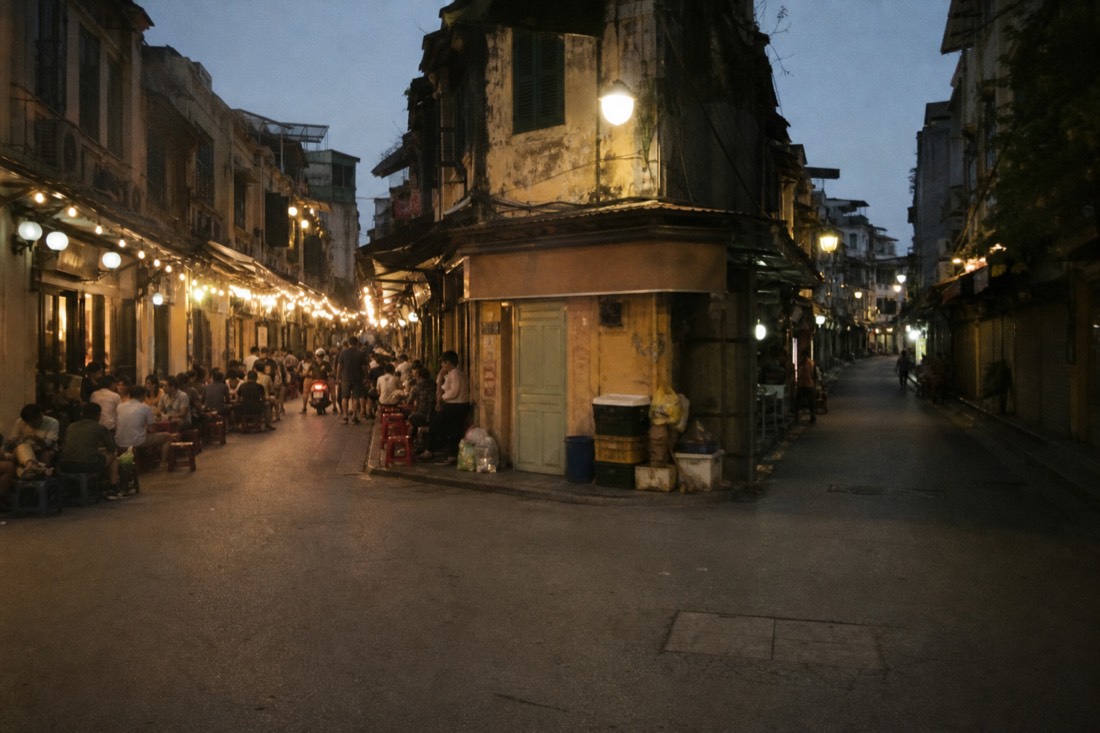
Stand at the mouth of any Old Quarter alley at 7 pm and the problem states itself. Eight stalls, no signs in English, three of them packed with locals, one clearly the reason everyone came, and no way to tell which. You can solve that puzzle yourself over a few delicious, occasionally misfiring evenings. Or you can pay someone who already knows the answer. That is the whole DIY-versus-guided question, and both answers are defensible.
Are food tours in Hanoi worth it?
For most first-time visitors, yes. Three hours with a guide compresses days of trial and error into one evening: the right stalls, dishes ordered in Vietnamese, context you would never guess, and a mental map you reuse all trip. The top Hanoi tours hold 4.9 to 5.0 ratings across thousands of reviews, which is not an accident.
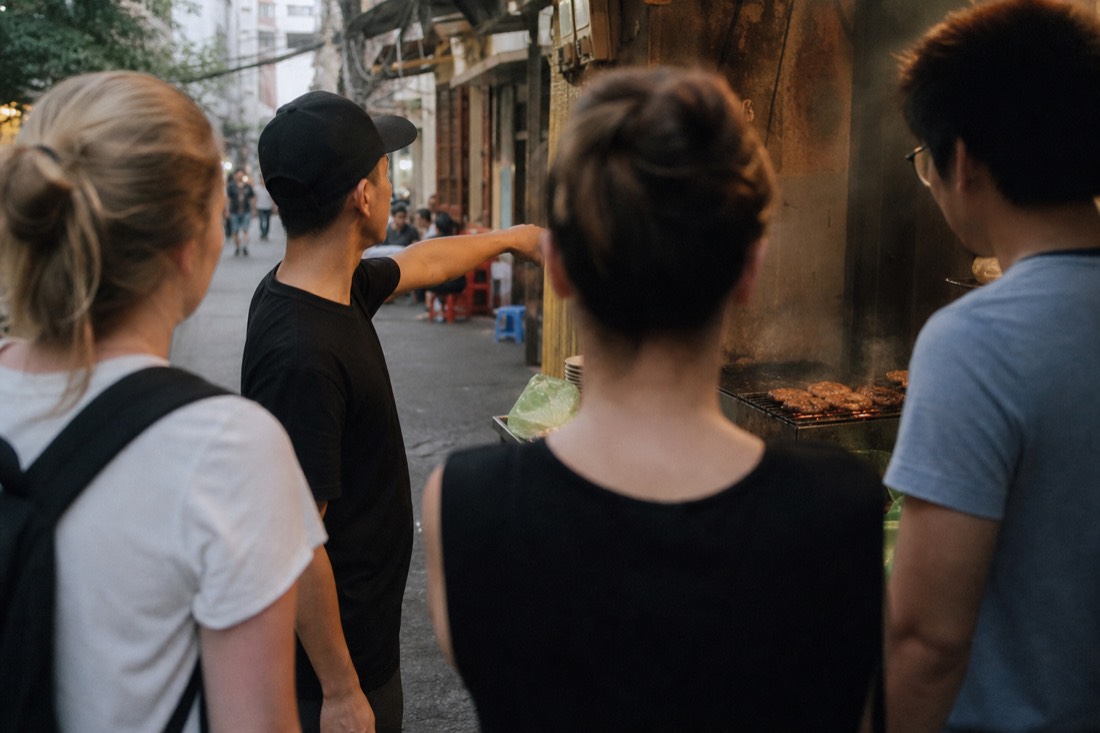
The strongest case for a tour is not the food itself, which you could mostly find alone, but the sequencing and the certainty. A good guide orders the bun cha the way regulars order it, knows which banh cuon lady steams to order, and walks you past the tourist-bait griddles without comment. Reviewers across the major listings repeat the same phrase in different accents: would never have found this alone.
The numbers back the enthusiasm. The Train Street food walk carries a 4.9 from 7,821 GetYourGuide reviews. The small-group foodie crawl and the Old Quarter walking tour both hold flat 5.0 scores on Viator. Averages like that, sustained over thousands of trips, are hard to fake and harder to keep.
Can you do a street food crawl on your own?
Absolutely, and it is one of the world's great cheap adventures. The Old Quarter is compact, the classic dishes are documented, and a self-guided crawl costs 200,000 to 250,000 VND, under ten dollars, for five stops. You trade away language, stall vetting, and stories, and you eat a few misses along the way.
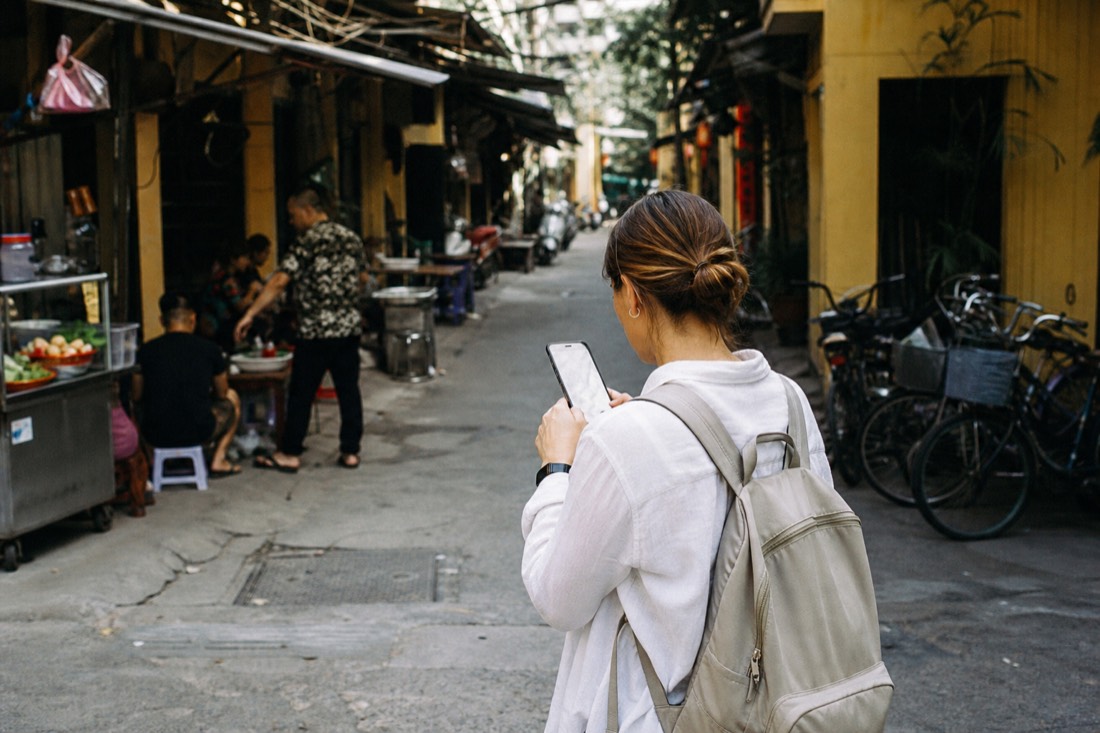
DIY works because Hanoi's food geography is learnable. Bun cha lives on Hang Manh, egg coffee on Nguyen Huu Huan, beer on Ta Hien, and the street food overview plus a saved map pin list will carry you a long way. The craft is in the small heuristics: eat where locals cluster, favour stalls that do one dish, go at local mealtimes when turnover is fast. Those rules, incidentally, track the CDC's food safety guidance for street eating, which comes down to hot, fresh, busy.
The honest costs of DIY are not in dong. They are the bowl you mis-order, the stall you skip because nobody could tell you it was the good one, and the herb plate you eye nervously without knowing the local practice; the street food safety guide covers that last anxiety in detail. None of these ruin a trip. All of them are what a guide is for.
What does a guide get you that DIY doesn't?
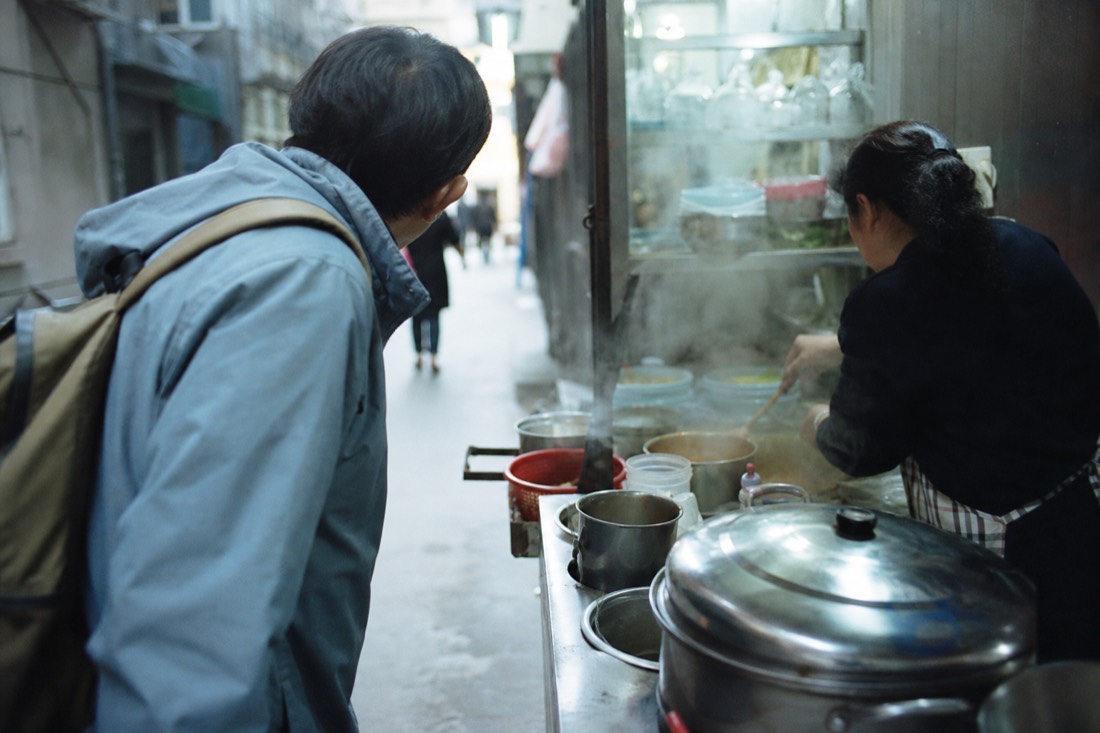
Four things: language, access, vetting, and pacing. A guide orders off-menu in Vietnamese, leads you into alley kitchens you would walk past, has already eaten everywhere they take you, and sequences five to eight tastings so you finish full rather than defeated. DIY replicates none of these on night one.
| Factor | DIY crawl | Guided tour |
|---|---|---|
| Language at the stall | Pointing and hoping | Ordered in Vietnamese, off-menu included |
| Finding alley kitchens | Days of research, some luck | Built into the route |
| Stall vetting | Your own judgment | Guide eats there routinely |
| Pacing and portions | Easy to be full by stop two | Portions staged across 5 to 8 tastings |
| Stories and context | What your phone tells you | A local narrating their own city |
| Flexibility | Total, wander anywhere | Fixed route, fixed start time |
| Cost | A few dollars in food | Tens of dollars per person |
| Booking effort | None | One click, free cancellation is standard |
Access deserves one concrete example. Train Street, the famous track-side cafe strip, is barricaded in 2026 with entry effectively limited to cafe customers, and the access rules keep shifting, as current on-the-ground reports describe. Tours that include it, like the Train Street food walk, fold the admission logistics into the evening. Solo visitors sort it out at the barrier. Both work; one is effortless. Background on the street itself is in the Train Street guide.
What do the costs actually look like?
A five-stop DIY crawl runs about 200,000 to 250,000 VND in food, under ten dollars. Guided walking tours sit in the tens of dollars per person, with motorbike and jeep formats above that. The gap buys a guide for three hours, and it shrinks fast once you count DIY research time and misses.
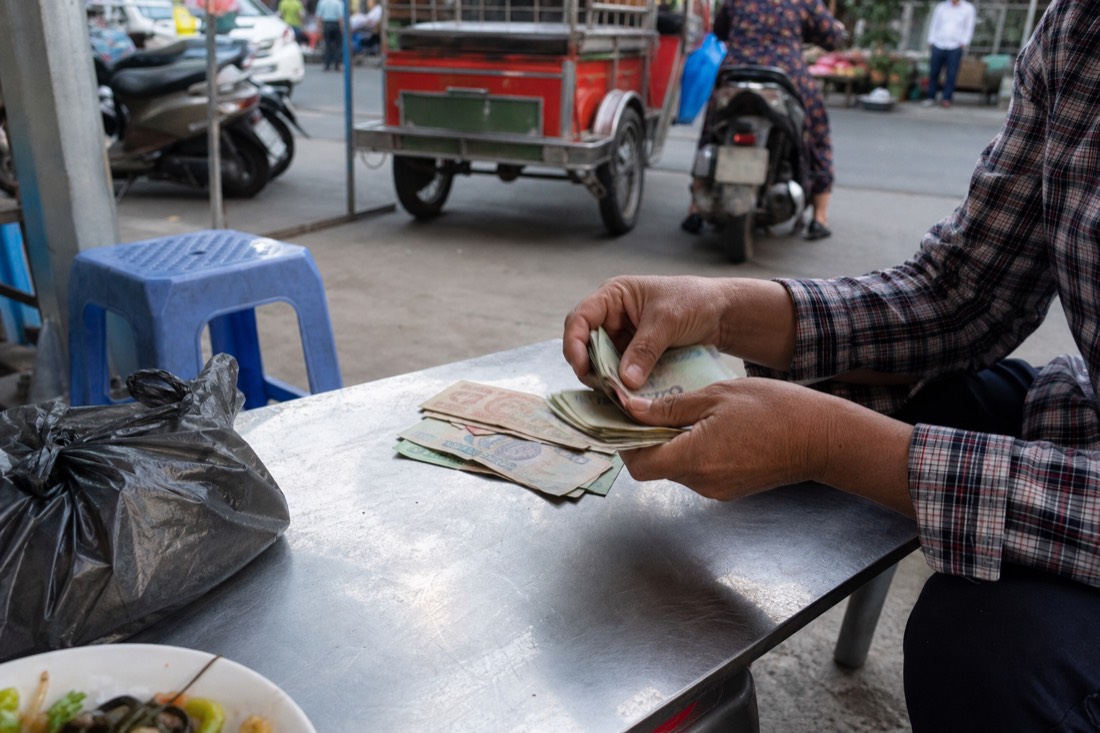
Priced in bowls, the comparison looks lopsided. Priced in successful evenings, it tightens considerably.
| Option | What you spend | What you get |
|---|---|---|
| DIY crawl, 5 stops | 200,000 to 250,000 VND in food, under $10 | Full freedom, your own pace, some misses |
| Guided walking tour, about 3 h | Tens of dollars per person | 5 to 8 vetted tastings, guide, stories, zero friction |
| Motorbike or jeep tour, 4 h and up | A higher band, motorbike and jeep price above walking tours | Rides between districts, dishes beyond walking range |
A DIY crawl at that budget covers pho at 50,000 VND, bun cha at 60,000, a banh mi at 30,000, an egg coffee at 35,000, and two glasses of bia hoi, with change from a 250,000 note. No fake precision on the tour side: prices move with season and group size, so the live listing is the only number that counts.
Which should you pick?
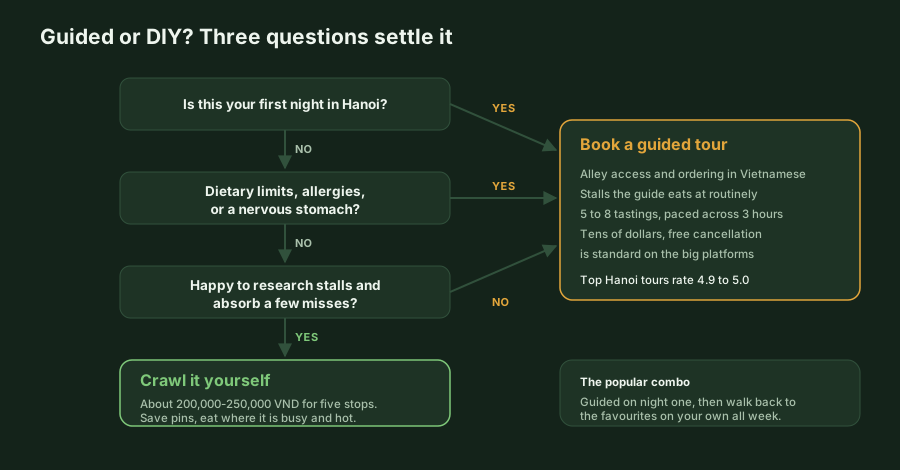
Pick guided for your first night, dietary restrictions, solo travel you want company on, or a short trip with no slack for misses. Pick DIY for tight budgets, long stays, and the pleasure of your own discoveries. The best answer is both: tour first, then spend the rest of the week walking back to the winners.
| Your situation | Better fit |
|---|---|
| First night, first visit | Guided, learn the map fast |
| Vegetarian, celiac, allergies | Guided, the guide translates restrictions |
| Backpacker budget, long stay | DIY, with one tour if funds allow |
| 48 hours in the city | Guided early, DIY the rest |
| Nervous eater or stomach | Guided, stalls are pre-vetted |
| Return visitor who knows the grid | DIY, chase new districts |
| Want Train Street included | Guided, admission logistics handled |
Either road ends at the same low plastic stool. The only real mistake is spending your first Hanoi evening scrolling reviews instead of eating.
What does a self-guided evening actually cover next to a guided one?
A DIY crawl gets you about five stops for 200,000 to 250,000 VND in food, every one of them chosen by you. A three-hour guided walk delivers five to eight tastings picked and ordered for you, with the most generous formats packing in ten. The gap is curation and coverage, not calories.
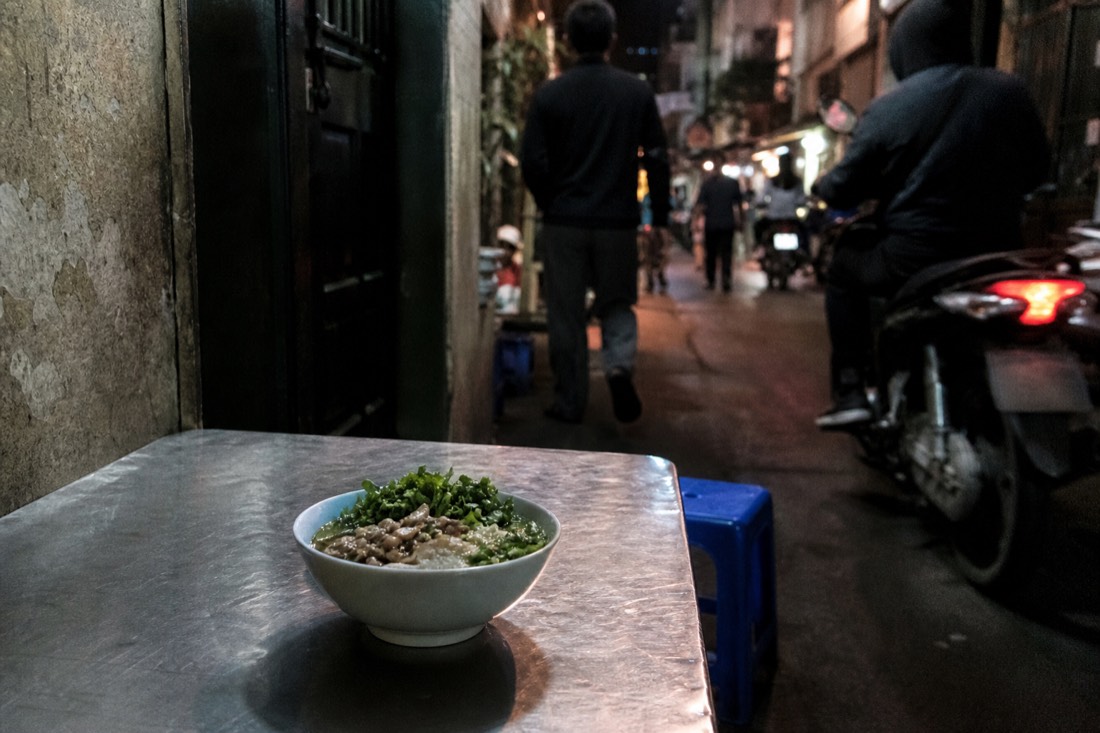
Count the evening in stops and the two options look similar. Count it in variety and they separate. Five DIY stops usually means five dishes, because you order a whole portion each time and get full. A guided route staggers half portions so the same three hours carry seven or eight distinct things, plus the drinks, which is why people come off a tour describing dishes they had never heard of rather than dishes they were already looking for.
| What the evening delivers | Self-guided crawl | Guided walk, about 3 hours |
|---|---|---|
| Stops or tastings | Around 5 stops you choose | 5 to 8 tastings, 10 on the most generous formats |
| Who orders | You, by pointing at the pot | The guide, in Vietnamese, off-menu included |
| Food spend | 200,000 to 250,000 VND, under $10 | Ticket in the tens of dollars, tastings included |
| Drinks | Bought stop by stop | One or two typically inside the ticket |
| Portion control | Whole servings, so you fill up early | Staged portions across the route |
| Route decisions | All yours, all night | Fixed, and already tested on other groups |
| What goes wrong | A mis-ordered bowl, or a stall aimed at visitors | A dish you would not have chosen for yourself |
Neither column is the better evening in the abstract. The DIY column is the better second night, once the map in your head has something on it, and the guided column is almost always the better first. Prices for individual dishes are in the Hanoi food prices breakdown if you want to build the DIY budget precisely, and the dish-by-dish list is what to fill it with.
How bad is the language barrier on a DIY crawl?
Manageable, because Hanoi's best stalls sell one dish and put its name on the sign. You do not need Vietnamese so much as the dish names and a willingness to point. The barrier appears on follow-up questions: what is in it, can it come without pork, is this the good stall or the one next door.
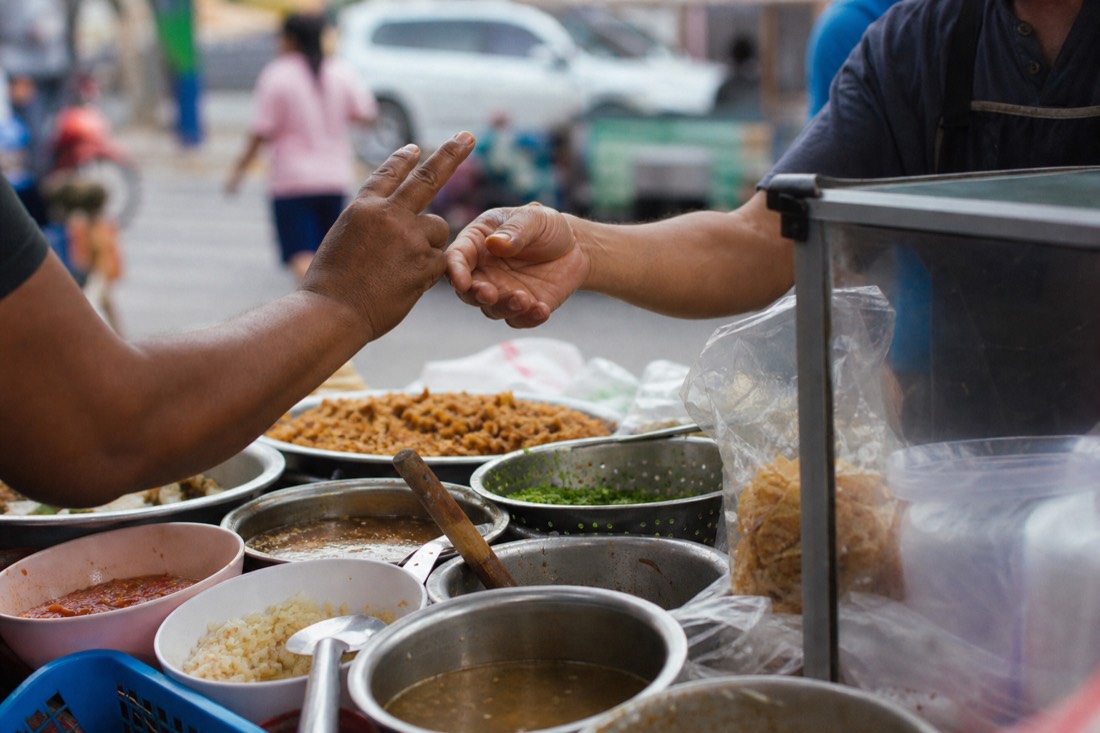
The one-dish shop is the traveller's best friend here. A place with bun cha painted above the door serves bun cha, at a price the locals in front of you are also paying, and the whole transaction is a nod and a number of fingers. Trouble starts when you want something modified, when the shop sells three things and the difference matters, or when two identical-looking stalls sit side by side and only one has the queue.
| What the sign says | What arrives | Street price (VND) |
|---|---|---|
| Pho | Rice noodle soup with beef or chicken, herbs to add yourself | 40,000 to 60,000 |
| Bun cha | Charcoal-grilled pork in warm dipping sauce, noodles and herbs alongside | 40,000 to 80,000 |
| Banh mi | Baguette sandwich, filled to order at the cart | 20,000 to 40,000 |
| Ca phe trung | Egg coffee, hot robusta under a whipped egg-yolk cream | 30,000 to 45,000 |
| Bia hoi | Fresh draft beer, poured by the glass at pavement corners | 10,000 to 15,000 |
Learn those five and a self-guided night runs itself. What you cannot fake with a phrasebook is dietary negotiation: fish sauce and pork broth turn up in places a menu translation will never warn you about, which is the single strongest argument for a guide if you have a restriction rather than a preference. The vegetarian and gluten-free guide covers the specific traps. For everyone else, pointing works, translation apps cover the rest, and a wrong bowl costs a dollar or two.
Who should skip the tour entirely and go DIY?
Repeat visitors who already know which alley does what. Long-stay travellers with weeks of evenings to spend. Anyone whose budget makes a ticket worth three days of eating. Early risers whose best food hour is dawn at a market rather than seven in the evening. For all of them, DIY is the better trip, not a compromise.
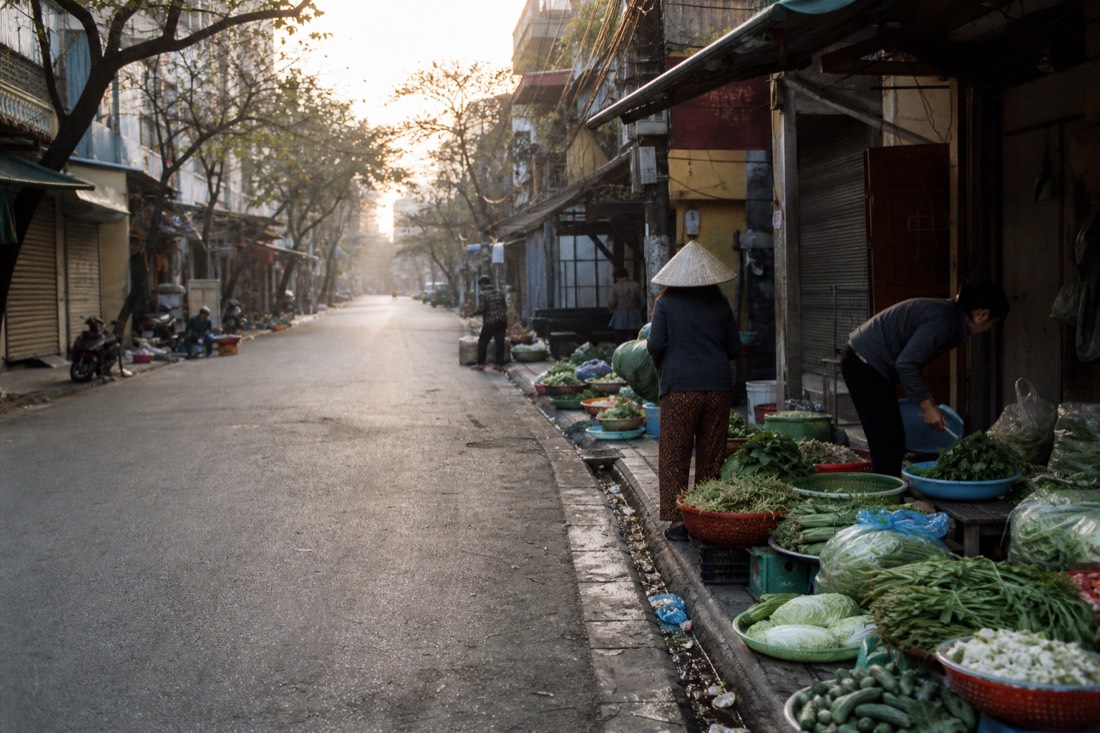
Being honest about who should not buy is the only way the recommendation means anything. A tour sells you a shortcut, and a shortcut is worthless to someone with time. If this is your fourth trip to Hanoi, you have a mental list of stalls that no three-hour route will beat, and your money goes further chasing a district you have not eaten in yet. The same holds for slow travellers: at four weeks in the city, trial and error stops being a cost and becomes the point of the exercise.
Budget travellers deserve a straight answer too. A walking tour in the tens of dollars is a real chunk of a backpacker week when five stops of street eating run under ten. If funds stretch to one ticket, spend it on night one and let it pay off across every evening after. If they do not stretch at all, you are not missing the food, only the commentary, and Hanoi's food is genuinely legible from the pavement.
There is one group that gets sorted wrongly all the time: the morning eater. Hanoi does its finest work at breakfast, and a food walk built for the evening will never show you that. If dawn markets and early noodle counters are what you came for, the better spend is a cooking class with a market visit that starts in the morning, or nothing at all. Similarly, if the appeal is distance rather than density, the motorbike and jeep formats reach neighbourhoods no walking crawl or DIY evening covers, which is a different purchase from a guided Old Quarter walk.
How does a Hanoi guide pace a first night of eating?
Mai Trần has guided food walks in Hanoi since 2015, and she paces a first night around five small stops rather than three big ones. Half portions, the heaviest dish in the middle, something sweet and a coffee at the end. Most visitors fill up faster than they expect, especially in the heat.
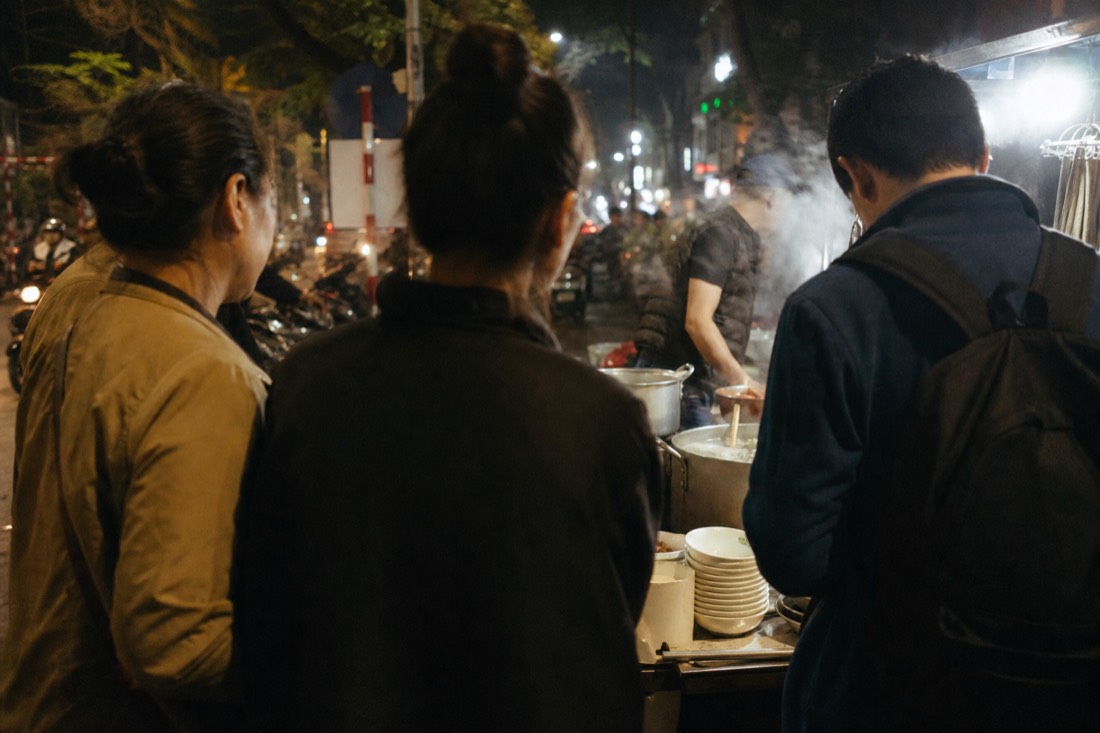
The mistake I see every week is portion arithmetic. People order full servings at the first two stops because they are hungry and the price looks absurd, then spend the rest of the night watching other people eat. Ordering one bowl between two at the early stops is not stinginess, it is how you get to five dishes instead of two. Vendors are used to it, and nobody minds a shared bowl at a stall that turns tables fast.
These are planning allowances I use when pacing a night of eating, not published figures.
| Planning question | The allowance I use |
|---|---|
| Walking time between Old Quarter stops | 10 to 15 minutes, less in the tight lanes |
| Time seated at a savoury stop | 20 to 30 minutes, longer where the coffee is good |
| Savoury dishes before people slow down | Three, four if bowls are shared |
| Cash per person for an evening of street eating | 300,000 to 400,000 VND in small notes |
| Buffer before a booked meeting point | 20 minutes, because Old Quarter distances mislead |
Two more things worth knowing before your first night. Tipping is not expected at street stalls, though rounding up is welcome, and current tipping practice in Vietnam puts 5 to 10 percent in sit-down restaurants and roughly 100,000 to 200,000 VND a day for a guide. And the weather sets the ceiling on all of this: June to August runs hot, above 35C and humid, so an evening in July needs shorter walks and more sitting than the same route in October.
To be clear about my own footing here: I guide my own walks in this city, I do not operate the products booked through this site, and everything above comes from pacing groups through the same streets since 2015. What the operators include, where they meet and how they cancel comes from their listings, not from me.
Are food tours in Hanoi worth the money?
For first-time visitors, usually yes. A three-hour tour delivers five to eight vetted tastings, a guide who orders in Vietnamese, and a mental map of the Old Quarter you reuse all trip. The leading tours hold 4.9 to 5.0 ratings across thousands of reviews. Repeat visitors who already know the streets get less from the ticket and can crawl solo happily.
How much cheaper is a DIY food crawl?
Substantially, on paper. Five self-guided stops cost about 200,000 to 250,000 VND in food, under ten dollars, while guided walking tours run in the tens of dollars per person. The gap pays for language, stall vetting, pacing, and stories. Count the research hours and the inevitable mis-orders and the real difference narrows, though DIY always stays the cheaper evening.
Can you visit Train Street without a tour?
Yes, but with friction. The street is barricaded in 2026 and entry effectively requires being a customer of a track-side cafe, with rules that shift and a possible train rerouting under discussion. Solo visitors manage it regularly. Tours that include Train Street simply fold the admission and timing into the route, which is the easier experience of the two.
Should you do a food tour on your first or last night?
First, and it is not close. A tour on night one hands you a vetted list of stalls, dishes, and neighbourhoods you can revisit for the rest of the stay, which multiplies its value. The same tour on the last night is a pleasant recap of things you can no longer act on. Book early: small-group caps mean prime evening slots go first.
Your next Hanoi experience
Check your date before planning the rest of the day
Small-group Hanoi food walk
Taste a changing selection of Hanoi dishes with a local guide in a group of up to eight.
Old Quarter pickup; otherwise 41 Luong Van Can. Food tastings and a drink included. Menu varies; dietary requests need advance confirmation.
An editorial starting point. Confirm your party’s requirements with the operator.
Choose a date to see scheduled departures. Final availability and price are confirmed on Viator.
No verified option fits those requirements. Adjust your choices or reset to explore the general recommendations.
Compare options, fit your schedule & check your budget
Small-group Hanoi food walk · 3h. Taste a changing selection of Hanoi dishes with a local guide in a group of up to eight. Old Quarter pickup; otherwise 41 Luong Van Can. Food tastings and a drink included. Menu varies; dietary requests need advance confirmation.
Private Old Quarter food walk · 3h. Explore the Old Quarter with a guide dedicated to your own party. Old Quarter pickup or 38 Bat Su. Tastings included. Confirm specific dietary and access needs before booking.